Long before Star Wars was even a gleam in George Lucas’s bank account, 1968’s Planet of the Apes – based on the 1963 novel by Pierre Boule (clumsily translated into English as Monkey Planet) – launched the first full-blooded science-fiction movie franchise. Across five films, one live-action TV series, one animated TV series, umpteen comic and spin-off books, a misguided Tim Burton ‘reimagining’ and the triumphant 21st-century trilogy, Planet of the Apes has developed its own intricate, often stubbornly contradictory mythology, all born from the curious concept of a world where intelligent simians have the power of speech and have obtained dominion over humankind.
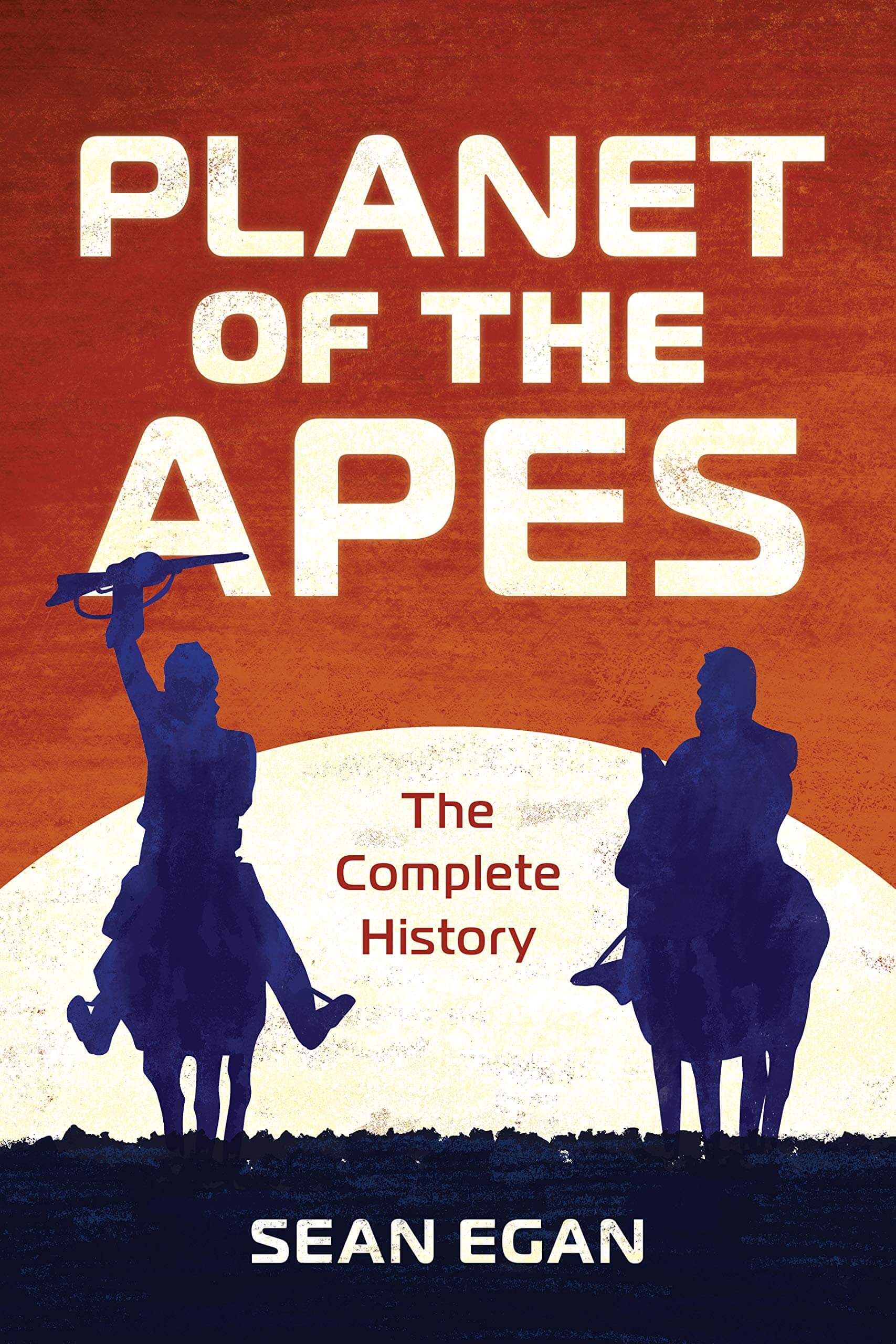
Sean Egan’s The Complete History might not be the last word on the cultural impact of this extraordinary phenomenon but it’s certainly an engrossing, detailed chronological exploration of the making of the first film (and everything that followed across all media) and how its surprise success spawned a lucrative and apparently indestructible brand name. What’s made quite clear here is that no one really had much faith in the idea of a Planet of the Apes movie beyond visionary producer Artur P Jacobs who managed to get the film made – a process hurried along by the casting of screen legend Charlton Heston – despite the doubts and protestations of reluctant studio heads. But an intelligent, thoughtful screenplay, coupled with John Chambers’ revolutionary prosthetics designs, managed to convince the audience that a planet could indeed be ruled by talking apes. The rest is very much cinematic history, albeit an occasionally chequered one. In prose that is detailed but rarely dry, Egan guides us through the Apes series timeline as the sequels – each of them made on increasingly-reduced budgets – slowly but gradually built up the series’ lore and he demonstrates how the films’ writers – especially Paul Dehn who helmed the last four titles – worked hard to give the series a proper continuity. Falling box office numbers brought the original five-film series to an end in 1973 but a short-lived TV series (hugely popular in Europe and the UK but a flop stateside) kept the flame alive for a while and Marvel enjoyed huge success with increasingly-bizarre comic strip stories throughout the 1970s.
Despite its success at the box office, Burton’s 2001 version seemed to close the door on the Apes forever but the series was wonderfully reborn in 2011 with Rupert Wyatt’s Rise of the Planet of the Apes which spawned its own two sequels in 2014 and 2017. Egan is surprisingly sniffy about both Rise and War (2017) but is full of praise for Dawn (2014) and whilst opinions may indeed vary, his virtual dismissal of the other two pictures can’t help but rankle. But this remains an engaging, highly-readable and occasionally warts’n’all pocket digest of the history of cinema’s first sci-fi movie series.
Planet of the Apes – The Complete History is available now from Applause Books