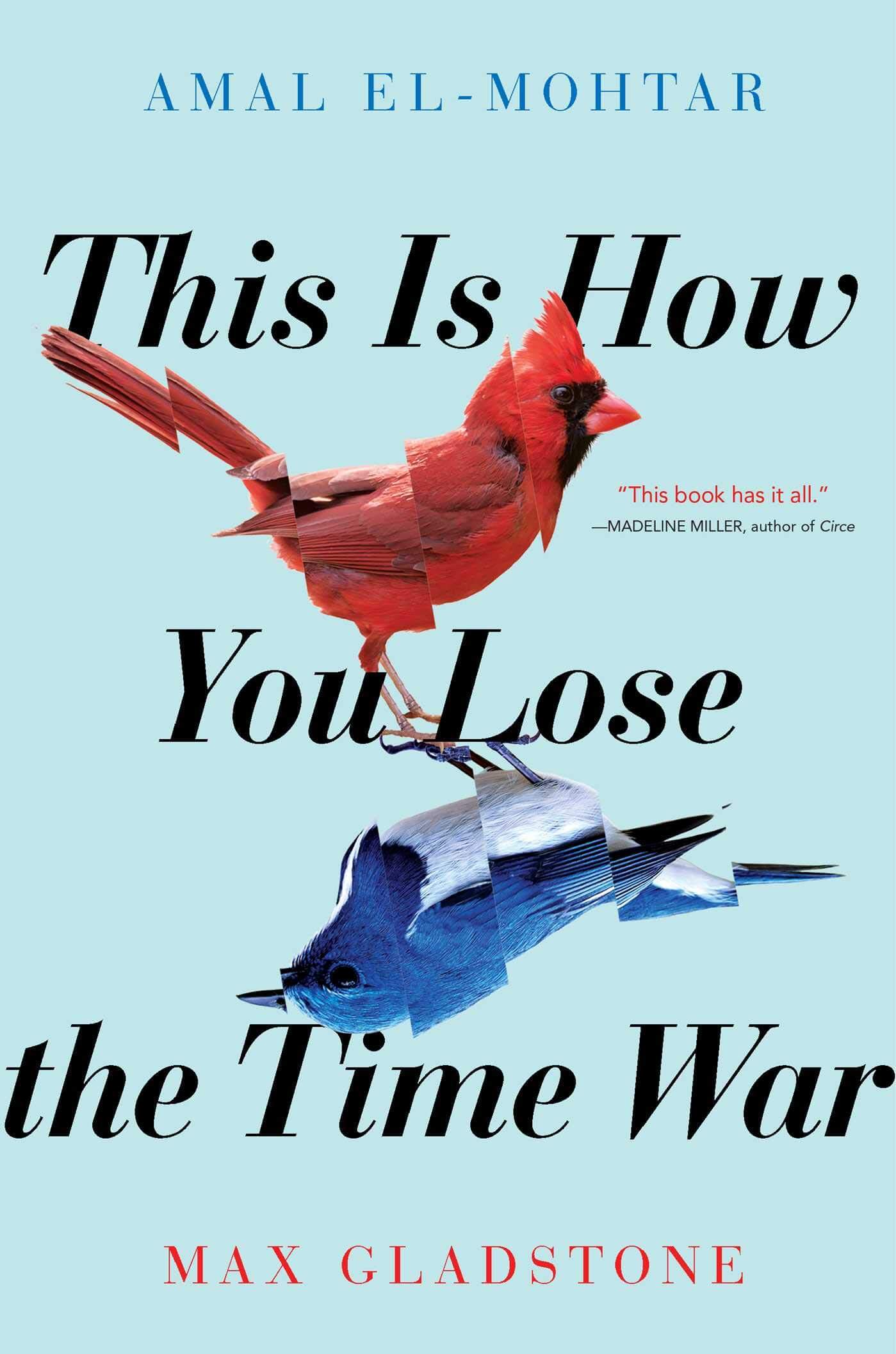
THIS IS HOW YOU LOSE THE TIME WAR / AUTHOR: AMAL EL-MOHTAR, MAX GLADSTONE / PUBLISHER: JO FLETCHER BOOKS / RELEASE DATE: 18TH JULY
An agent of the Commandant finds a letter in the aftermath of a battle, in the ruins of a dying world. It reads, in its entirety, “Burn before reading.” She burns it, and then she reads it. It is a letter from her opposite number, an agent of the Garden. It is a boast, a taunt, and a challenge. She chooses to reply with a jar of water. And so it begins.
Time wars, conceptually, ought to be messy, bloody things. Wars are horrific, uncertain, devastating affairs; time wars must be even more so. Being able to wield paradoxes, undo battles, avert tactical reversals, endlessly transform victories into yet more war, must be more chaotic and complex than war alone.
This Is How You Lose The Time War doesn’t satisfy expectations on that level. This time war is simpler. There are only two factions. The territories they fight over are timelines, but they’re distinct timelines, neatly numbered and addressed, and they don’t bleed into each other.
The mess is reserved for the protagonists: two agents of the factions whose missions consist of entering the individual timelines and surgically nudging the pebbles of history into one day becoming the avalanche, orienting one more future towards their side’s agenda. They are spies and influencers, travelling up and down (and across) the aeons to achieve their aims.
This novella is the tale of their clandestine correspondence. Neither agent trusts the other, and neither can allow their own faction to know the conversation even exists. And yet, already, they’re being pursued.
It’s easiest to classify it as a romance. It’s a story with spies in, rather than a spy story; a story with wars in, rather than a war story. There’s a wonderful tapestry of detail of the warzones fought in, and the protagonists share much of themselves, but when it comes to details of the conflict, the factions, and the campaigns, the book feels shallow. The agents very capably use their considerable talents to make a difference, but the consequences on the war lack impact.
The core of the story, really, is the letters to each other, how they stumble from overtly formal structure to expressing themselves and their very different worlds in intimate detail. What’s evoked in the passages between letters instead is intrigue: how the letters are left behind, how the agents intricately build their bridge, how they hide their secrets from their own side.