PLATFORM: PC, PS5 (REVIEWED) | RELEASE DATE: OUT NOW
A young chap named Akito wakes up in Shibuya to find that humans have disappeared. A voice in his head informs him that his body has been taken over by a spirit, and he will die if the spirit leaves him. Forced to do as the spirit demands, and understanding that neither of them can survive without the other, the two form an alliance and help each other to achieve their goals. For Akito, that means tracking down his sister, abducted from her hospital bed by a mysterious man in a hannya mask. But what has actually happened to the world he once knew, and what does his new companion gain from all of this?
Coming from a studio that was founded by the creator of Resident Evil and was responsible for the two Evil Within games, you’d immediately expect GhostWire: Tokyo to be a full-on scarefest. There’s definitely evidence of some shared DNA with the team’s previous releases, but the all-out horror has been toned town massively, replaced with a general air of kooky supernatural weirdness that, coupled with some incredibly strong art direction, find Akito exploring all kinds of memorably spooky situations.
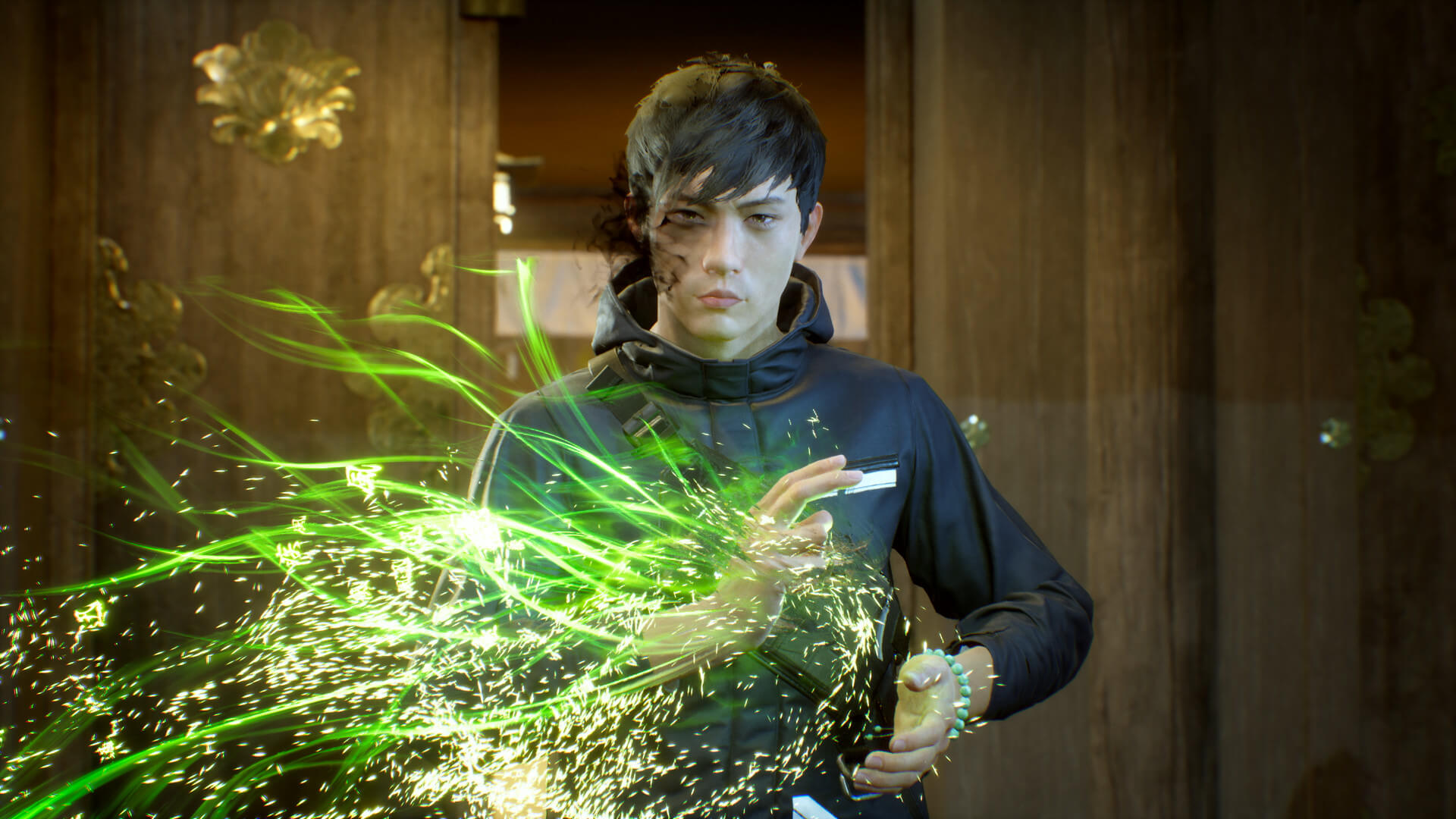
GhostWire‘s six chapters take you through the streets of Shibuya and its surrounding areas, blending the impressive set pieces of its main missions with shorter side quests that task you with helping lingering spirits to move on to the next life in return for some handy rewards. Along with searching for lost spirits, cleansing gates to open up new areas and buying and selling useful items from shops run by cats, Akito will also have to deal with many ghostly entities known as “Visitors”. These headless schoolkids, businessmen with featureless faces and other apparitions can be taken down using elemental powers that Akito shoots straight from his hands, resulting in satisfying showers of particles and sparks and a nice weighty thud when enemies’ cores are removed (this replenishes your health and ammo, like in modern Doom). It feels a little underpowered to begin with, but proves to be immensely satisfying after acquiring a few upgrades.
Feeling a bit like a throwback to simpler times, GhostWire: Tokyo‘s open world is a lot smaller and more focused than the sprawling environments seen in other games. That’s no bad thing, as it leaves less room for endless fetch quests and collectathons, instead giving players meaningful and endearing side stories to occupy their time with when taking a break from the main questline. Wandering around the city brings to mind the more exploration-based moments of Astral Chain, while the supernatural elements are very reminiscent of Control and there’s a bit of Yakuza influence in there too (one side quest in particular will be especially pleasing to Yakuza fans). GhostWire: Tokyo is likely to most appeal to those with a fondness for Japanese culture, superstitions and folklore – if that’s you, this will be right up your spirit-laden street.