CERT: 18 / DIRECTOR & SCREENPLAY: TOSHIO MATSUMOTO / STARRING: PÎTÂ, OSAMU OGASAWARA, YOSHIO TSUCHIYA / RELEASE DATE: OUT NOW
The BFI’s Japan 2020 project is celebrating the past century of Japanese cinema, from Kurosawa’s classics to anime and horror, not forgetting the taboo-breaking New Wave of the 1960s. That includes Toshio Matsumoto’s Funeral Parade of Roses, now available on Blu-ray, which subverts any perception we may have of mid-century Japan as rigid and straight-laced as it dives into the hedonistic queer underground of Tokyo.
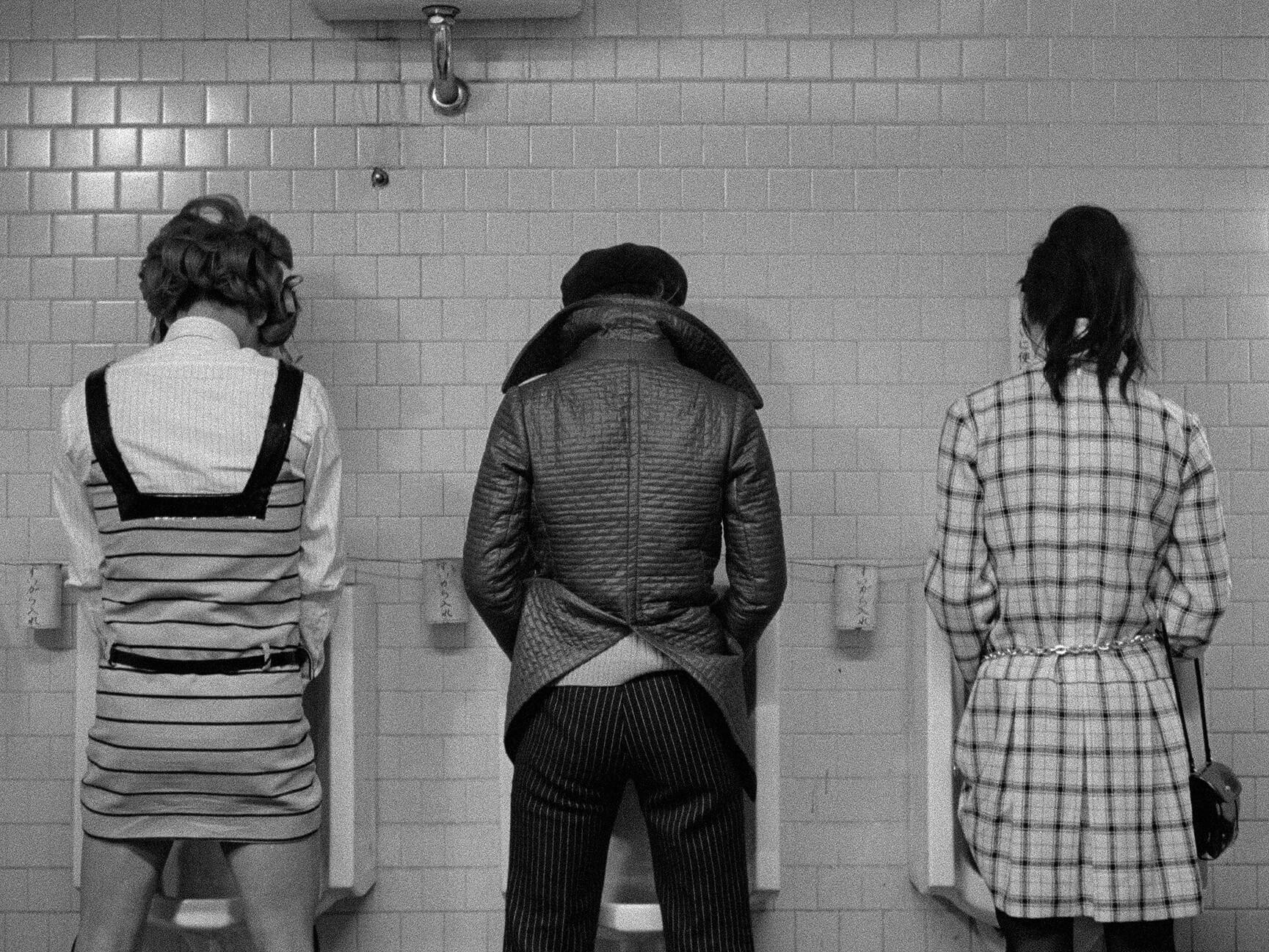
Eddie (Pîtâ) is one of several cross-dressing “gay boys” (they’d probably identify as transgender women today) who entertain middle-aged men at the Genet Club. Outside of the club, Eddie hangs out with hippy youths – one even calls himself Guevara – who smoke pot, talk revolutionary politics, and have a whole lot of sex.
The main plot is Eddie’s rivalry with club madam Leda (Ogasawara); Eddie is simultaneously taking over the club and having an affair with Leda’s partner Gonda (Tsuchiya). Later on, violent flashbacks of Eddie’s childhood and a twist in the affair story turn the film into a contemporary adaptation of Sophocles’ Oedipus Rex, with an intense, shocking culmination.
It’s a thin plot, but the world in which it takes place makes the film fascinating; a look into both a queer and a revolutionary counterculture that we’ve seen many Western depictions of but may not know also took form in Japan. Despite the downbeat final act, Matsumoto’s filmmaking is celebratory of its sexually progressive subjects, with sex scenes depicted tenderly – erotic but not exploitative – and documentary interviews allowing the real ‘gay boys’ to tell their stories.
There’s an avant-garde style throughout, reminiscent of the French New Wave. As handheld camerawork takes us away from studios and around the real Tokyo, Matsumoto is playful with editing, music, and other cinematic devices, most notably in a confrontation between Eddie and Leda that’s first depicted as a cowboy duel before descending into a Benny Hill-like sped-up scrap. Matsumoto has fun pushing the boundaries of cinema, and for the most part – a couple of more meta devices may test patience – the sense of fun passes on to the audience.
This Blu-ray release is, as we’ve come to expect from the BFI, stunningly packaged. The 4K restoration is gorgeous and crisp, and the same can be said of the eight included short films by Matsumoto. The highlight of these is Nishijin, a 25-minute documentary about Kyoto’s weaving industry; most others are shorter, less narrative-based pieces that show Matsumoto experimenting with technology to depict psychedelic experiences – if you ever wanted to know what footage of a toilet electronically processed by a medical imaging device would look like, you’ll find out here. There’s also a feature-length commentary from punk poet and historian Chris D and a 34-page booklet of essays.