The Devil’s Men is a curious and rather bland mid-1970s horror offering that sits uncomfortably (and unnecessarily) between the end of the classic Hammer era and the decade’s late period reinvention when the horror genre started to become a bit more visceral and a lot more graphic. Despite appearances from Peter Cushing (who has the good grace to deliver another of his charming, good-natured performances despite looking largely quite bored throughout) and Donald Pleasance who does his best to look as if he gives a damn and hasn’t just turned up to justify the paycheque.
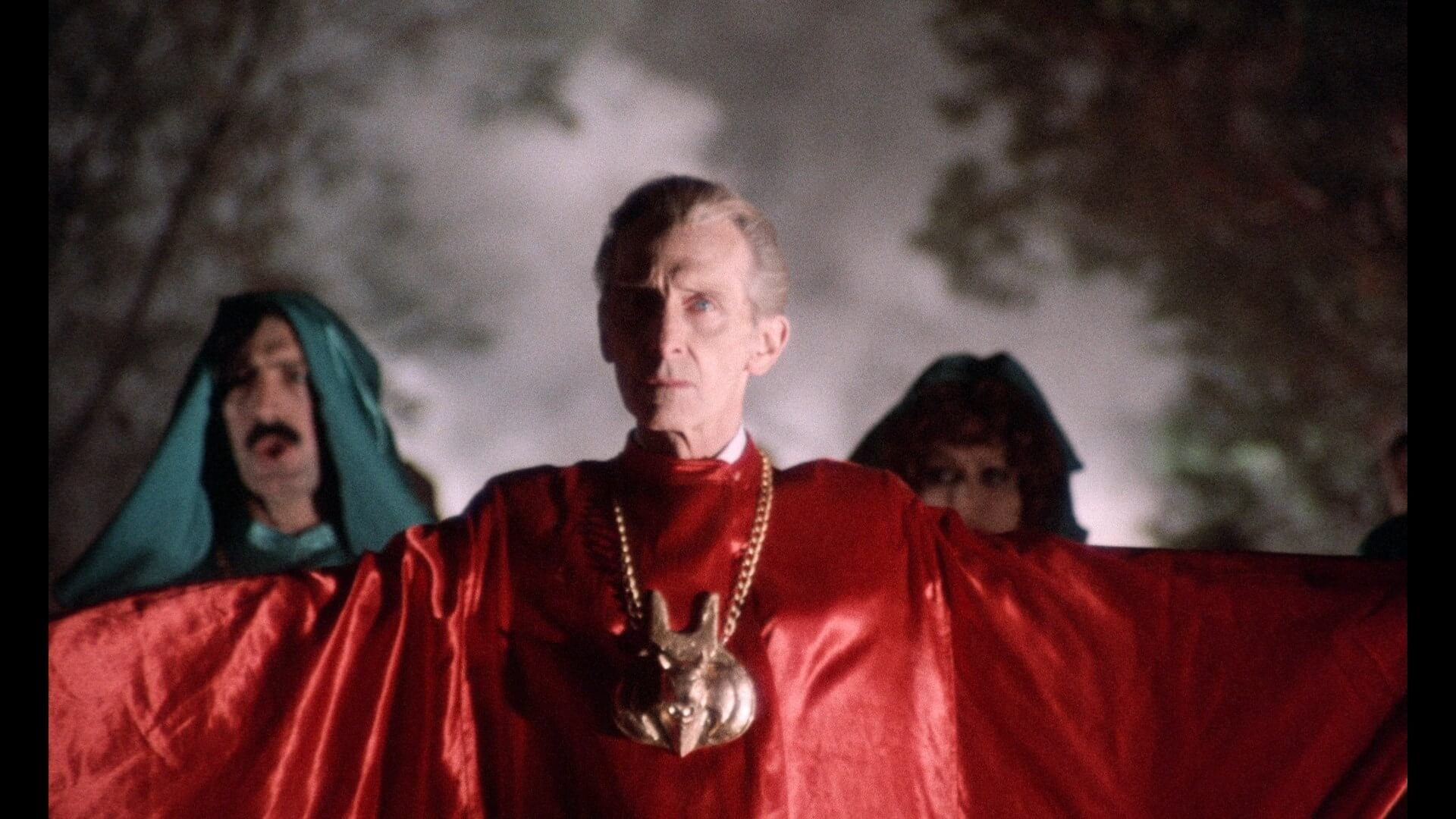
In a remote Greek village (the stunning location sequences look beautiful on BluRay) tourists are abducted and sacrificed by a satanic cult in thrall to the ‘ferocious’ Minotaur (hence the film’s US title Land of the Minotaur). Cushing – he appears briefly in the opening sequence until disappearing until around the 40-minute mark – plays the suave Baron Corofax, the sinister leader of the cult. Pleasence plays Father Roche who, with the help of former student Milo Kaye (Kostas Karagiorgis) and Laurie Gordon (Luan Peters), girlfriend of one of the missing tourists investigates the village’s mysterious occult underbelly.
The Devil’s Men is dry and unaffecting stuff. The film toys feebly with themes far better tackled in 1973’s The Wicker Man and the curious mix of seasoned British genre icons and badly-dubbed Greek actors gives it an uneven and schizophrenic tone that undercuts its attempts to deliver something dark and sinister. Arthur Rowe’s half-hearted script doesn‘t help; there’s no real attempt to explore exactly why this cult has managed to thrive and what exactly the ‘Minotaur’ is – beyond a rather feeble statue that snorts steam occasionally. The Devil’s Men does exploit the heightened expectations of the 1970s horror audience though thanks to a bit of gore and a few largely-gratuitous displays of naked female flesh. But the film is ultimately a tedious, pedestrian affair with no real drama or sense of urgency; it’s a film that’s content to mundanely go through the motions and, fatally for a film that purports to be a horror movie, it’s not even remotely scary even when viewed through a sympathetic 1970s prism. Cushing fans will enjoy seeing their hero in this obscure rarity and there’s some brief diversion offered by Brian Eno’s genre-inappropriate electronic score, but nothing here will live long in the memory because the film has nothing new or unusual to offer except things we’ve seen dozens of time before in far more accomplished films. The Devil’s Men looks good but that’s pretty much all it has going for it. Comprehensive special features include the original longer cut and the 86 minute US cut, critics’ commentary, a rare 1973 John Player Lecture audio interview with Cushing, producer interview and souvenir booklet. It’s a devil of a package.