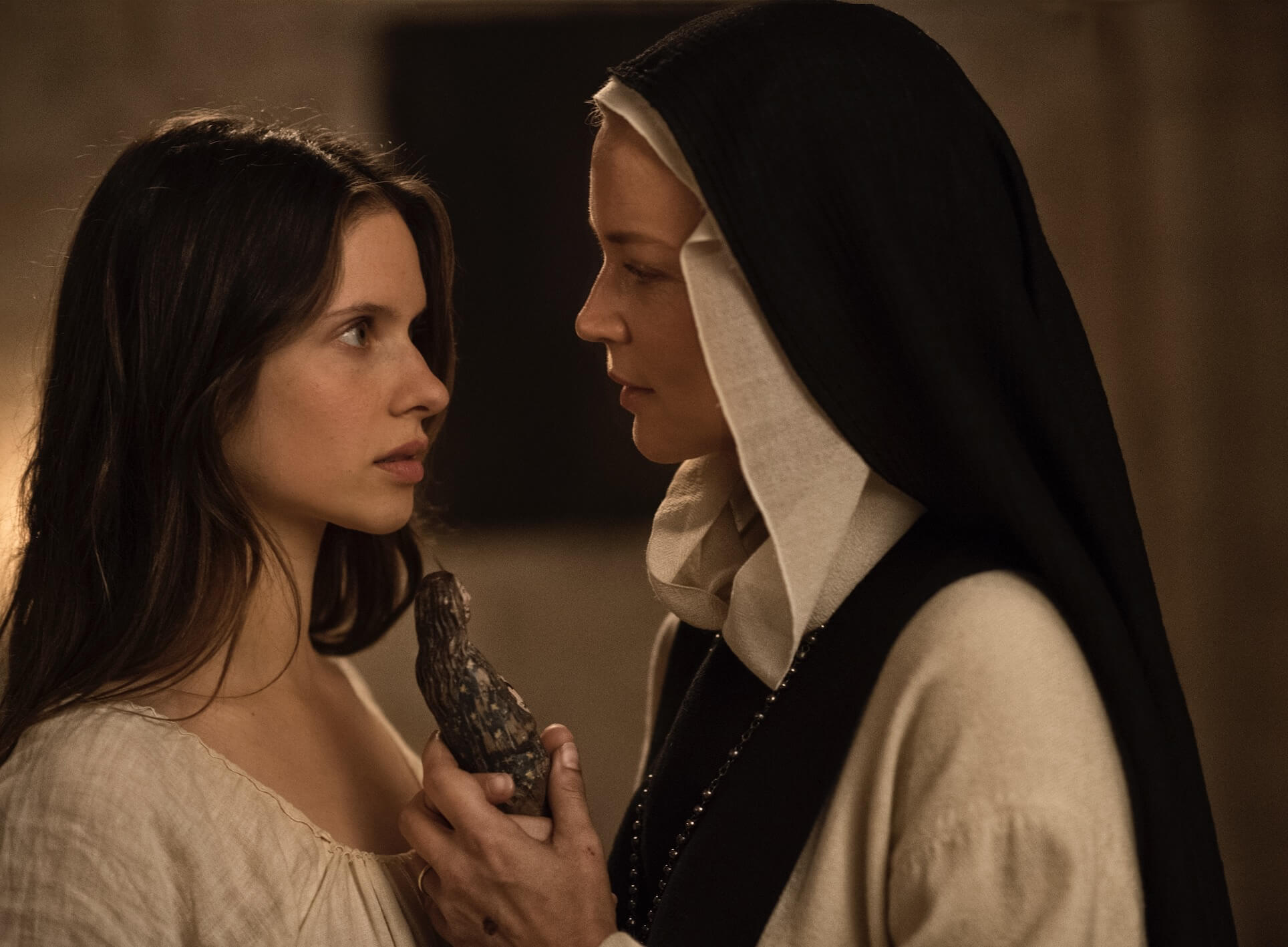
For his latest film, Benedetta, Paul Verhoeven has turned his attentions to Catholic nuns in 17th-century Reformation Italy, delving into the political machinations, subverting the imagery, and challenging the viewer throughout. Much like in the masterful Elle, Verhoeven presents a strong, flawed woman as his primary focus, but here, the provocateur’s carnal instincts threaten to confuse the greater themes.
Based on a true story – although one suspects the Virgin Mary sex toy is an addition – Benedetta tells the tale of Benedetta Carlini, a real nun in Pescia, Northern Italy. Devout and headstrong, it is reported she experienced holy visions and received the stigmata, rising to the position of the Abbess of the Convent of the Mother of God. Amid accusations of a sexual relationship with another sister, she was stripped of her rank and imprisoned. Verhoeven focuses on the middle period of her life, expanding the visions into something almost comedic, and revelling in eroticism.
The performances are exceptional, with Virginie Efira engagingly unpredictable in the lead role, wildly fluctuating from sympathetic victim to possessed aggressor. Charlotte Rampling stalks the abbey almost wraith-like as Sister Felicita, harbouring her true allegiances, and it’s fitting she dominates the film’s most striking moment.
But Verhoeven’s intentions remain somewhat confused and out of reach.
Is he commenting on gender in medieval religion, and its predisposition for violence and abuse? Is this simply about sexually repressed nuns? There are a lot of ideas thrown at the screen, and while not everything works, Benedetta is a film that prompts debate and discussion, and that seems to be what Verhoeven really strives for.
Benadetta is in cinemas on April 15th.