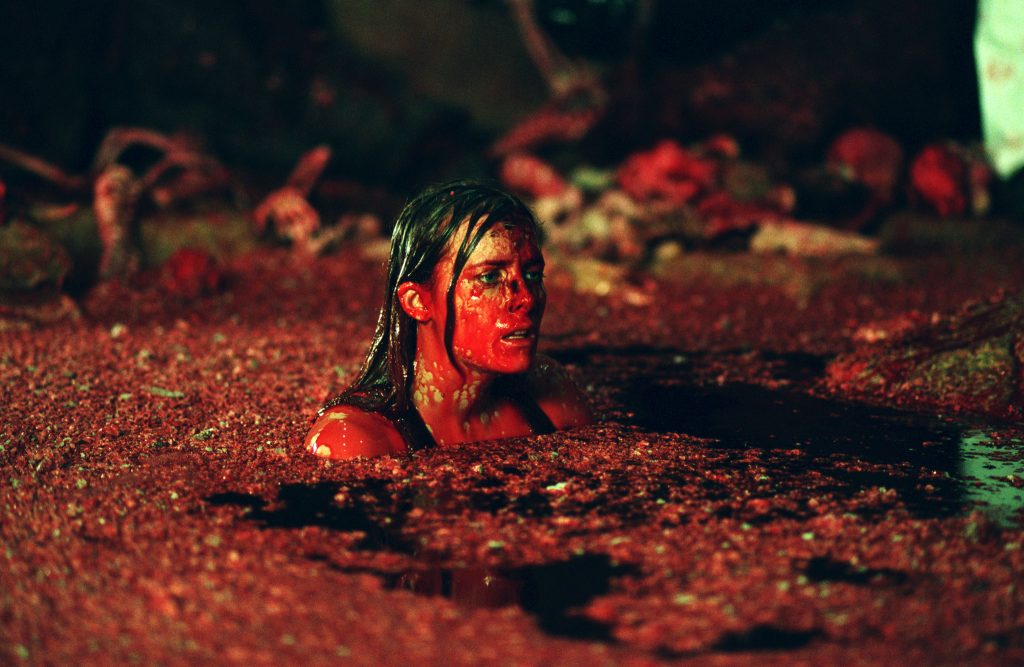
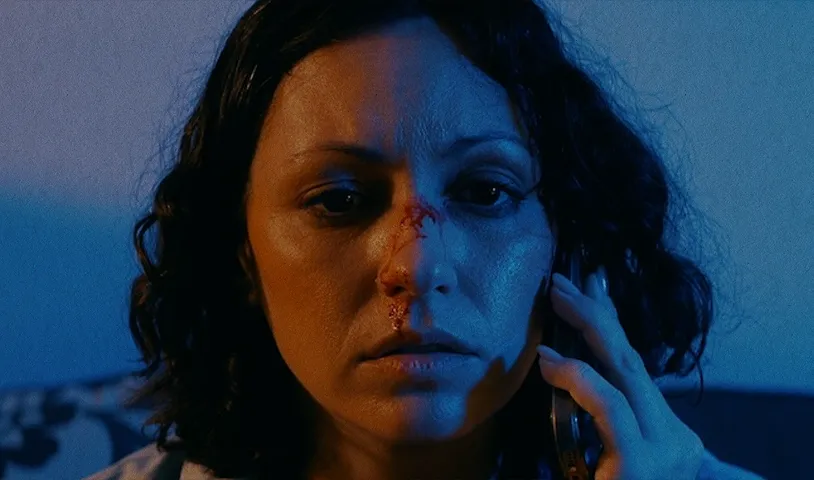
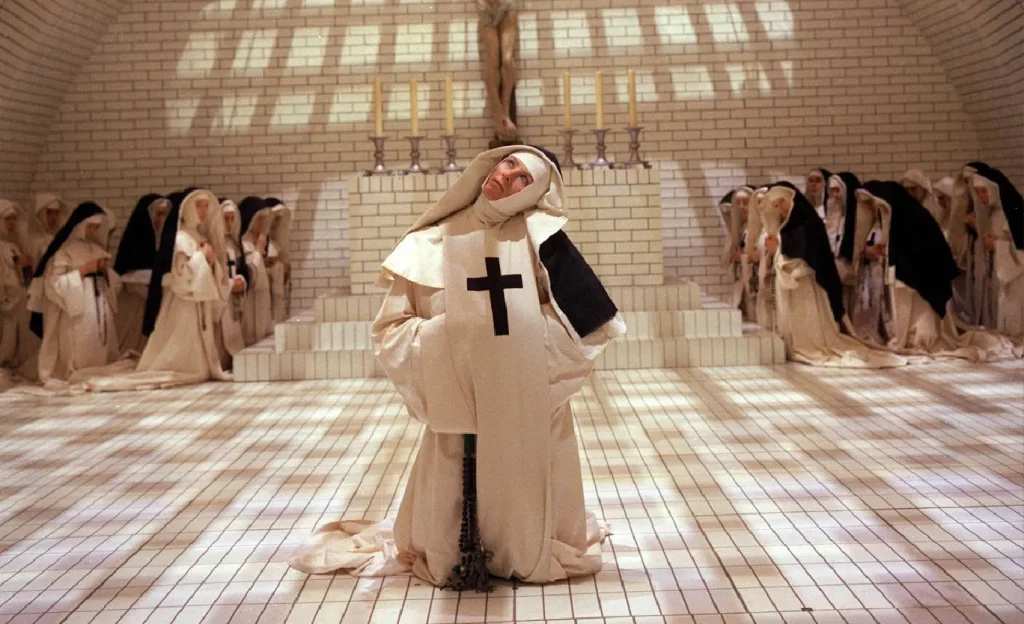
Set in a world populated by women only, After Blue – the place and the film – is mesmerising, transgressive, bathed in saturated colours, and will no doubt be something very few people will visit. This is a shame as it’s an engrossing, surreal fantasy that evokes memories of Barbarella (lo-fi weapons and skimpy, if grubby, costumes are de rigueur) and no doubt would have packed out the Scala Cinema in London should that place still exist.
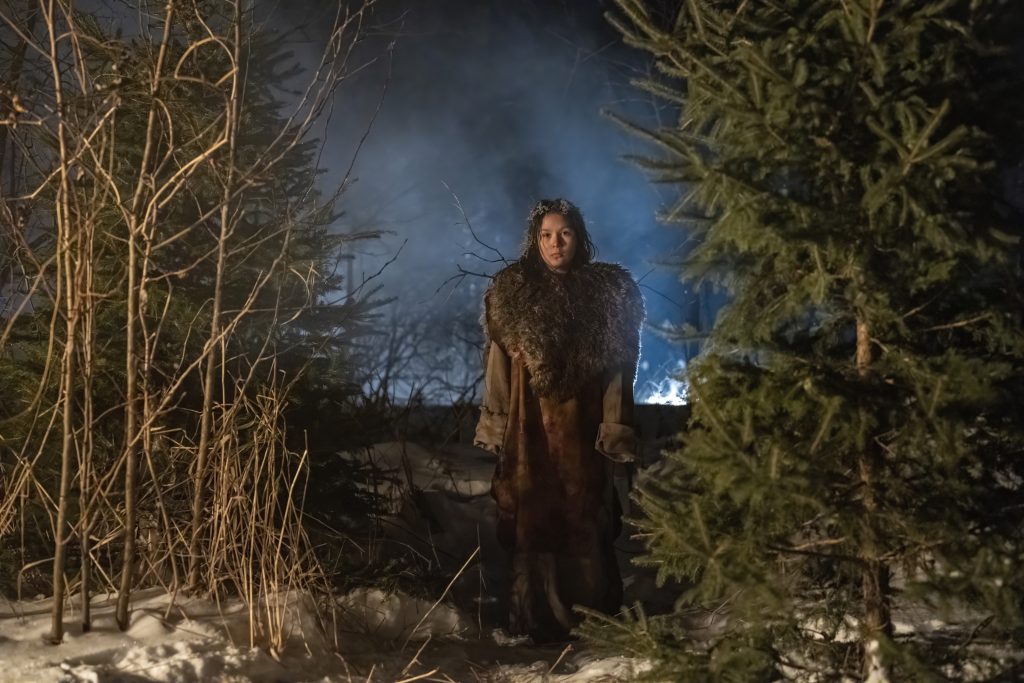
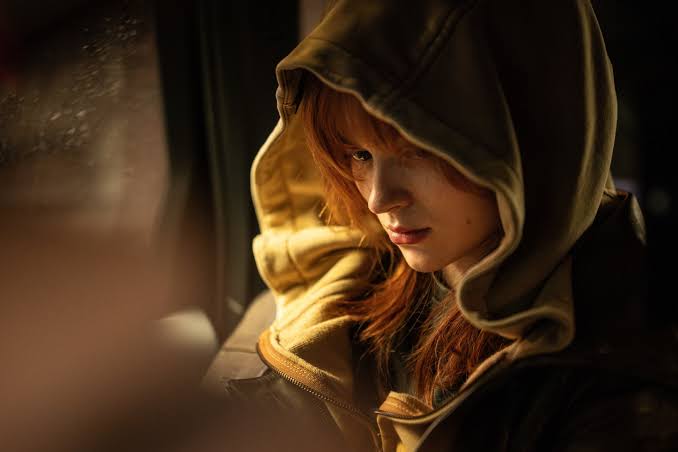
The story begins with Roxy (Paula-Luna Breitenfelder), bullied by her peers, digging a woman (Agata Buzek) out from the sand in which she’s been buried up to her neck. Introducing herself as (don’t laugh) Kate Bush, she is a tall, imposing presence with one overly-hairy arm and an extra eye on her more intimate area. As a reward for releasing her, she kills her three tormentors. The locals are not happy about the witch Kate Bush being set free, however, and task Roxy and her mother (Elina Löwensohn) to track her down.
After Blue feels like something that Jean Rollin would have come up with if he had directed a sci-fi film. It’s permeated with erotic and sensuous imagery, while never being exploitative. Despite the otherworldly setting, it could easily be a retelling of some Eastern European folk tale (think Russian classic Viy). Writer/director Bertrand Mandico fills the screen with knowing references to real-world people (like the aforementioned pop goddess, fashion icons form the names of weapons) and his world could have come from the same limited resources department as ‘70s Doctor Who (coincidentally, the only male character has Ood-like tentacles but lower down).
While Mandico’s film is overlong at just over two hours, its ethereal visuals and ambiguous nature will make you want to come back for a second viewing in the hope of unravelling some of the more enigmatic portions of the story. Like with the work of Alejandro Jodorowsky, there’s plenty to unpick.
After Blue (Dirty Paradise) is in cinemas now and is available on digital from November 7th.