by Hayden Mears
A whodunit’s success hinges – at least partly – on how effectively it can create and contain atmosphere. A Haunting in Venice, Kenneth Branagh’s latest adaptation of Agatha Christie’s Hercule Poirot novels, is the filmmaker’s strongest stab at this material, mostly thanks to its emphasis on mood and atmosphere.
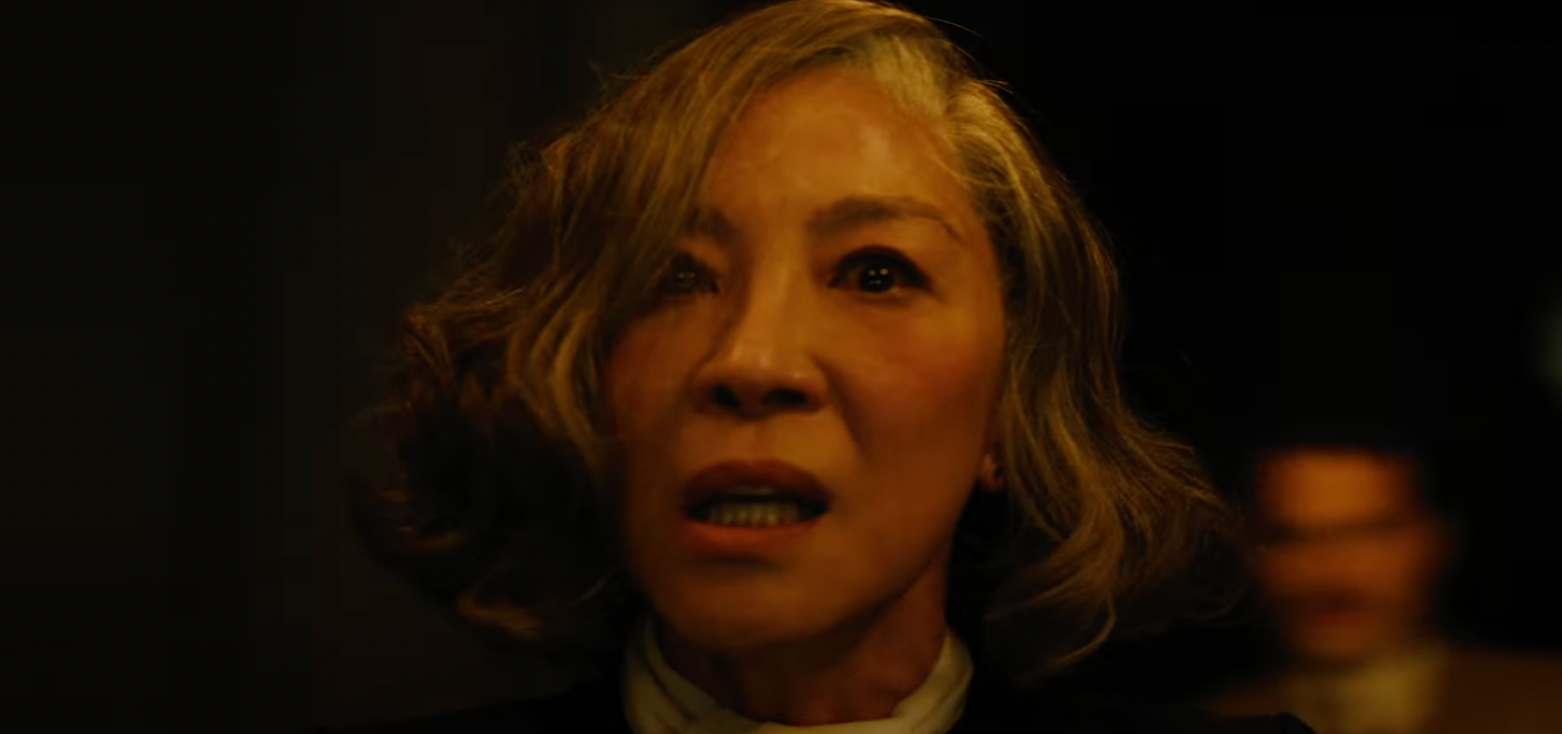
The plot shakes out something like this: Famed detective Hercule Poirot (again played by the multi-tasking Branagh) has retired. An old friend, self-important mystery writer Ariadne Oliver (a profoundly miscast Tina Fey), pulls him to Venice to attend a séance conducted by the medium Joyce Reynolds (Michelle Yeoh). Oliver wants to see if Reynolds can stump Poirot by proving the existence of the supernatural. The grieving mother who arranged the séance, Rowena Drake (Kelly Reilly), calls on Reynolds to determine if her recently deceased daughter was a victim of a centuries-old curse called the Children’s Vendetta. Poirot, a staunch advocate for more…tangible problem-solving tools, is sceptical. Cue 100 (ish) minutes of mind games and red herrings!
As with Murder on the Orient Express and Death on the Nile, the set-up is far more interesting than the actual mystery, which never feels as potent or surprising as it should be. Branagh and screenwriter Michael Green smartly shy away from explicit confirmation of the supernatural. Poirot isn’t here to liaise with spirits, and Branagh doesn’t want to convince viewers that ghosts of murdered children are behind the tragic death of the owner’s daughter. This is an old-school mystery in a horror movie’s skin, and Branagh is at his best when he toys with viewers’ expectations. Green’s script doesn’t fully commit itself to either camp; instead, it presents contradictory evidence to sow dissonance. Branagh spends most of the movie showing how this dissonance weighs upon Poirot’s psyche.
Like Christie, Branagh seems to derive great joy from pitting logic, reason, and process against superstition and emotion. This time, though, Poirot isn’t just tackling a seemingly unsolvable case. He’s contending with history and tradition, questioning ideas, beliefs, and stories – such as the Children’s Vendetta – that have spent centuries running rampant in the minds and hearts of locals.
Branagh again does a bang-up job selling Poirot as a likeable, brilliant detective whose fame weighs on him. The supporting cast is solidly serviceable, with the exception of Fey. She’s never able to shed her snark, even when the story demands more genuine reactions and interactions. She’s always a quip or two away from feeling completely out of place, and her performance never quite sells Oliver’s ever-present smugness as a worthwhile aspect of the story. It just ends up being annoying.
A Haunting in Venice doesn’t break any new ground, but it isn’t trying to. It’s a perfectly acceptable mystery with a mostly effective cast and a handful of creative jump scares. It won’t endure or endear itself the way its source material has, but it does make for a reasonably fun theatre experience.

A HAUNTING IN VENICE is in cinemas from September 14th