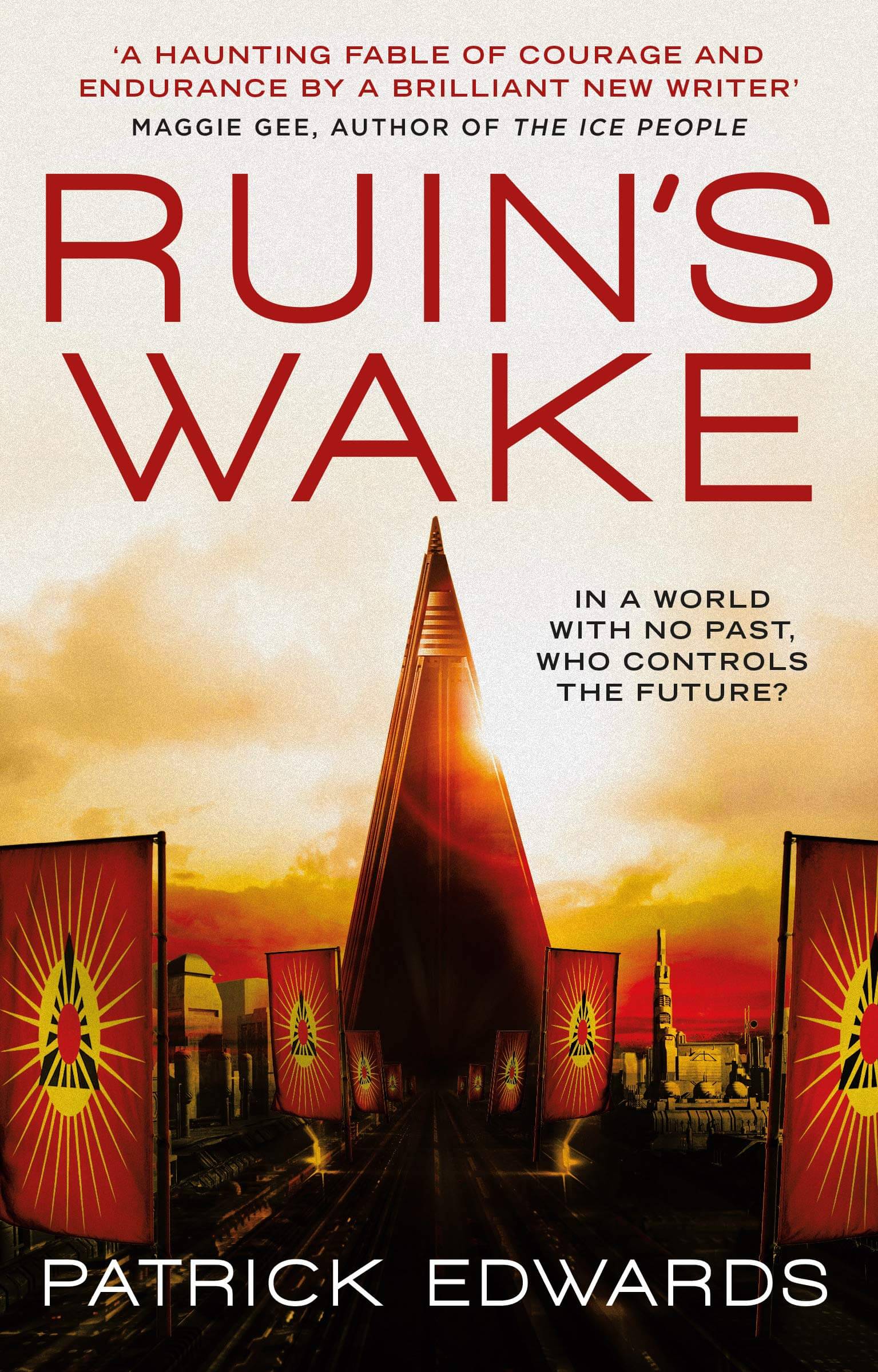
RUIN’S WAKE / AUTHOR: PATRICK EDWARDS / PUBLISHER: TITAN BOOKS / RELEASE DATE: OUT NOW
In a far-future Earth in which centuries of human knowledge have been lost, society has fallen under the thrall of a cruel and self-serving tyranny. Without access to the evidence, history has been rewritten by the ruling elite, and a ‘cult of personality’ constructed around the supreme demi-God, the Seeker. Society is stratified, militarised and oppressive, and while the regime tolerates no dissent there appears to be little resistance to the dictatorship. Instead, people try to find ways to survive that won’t attract the prying eyes of the state.
In his debut novel, Patrick Edwards quickly establishes the premise of Ruin’s Wake before setting in motion the parallel storylines of three protagonists: the frustrated military wife, suffocating in a life of crushing subservience; the hermit with a past, forced to return to the world by the pull of long-frayed family ties; and the obsessive archaeologist, whose research project might just unearth a connection to the hidden vaults of human memory, and so threaten the regime’s edifice of lies.
There are many familiar themes in Edwards’ imagined dystopia – most immediately the notion that a ruthless ruling elite might establish an unchallengeable authority, based on the construction of “truth” and the veneration of an apparently infallible leader. Neither is he the first genre author to explore the repercussions of a loss of connection with humanity’s own history.
This sense of familiarity notwithstanding, two things make Ruin’s Wake stand out. The first is the richness with which Edwards paints the picture of his imagined world. The prose is infused with an evocative sense of place, both of the isolated hinterlands of this world and the bustling conurbations that draw in the multitudes of its less privileged subjects. The second is the sheer quality of the characterisation of the story’s main protagonists. These are vividly drawn, relatable people, pushing back against the crippling limitations of the lives imposed upon them by the immutable social order of the world.
It gives little away to reveal that the three separate stories begin to intersect, as the journeys of different players cross paths and hidden connections and correlations are revealed. As the first stirrings of a possible rebellion demand that everyone choose which side of the divide they will stand on, activists clash over how the truth of human history might once again be made the common property of all.
One of the clearest ways in which the impact of a novel makes itself felt is in the extent to which the reader comes to care about the fate of the story’s characters. As the showdown in the book’s finale comes into focus, it’s once again Edwards’ ability to craft recognisable human beings struggling in conditions of adversity that makes the perils of the endgame feel that much more compelling.