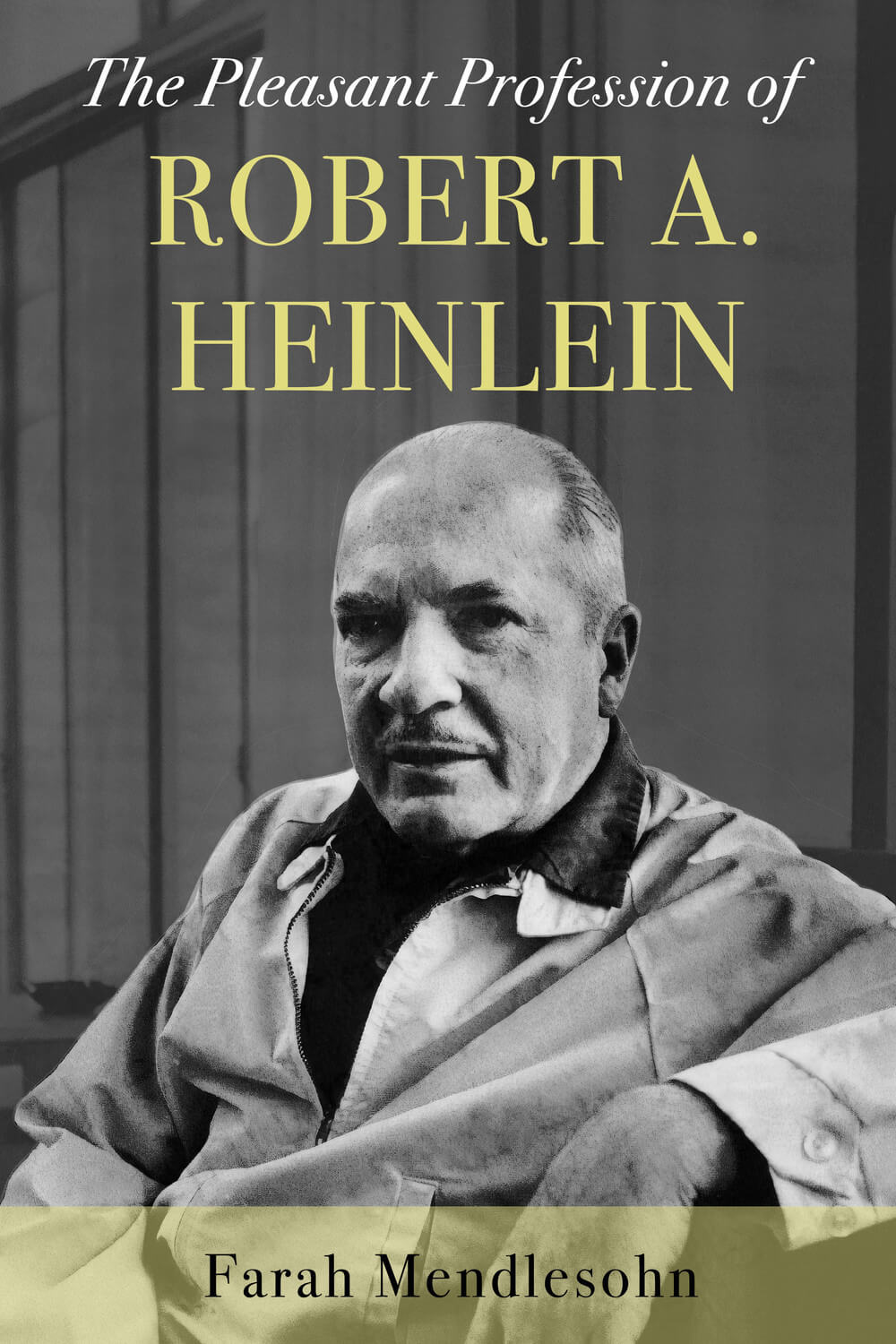
Farah Mendlesohn does a fantastic job of looking at the major themes of Heinlein’s career that ran from 1939 to 1987. Her introductory chapter shows how after being pensioned out of the US navy Heinlein became involved in Californian politics and started writing short stories that helped contribute to and lay the foundations for the Golden Age of Astounding magazine and science fiction in general.
After providing a short biography, Farah turns her attention to the narrative arc in his short stories, his early juvenile novels and his adult novels. She notes that although he rarely wrote a series or sequels he did return to different themes and characters throughout his work. These run from his predilection for featuring redheads to the themes of distant fathers, comradeship, slavery and survivalism.
Heinlein not only brought the wonders of science to our attention but showed their impact on his characters and their wider society. Farah observes that he was an experimental writer who used different techniques in a range of genres. She identifies his use of a narrative ‘camera’ that plunges us into the core of the story. This cinematic approach was no doubt influenced by his second wife, Leslyn MacDonald who was a script editor who encouraged him with his first attempts at making a career as a writer. Secondly he often employs ‘the sidekick’ in his stories (the technique used by Arthur Conan Doyle; Watson being the sidekick narrator in the Sherlock Holmes stories) She also examines his ‘engineering’ stories that use plain sentences to focus on technological problems and their solutions and on the careful construction of his time travel tales.
Rather than being just a hard sf writer, Farah shows he was as much interested in how people deal with the future and a sentimental streak infuses all his writing and according to her ‘…this is a key element that Heinlein gifted to science fiction.’
The following chapters move from his use of different modes of rhetoric to look at how his works deal with how society is structured and shaped by civic revolution, racism, personal and sexual integrity and gender. It is all topped off with an epilogue highlighting the role of cats in his writings.
Over his lifetime he did move from supporting the Democrats to the Republicans but Farah shows how he was often in advance of prevailing views, and he had a core set of values (sexual integrity, the value of the family, self-education and civic duty) that underscored his political thinking.
The appendices include a handy chronological chart of his publications, listings of his fiction and non-fiction titles and a bibliography.
Farah’s thematic approach to Heinlein’s body of work unblinkingly exposes the greatness of his stories as well as their faults and low points. All-in-all it is an insightful addition to the academic study and appreciation of Heinlein’s body of work.
THE PLEASANT PROFESSION OF ROBERT A. HEINLEIN / AUTHOR: FARAH MENDLESOHN / PUBLISHER: UNBOUND / RELEASE DATE: OUT NOW