by Paul Mount
Even if he had only directed Night of the Living Dead, George A. Romero would have secured a deserved place at the top table of any gathering of filmmakers pivotal in the development of the horror genre. But there’s more to Romero’s oeuvre than his infamous tale of hideous, flesh-hungry ghouls rising up against Mankind (and its numerous sequels). Romero himself often stated that 1977’s underrated and underappreciated Martin was his favourite of all his films. It’s not hard to see why. Romero’s take on vampire lore is gritty, a bit dirty and, ultimately, a reminder that sometimes monsters live in plain sight, aren’t necessarily all that different from us and, indeed, that any one of us could be a monster in the right (or wrong) circumstances.
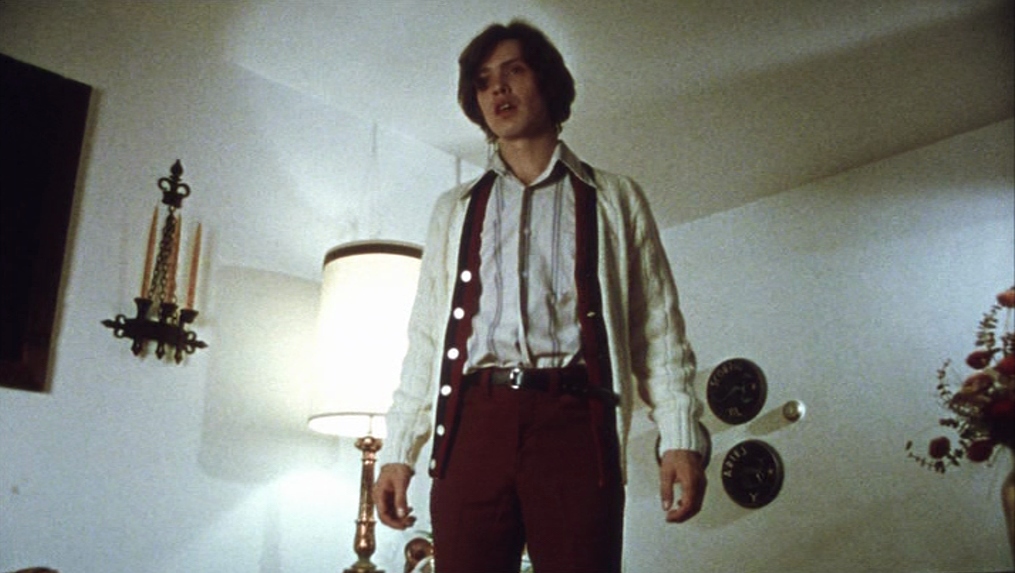
Newcomer John Amplas (in a role that should have been star-making but wasn’t) is the troubled, socially-awkward Martin Mathias. We see him slaughter and drink the blood of a female fellow passenger on a train en route to Braddock, Pennsylvania. So we’re not too surprised when he arrives at the home of his uncle Tateh Cuda (Lincoln Maaazel), that he immediately identifies him as ‘nosferatu’ and imposes strict conditions on him living under the same roof. But is Martin a vampire or a deeply troubled young man with some very strange and disturbing psychopathic tendencies, and can he find redemption and peace in a world he doesn’t really understand?
Filmed almost guerrilla-style on a tiny budget, Martin wears its independent spirit proudly on its sleeve, and it’s an oddly-detached, slightly surreal and almost documentary-style experience, its characters cold and careworn, living out their tired lives in a run-down, unappealing environment. Martin himself is at once an innocent-about-town and yet a cold-hearted killer, a character who evokes our sympathy as much as our revulsion. Martin looks as good as it can on this new Second Sight release that offers a new 4K restoration approved by the film’s Director of Photography. The film is also supported by some generous special features, the best of which is Taste the Blood of Martin. This new feature-length documentary takes a deep dive into the history of the film and its production and reunites the cast and crew at some barely-changed locations, an interview with the film’s composer, a short film, a string of commentaries and much more. A welcome opportunity to discover or rediscover a haunting, complex, forgotten minor horror classic.