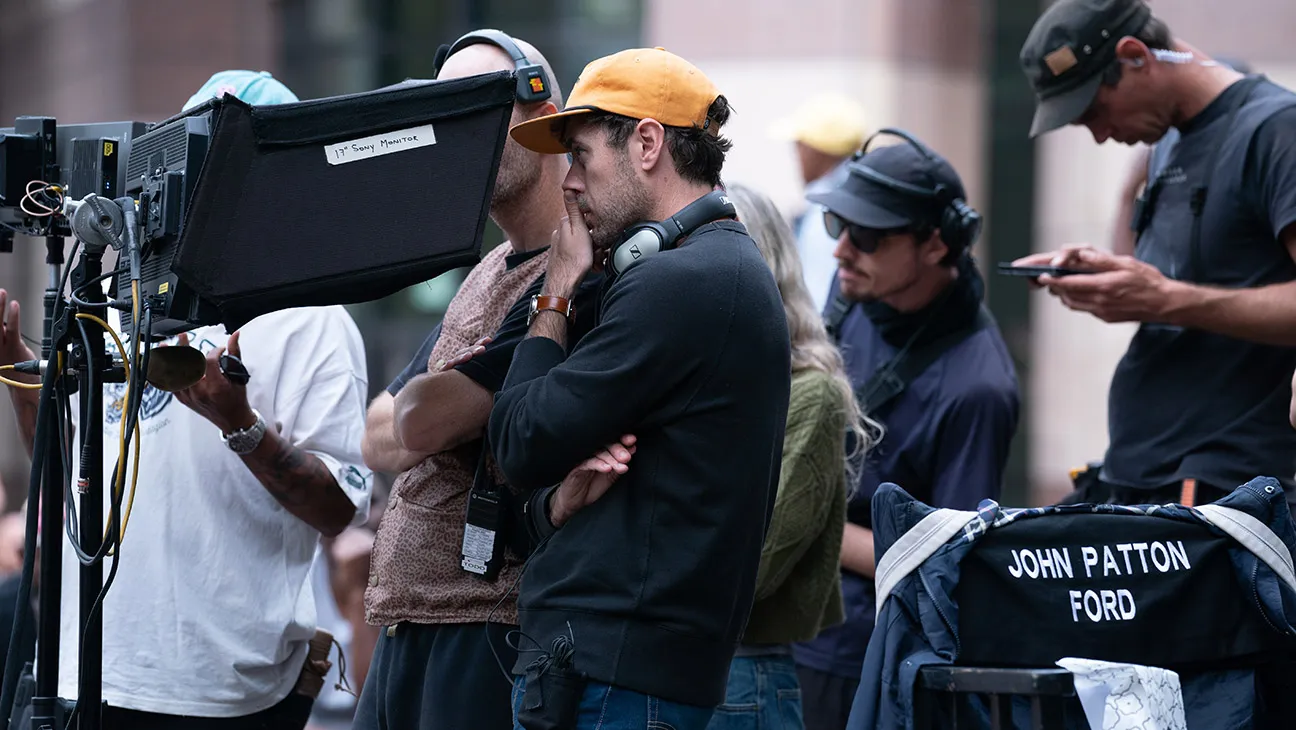
Writer-director John Patton Ford first made his mark with the tense, character-driven thriller Emily the Criminal (2022), a film that explored economic precarity and moral compromise in contemporary America. His latest feature, How to Make a Killing, expands those themes into darker, more satirical territory, blending black comedy, crime thriller elements and class commentary into a story about ambition, resentment and the pursuit of status.
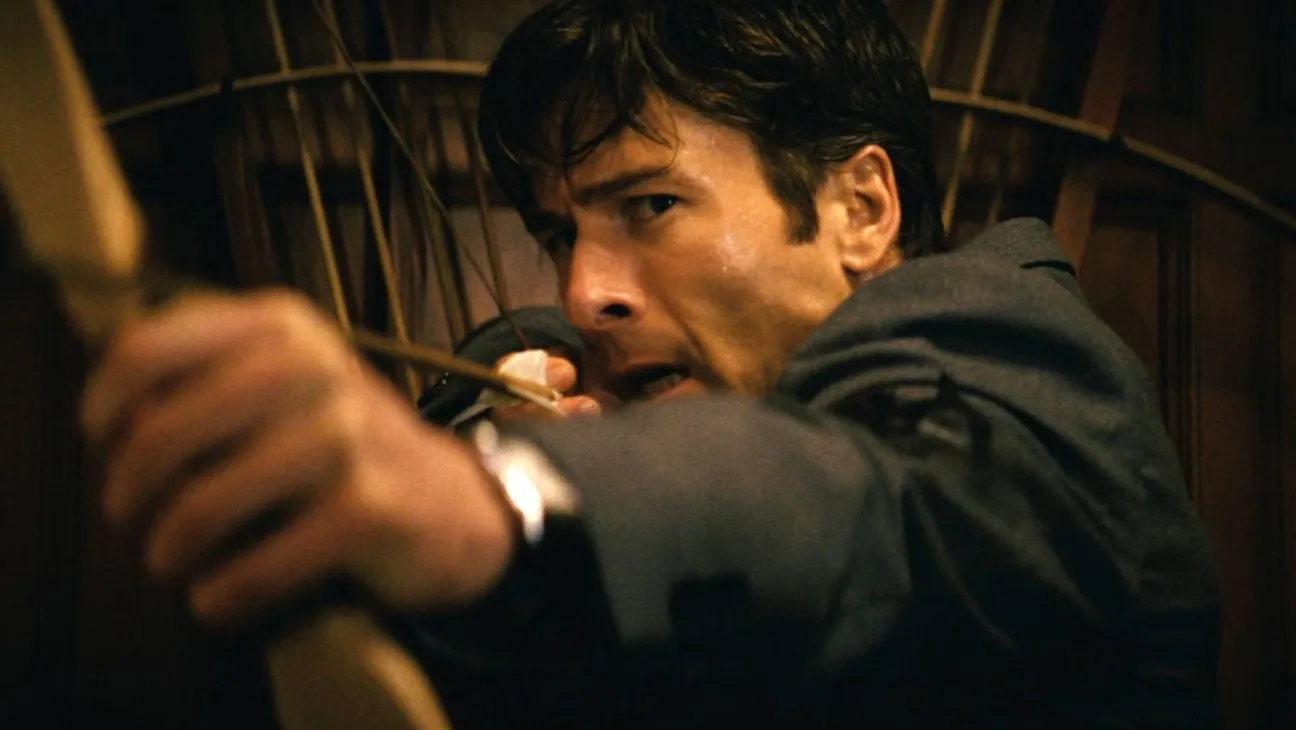
Starring Glen Powell alongside Margaret Qualley, Jessica Henwick and Ed Harris, the film follows Becket Redfellow, a working-class outsider disowned by his obscenely wealthy family before he was even born. When he discovers that a vast family fortune may technically still belong to him, Becket decides to remove the relatives standing between him and the inheritance, setting off a string of murders that are equal parts calculated and absurd.
Loosely inspired by the classic Kind Hearts and Coronets (1949), Ford’s film updates that aristocratic murder-comedy premise for a modern, American context shaped by widening wealth inequality and fascination with the ultra-rich.
How to Make a Killing continues Ford’s interest in characters navigating a ruthless economic hierarchy, and the compromises people make in pursuit of the lives they believe they deserve. In conversation with Starburst, Ford discusses the film’s long development journey, its inspirations, and why he wanted its murderous anti-hero to feel both sympathetic and troubling.
The screenplay originally appeared on the 2014 Black List under the title Rothschild, and you weren’t initially attached to direct it. How does it feel more than a decade later seeing it realised, and how has your perspective on the material changed?
John Patton Ford: The first draft was much sillier and a lot more bombastic. It was kind of crazy in places. As we developed the newer version, we had to bring it back down to earth. I also needed to make it a little more sophisticated and thoughtful, to update it and make it feel like something I could do with integrity.
Part of that was practical; the original script was just too big, and needed to be scaled back. There were huge, expensive set pieces that we would never realistically be able to shoot. So, we had to scale it down and make something that felt cohesive and achievable.
What was the most bombastic set piece that you couldn’t make happen?
John Patton Ford: In the early version, Beckett goes to Hong Kong and recruits people to come back to the U.S. to help him kill someone. At one point he even goes off and fights in the Iraq War. It had this huge, Forrest Gump-like, globe-trotting arc. We had to compact the story and make it more focused.
The film draws inspiration from the classic Ealing comedy Kind Hearts and Coronets. At what stage did you decide you wanted to reinterpret the concept rather than remake the film?
John Patton Ford: Right out the gate. I didn’t have any desire to remake Kind Hearts and Coronets. It’s a perfect movie and very much of its time. It’s so British, so specific to that era.
What interested me was the structure and the central concept. I wanted to use that as a jumping-off point for something contemporary and distinctly American, something that could speak in a slightly different cultural language.
You’ve said before that you didn’t want the film to fall into a simplistic “rich people are bad” narrative. Why did that feel too easy?
John Patton Ford: We’ve seen a lot of movies lately that indict the wealthy and allow the audience some wish-fulfilment in seeing rich people get what’s coming to them. And that can be fun.
But I wanted to take it a step further. There’s this contradiction where we resent the wealthy while also wanting to be them. Most of us are trying to make more money, fantasising about what we’d do with it, while hating the people who already have it.
I wanted to explore that tension and try to reconcile those ideas. How does someone who has killed people for money deal with a relationship where the other person doesn’t believe in wealth as the means to happiness?

Do you think resentment toward the rich is mainly driven by envy?
John Patton Ford: Historically, people have felt very resentful towards the upper classes and the rich. But I think now, it’s more than jealousy.
There’s a growing sense that the scale of wealth inequality itself is ethically wrong. In the U.S., you have 700 people who control half the wealth. They accumulate all this money into overseas account, on which they don’t even pay taxes, and never put that money back into the U.S. system. They’re literally syphoning off money, and it’s more money than anyone could conceivably spend.
So, there’s a real… hatred isn’t even the word. People ethically disagree that these people should even be allowed to exist. The resentment isn’t just envy anymore; it’s a moral argument about whether that level of wealth concentration should exist at all.
Beckett is sympathetic but far from heroic, given he’s very much out for himself. How do you see him: as a hero, a victim of circumstance, or something else?
John Patton Ford: I see him as a tragic hero. He’s convinced there’s this one thing he needs in order to be happy — wealth, success, security — and he pursues it relentlessly.
And really, it’s only after he’s killed that he begins to realise that perhaps he could have been content without crossing those moral lines. But of course, by that point, it’s too late to go back. He has to deal with the repercussions of his decisions.
I see him as a hero, yes, but a tragic one who learns his lesson too late.
Have audiences interpreted that tragedy in different ways?
John Patton Ford: Definitely. Some people see the ending as tragic, while others see it as a kind of victory. There’s an irony there that doesn’t always register for everyone.
As you’ve mentioned, many recent films have leaned into “eat the rich” satire. How did you want your film’s critique to stand apart?
John Patton Ford: I wanted the central character to be someone the audience could also indict. Beckett is just as complicit in the system as the people he’s targeting, even if he doesn’t see himself that way in the very beginning. That’s more interesting to me than a film where the central character is totally redeemable, and the rich are all bad, and they get what’s coming to them.
The problem with wealth inequality isn’t just that billionaires exist, it’s also that our whole culture is obsessed with wealth and success. We’re all participating in that system in some way. So in a way, we all need to be held accountable. You can only indict the rich so much when half the country votes for an administration that creates tax loopholes for corporations. When I pay taxes in California, all I’m doing is subsidising billionaires. I don’t get back any kind of benefits at all. What I’m saying is that I wanted the film to acknowledge that broader complicity through its central character.
And while Beckett is undoubtedly the film’s central character, like you said, Jessica Henwick’s character Ruth often feels like the emotional and moral centre. How did you design their dynamic?
John Patton Ford: Beckett is chasing what he believes success looks like — money, status, achievement — then Ruth represents the opposite. She’s someone who has gradually realised she’s happier wanting less and has learned not to feel ashamed of that.
In a culture that constantly pushes ambition and accomplishment, simply saying “I’m content with a modest life” and “my small dreams are perfectly fine” can be a rebellious act. It’s a subversive, brave thing to do.
Her worldview challenges Beckett emotionally and philosophically. At first the film seems like it’s about the logistics of killing people, but eventually the real conflict becomes whether he can keep doing this after meeting someone whose entire worldview completely upends his own? That’s the bigger challenge.
Some critics have criticised the satire as lacking bite and consider the film more of a black comedy. Was that lean into tonal ambiguity intentional?
John Patton Ford: I think the film ultimately becomes more of a character study than anything else. People might expect a very biting satire because that’s what a lot of recent films in this space have done.
But this story is really about someone coming of age, in a strange way, within this high-concept situation. It moves across different tones and genres, which might surprise some audiences, but hopefully in a good way.
How To Make A Killing releases in cinemas from March 11th. Watch the trailer here.