by Ed Fortune
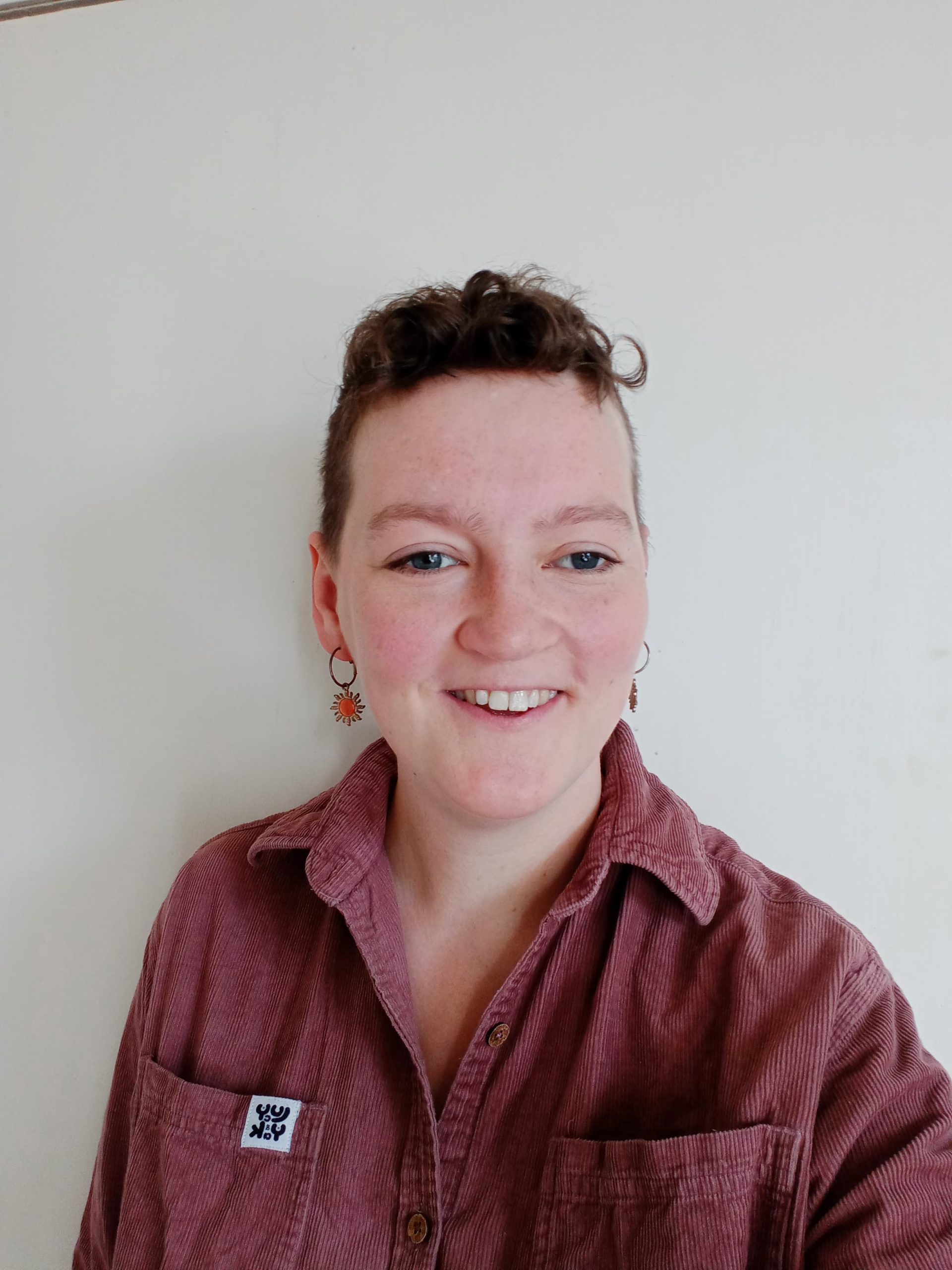
Jo Reid is a Glasgow-based filmmaker, curator, games designer and writer. As film-maker, they primarily work with archival materials to explore ideas of memory, the past, and how we see our own histories. Their most recent film, The Freedom Machine, explored the history of women cyclists through archival material from across the UK.
Their new project is Border Risings, a collaborative history-building game played by drawing evolving town maps on scraps of paper, which is printed on an old-school fold-out map and is currently on Kickstarter. We caught up with Jo to find out more.
STARBURST: How would you describe Border Riding to those new to tabletop games?
Jo Reid: Haha, I’ve had a lot of practice with this! My family are not tabletop people and do not know about the scene beyond Dungeons & Dragons – and that’s pushing it! When I’ve spoken with people from my hometown about Border Ridings, I generally use D&D as a jumping-off point and then explain that it’s nothing like that!
How do you play the game?
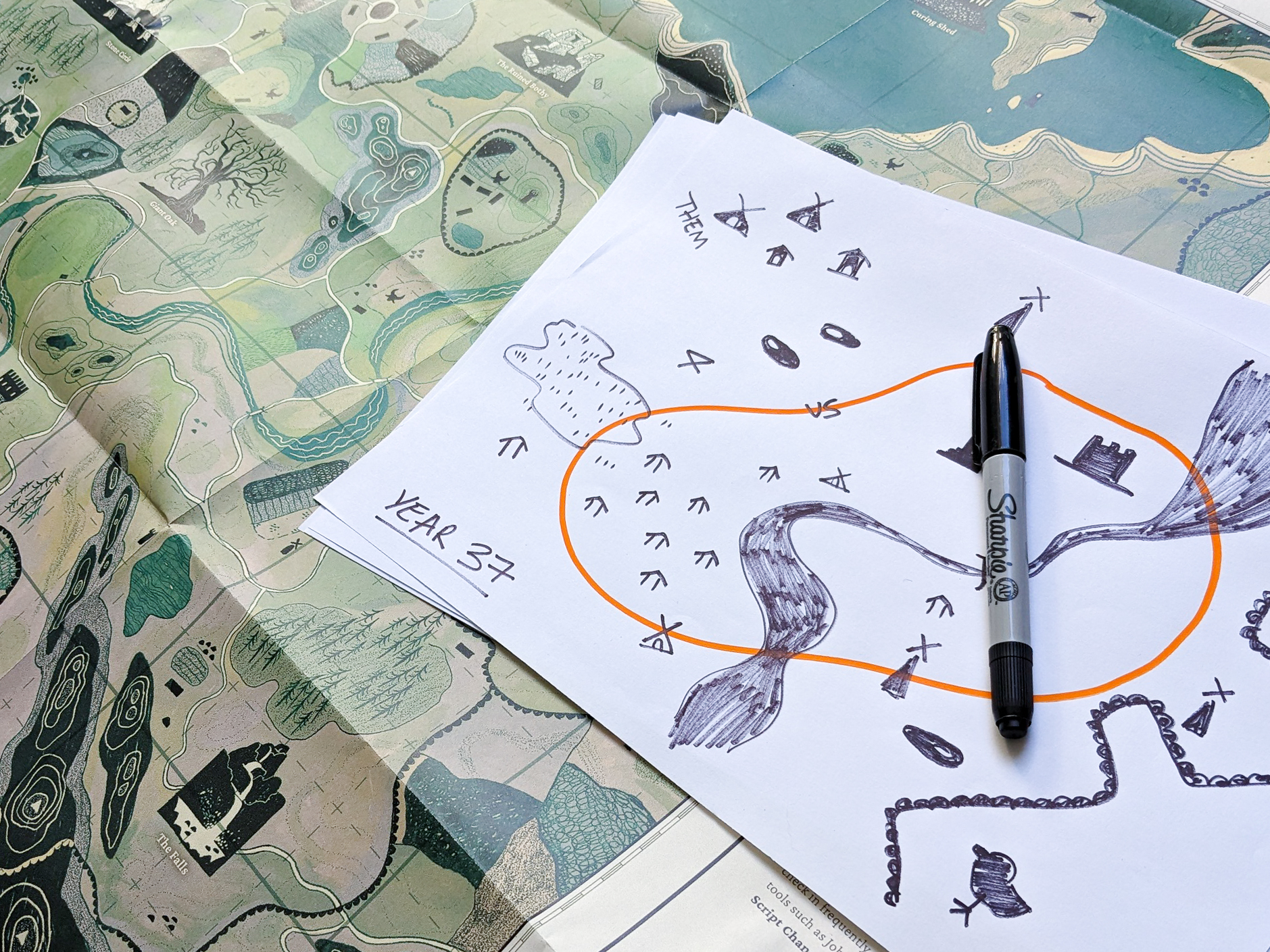
Border Ridings is a map drawing game where the players create a new map each round, capturing a year in a community’s life. As each new map changes from the previous one, your community changes too. The community at the end of the game will be very different from the community at the beginning of the game. The stories they tell, the borders they draw, and the heroes they celebrate are a reflection of their values. Border Ridings uses the act of drawing maps as a mechanism to tell the story of a small community discovering itself through its yearly festival. To play Border Ridings, you don’t have to be good at drawing! All you need is to bring your imagination, a few hours, and some good friends and together, you can create a whole new world on a few sheets of paper.
It feels like an incredibly personal game. Where did the idea for it come from?
Growing up in a small village, where these festivals and rituals are regular and normal, I always found it hard to explain the Whipman, my local Common Ridings festival, to friends from the city. I have always been quite dismissive of these festivals, playing up the weirdness and traditional aspects of my village for an easy joke. In 2020, when all these festivals had to stop because of Covid-19, I began to reflect on them, their place in my childhood, and how I feel about it as an adult. Moving away always changes your relationship with your hometown and allows me to see it with a lot more clarity.
These traditions and rituals can seem so strange and random, and yet diving into their history is really fascinating, particularly as you track the different influences piling up and mashing together to create these events that are a modern-day interoperation of a Victorian interpretation of a mediaeval procession. We look at history through so many different lenses and that’s something I wanted to explore through play, particularly as these events are a sort of community role-playing themselves!
Why did you choose this style of game?
Since these festivals are often built around marking borders, a map drawing game seemed like a logical way to adapt it to a game. I love encouraging players to physically draw a border as their communities do the same; the synchronicity really appealed to me. I am also a visual person, and I like games that produce something to be shared at the end. Seeing maps that are nonsense to anyone who wasn’t at the game table is really great and reflects how it must feel as an outsider to witness folk traditions you know nothing about – mystifying, bizarre, and a little funny.
Do you have other projects planned?
Nothing too major planned yet, but I do have some ideas on the backburner that I think I’m ready to excavate. One is a two-player card game based around the relationship between a patron and an artist, initially inspired by mediaeval Welsh bardic poetry but extrapolated to apply to subscribers and YouTubers, politicians and journalists. Really an exploration of power, legacy, images and who is really in control in an artist/patron relationship and how those power dynamics change.
Why are old maps so important?
I think looking at old maps can generate a lot of nostalgia, even if it was from before the time you lived there. It’s probably similar to why old photos of Glasgow are so popular on social media – it’s a record of the past, and it’s fun to see how things have and haven’t changed. With old maps, it requires a certain level of insider and local knowledge to recognise these changes within a familiar landscape – particularly when you can put it in the context of personal details. For example, there used to be a train line/forest/roman road/bog where my house is now! These old maps can therefore feel distant but extremely personal.
Of course, looking through old maps can be extremely important as a historical resource! You can discover a lot about a community through their maps. For example, placenames can give insight into the languages and communities that have historically lived there. What I hope to capture with Border Ridings is that even in modern-day maps, you can find traces of earlier communities through things like ruins of monuments, placenames, and buildings, even after the original meanings and people have long gone.
Does tradition matter?
Yes. Also no. Tradition can ground us; it can connect us to our past, our heritage. It can also block us from change and can be used to exclude others. It is extremely collective and deeply conservative. It matters because we hold so much value in it, and how we approach our traditions and which ones we choose to discard is massively revealing on how we view ourselves and what values we hold.
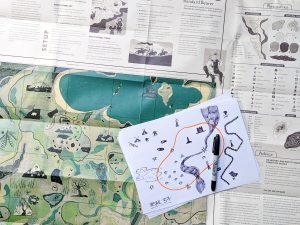
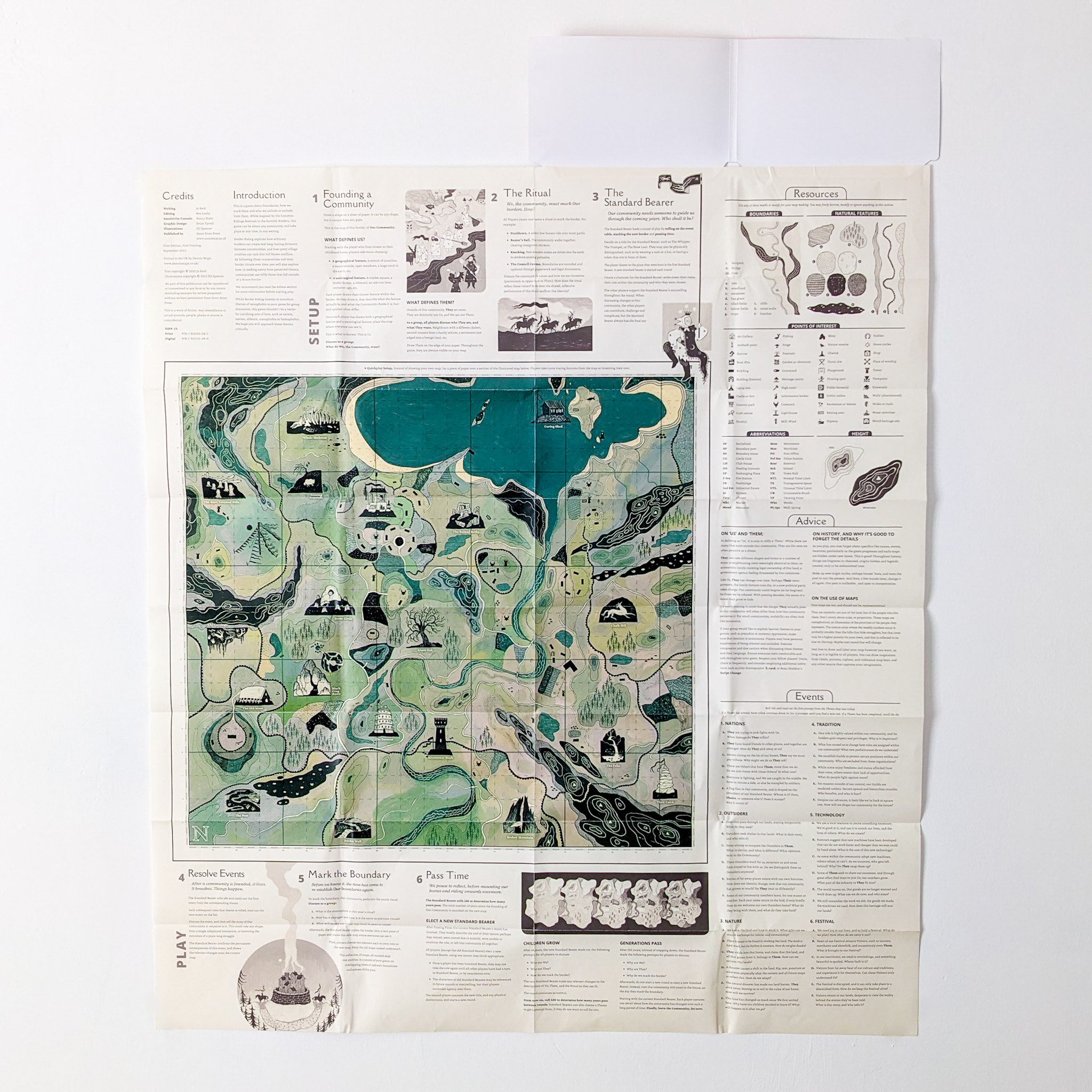
It looks spectacular. What inspired this design?
Thank you! I think so too. The design was primarily inspired by Ordnance Survey maps. In fact, it’s even printed by the same people that print OS maps. It’s super nostalgic to me. As a kid, when we went on holiday, I was the one who’d be tasked with deciphering the tiny icons and symbols for my dad, who was driving. I’d be wrestling with this fold-out map as big as me, careful not to rip or damage it.
I love the layout; that was all Brian, my publisher. They have been so wonderful from beginning to end in shaping Border Ridings, and he totally understood and enhanced my vision. The OS map was his idea, too – just the perfect touch. The illustrations by Eli Spencer are also excellent. We really wanted a feeling of adventure, history and magic, which she has captured perfectly. I absolutely cannot wait to display it on my wall.
Which creators inspire you?
One of my biggest inspirations is the podcast Friends at the Table, for both the way they have changed and developed my understanding of narrative, storytelling and using games to tell a story and the way they tirelessly champion the independent TTRPG scene. No one does it like them!
Other people that have and continue to inspire me include Takuma Okada, who created Stewpot Tales from a Fantasy Tavern and Ech0. A lot of their games are able to build really beautiful and often quite sad worlds but still have a great sense of fun and play within them.
What tropes do you personally avoid the most?
I think any trope can be done well if used in a thoughtful way and in the right context. However, I can find myself getting tired of the same kind of tropes being deployed over and over again. I personally avoid games that maybe are a bit too black and white with violence, where it’s seen as the most effective way to communicate with the world. It’s not my thing. I think there is a place for it, but I personally think it’s more interesting if there’s some sort of cost or commentary if characters are straight-up murdering people willy-nilly. If that is the case, It should say something about the game world and how it values human life!
Also, I’m not a big fan of really number-crunchy, dense gameplay tactical games. Nothing wrong with them, but I’m no good at maths, and my brain just doesn’t work that way!
What games are you playing?
I’m just about to start a game of Vampire: The Masquerade. It’s my first time playing it, and I’m really excited to dive into Gothic horror.
I bought Tiny Tome on Kickstarter last year and am having fun going through all the one-page TTRPGs. I particularly like Angela Quidam’s Symbiosis, really elegant and economical mechanics using a Jenga block. I love games that marry physical action with game mechanics.
What games do you consider to be a classic?
Fiasco is always a classic to me. I don’t think you can have a bad time with it. The rules are very good at forcing you to play in the genre and really allow you to take your story in weird and wacky directions while staying quite structured.
I also often find myself revisiting The Quiet Year. It definitely inspired Border Riding, and I think it is undeniably a classic of TTRPGs. Everyone should play it.
Border Ridings is currently on Kickstarter until July 21st. You can find out more about the game’s publisher, Stout Stoat, here.