by Ed Fortune
Jeff Richard is a Californian-born games designer who is also the Vice President and Creative Director for Chaosium. He is the lead author of the Guide to Glorantha, HeroQuest Glorantha, and RuneQuest: Roleplaying in Glorantha, as well as numerous other supplements and articles. His latest books are Cults of RuneQuest: The Lightbringers and Cults of RuneQuest: The Earth Goddess, both of which are keenly anticipated supplements to the classic RPG. We caught up with him to find out more…
STARBURST: What is Cults of Runequest?
The Cults of RuneQuest is a series of books detailing the mythology and the cults of the setting. Player characters join cults dedicated to a deity or hero – that’s how they get their magic! One’s cult is an important source of community, resources, and direction for most characters.
The first book released is the Prosopaedia – an encyclopedia of gods and heroes, followed shortly by the Lightbringers and the Earth Goddesses, which includes many of the most popular player character cults. After that comes a book of great personal interest for Greg Stafford and myself, the Mythology Book, which is an overview of the mythology of the setting. and in my opinion, one of the most unique things I have ever written or published. Then back to more cult books – The Lunar Way, Solar Gods, Darkness, Water, The Lords of Terror, The Horned Man and Spirits, and The Invisible God. There’s a lot there!
What does it add to the world of RuneQuest?
It greatly expands the setting and gives players far more options for magic, skills, and goals. Each cult can be equated to a Class (or even several) in D&D or a clan from Vampire the Masquerade. Each cult has its own understanding of the world, its own goals, its own place in society, etc.
Why is RuneQuest such a cult hit?
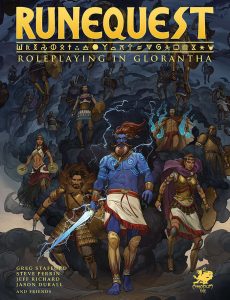
RuneQuest uses the Basic Roleplaying Game system – actually, it is the source of that rules system – just as Call of Cthulhu and Pendragon do. It is both gritty and intuitive, using an easy-to-understand percentile system to determine success or failure. Combat is fast, exciting, visceral, and dangerous, which forces players to really think about the stakes involved. Characters have passions and Runes, which means every character is unique.
It encourages you to dive into the setting, its mythology and to make it yours. One moment you might be haggling with merchants over some bison and scraps of armour you managed to take, and the next moment, you are briefly wielding the power of a god. It is a game with one foot in the realm of gods and spirits and the other in the gritty (and often brutal) Bronze Age setting.
What makes Glorantha so different from all the other fantasy settings?
Glorantha is, in my opinion, the greatest fantasy setting, period. It is perhaps the only RPG that is built off the underpinnings of fantasy – mythology – and lets us explore myth while still having one foot in the gritty mortal world. It is a setting both broad and deep, and unlike most other fantasy settings, it is not derived from the Medieval West. It draws upon the ancient world, upon Gilgamesh, the Iliad and the Mahabharata, and upon Campbell, Leiber, and Zelazny, rather than the tropes of Tolkien and medieval Europe.
Why are TTRPGs so popular now?
I think the greater awareness of TTRPGs thanks to social media, actual play, and general popular culture has greatly changed the market for TTRPGs, but more importantly, I think TTRPGs are one of the few social pastimes where we all get to be active creators, rather than passive spectators and consumers of other peoples’ creations. They let us experience something that is not our own daily life – in a TTRPG, I can be a completely different person from that in daily life. And I think there is a great interest in both of those things, especially nowadays.
What was the most fun bit to do?
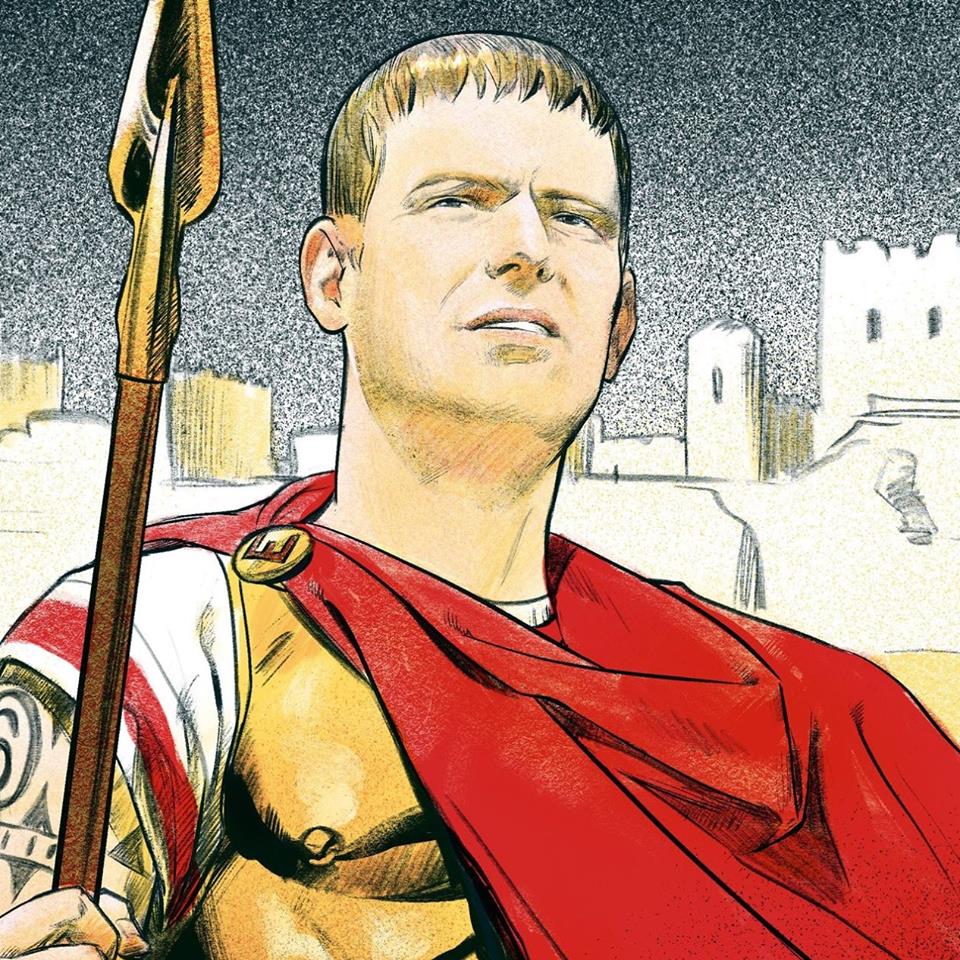
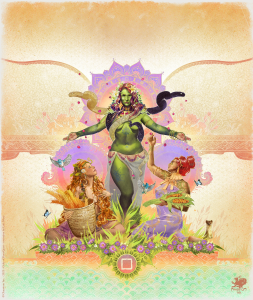
In the Cults series? For me, the most fun was actually the art process. I worked with several incredibly talented artists – Loic Muzy, Agathe Pite, Katrin Dirim, and Simeon Cogswell to put together the look and feel of these books. The art in these books looks utterly unlike anything in RPGs, and watching them bring my writing to life was incredible fun.
If I’ve been playing RuneQuest for decades, why do I need this book?
This is the long-promised take on all the cults you’ve been waiting for since Cults of Terror. Orlanth and all his sub-cults, Ernalda, Babeester Gor, Eurmal, Maran Gor, Asrelia, Valind, Ygg – you name it, they are in there. Cults, sub-cults, associated deities, new Rune spells, myths, history, and so much more! You know you need these!
If I’m new to RuneQuest, what one piece of advice could you give me to make my first game more fun?
Start small. Start by learning the setting through play – and tie your character to a community such as a cult, a temple, a clan, or whatever. Your character will get involved in things great and small, and the setting will become yours.
And learn to negotiate or run away from many possible foes. If you try to fight everything in your way, you are going to end up dead. Although violence is always an option, there is always another way!
What’s next for RuneQuest?
Besides the Cults books, we’ve got a Guide to Dragon Pass, a GM book, a Sartar book, and a big campaign book on the way.
The excellent RuneQuest Starter Set can be found here, and you can find out more about the Cults series and RuneQuest in general here.