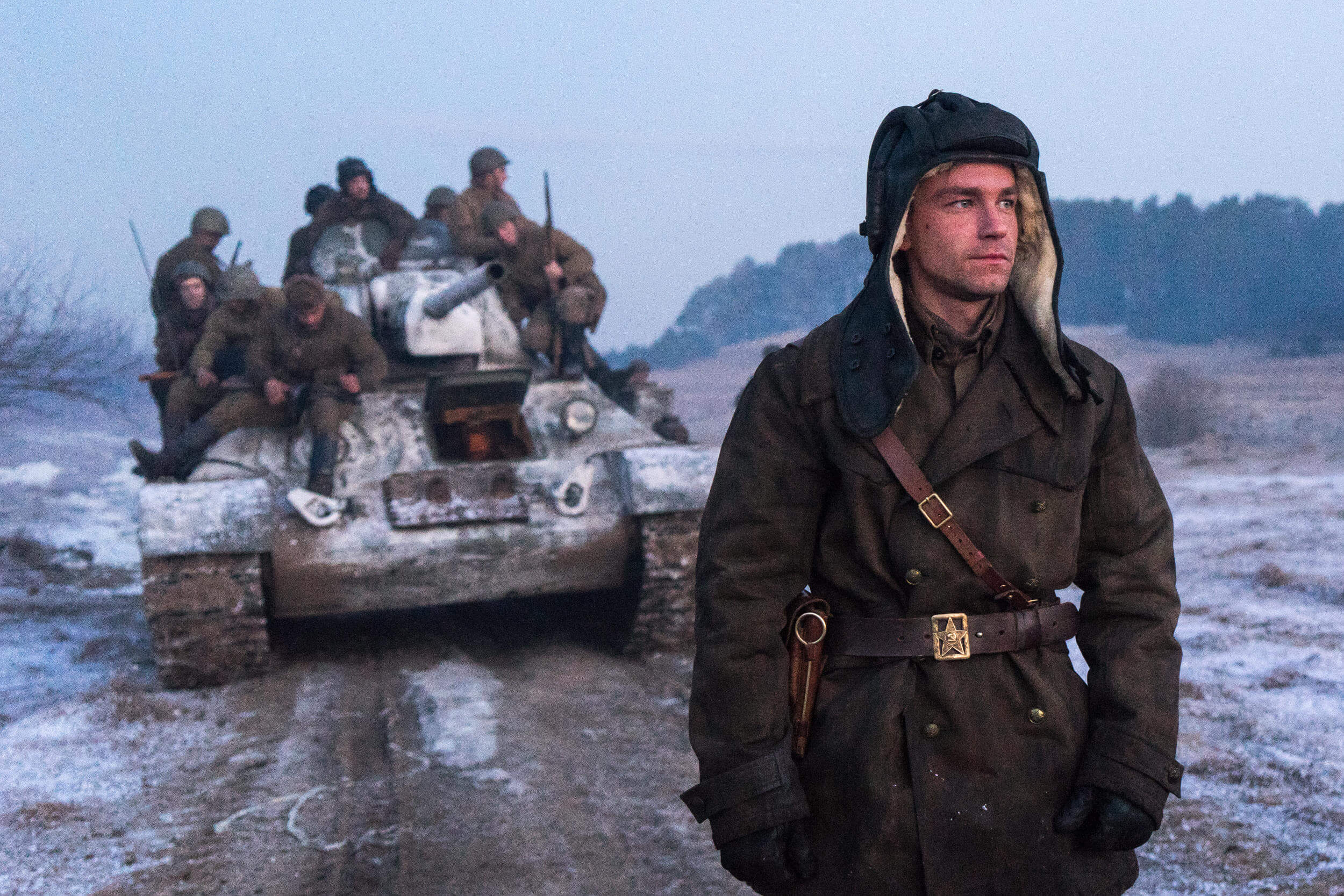
IRON FURY / CERT: 12 / DIRECTOR & SCREENPLAY: ALEXSEY SIDOROV / STARRING: ALEXANDER PETROV, VINZENZ KIEFER, VIKTOR DOBRANARAVOV / RELEASE: OUT NOW
A major hit with Russian cinemagoers, wartime tankfest Iron Fury (originally released as T34) now blasts its way in the direction of English-language audiences for the first time on DVD.
Let’s begin by dispensing with some of the major disappointments of this otherwise welcome release. While all the performances by actors playing Nazi characters are heard in their original German (subtitled, of course), the Russian actors have had their voices redubbed into a jarring form of transatlantic English. The fact that there’s no option to select the original soundtrack is (together with the lack of any behind-the-scenes special features) to the serious detriment of this package. It’s also been reported that the Russian theatrical version has been trimmed by more than thirty minutes; with the intention of increasing the combat density for the impatient western market.
Fortunately, despite these irritants, Iron Fury – part hunter-killer tank combat and part prison camp escape flick – still has enough about it to merit the attention of those looking for a different perspective on the conflict waged on the Eastern Front of WWII.
Events begin in November 1941, when Junior Lieutenant Nikolay Ivushkin is given what’s essentially a suicide mission. He’s told to command the one remaining tank in his section and, together with a handful of luckless infantry soldiers, hold back an approaching Nazi tank group and so cover his compatriots’ retreat towards Moscow. Although Ivushkin’s men put up spirited, sustained resistance, he and other survivors are captured and sent to a concentration camp deep inside Germany.
In 1944, with the tide of the war shifting in the Allies’ favour, his nemesis from that battle, Commander Standartenführer Klaus Jäger orders him to repair a captured T34 and provide simulated battle training for new and inexperienced Nazi tank crews. But Ivushkin’s men plan to make good use of the shells they uncover in the damaged T34 and, with the help of fellow prisoner and trusted translator Anya, they smash down the camp gates and head for the Czech border.
From the opening set pieces to the twists and turns of the escape, Iron Fury is bursting with tank-on-tank confrontations. With an impressive mixture of physical destruction (buildings are blasted and bulldozed in equal measure) and slo-mo shell-perspective CGI, there’s a strong, visually impactful quality to the heavy-metal action sequences. There’s also a palpable sense of the sweaty, smoky cramped claustrophobia of these tanks’ interiors. Rather than Kursk-level mass clashes of mobile armament, these are intimate showdowns that require each tank commander to pit his skill and guile against his opponent. The final standoff packs a rousing visceral punch.
Ivushkin’s crew is the expected mix of heroic oddballs, while Anya is locked into the traditional role of love interest (although Irina Starshenbaum makes good play of being the story’s emotional centre). The film is awash with patriotic Russian sentiment, but there’s little attempt to sanitize the realities of war. Iron Fury’s ending is also surprisingly restrained; its final images emblematic of those sculptures of resilience and survival that embody the Soviets’ narrative of the country’s suffering in the Great War.