by Ed Fortune
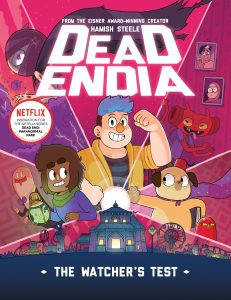
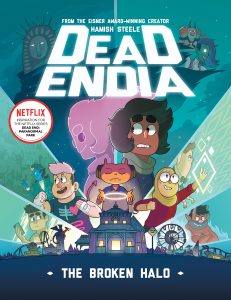
Hamish Steele is an Eisner award-winning, London-based Animation Director, Comic-Book Artist and Writer. He’s best known for the DeadEndia comic books and the Netflix series Dead End: Paranormal Park. His latest books are part of the DeadEndia series: The Broken Halo and The Watcher’s Test. We caught up with him to find out more…
STARBURST: What’s the elevator pitch for the DeadEndia books The Broken Halo and The Watcher’s Test?
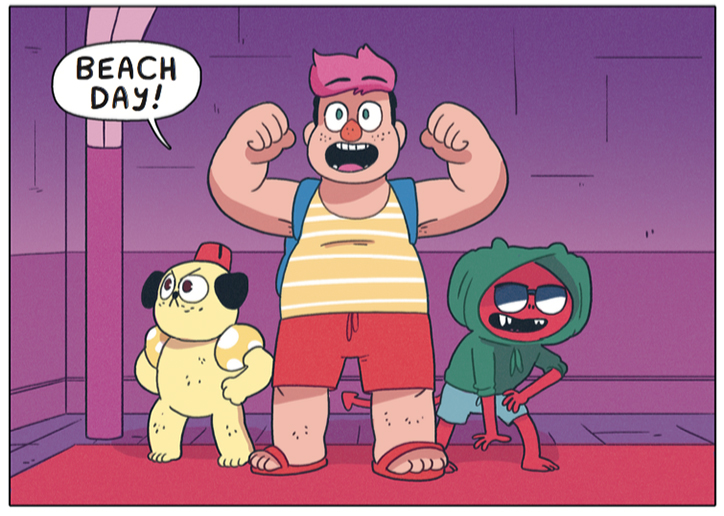
Hamish Steele: Well, it’s about an elevator! So if I’m pitching these books inside one, then that’s half the job already done! Except this elevator takes its riders to the “Multi-Plane”, a 13-level universe of demons and angels, and Earth is the neutral ground! Unfortunately, this elevator happens to be located where Barney and Norma work, at a kitschy theme park called Phoenix Parks. They just wanna get through their 9 to 5 but are constantly swept up in the centuries-long battle between good and evil.
What should fans of the TV show expect from the Graphic Novels?
They’ll recognise the same characters, heart, and tone of the show but see a slightly different story. They’ll be plenty of surprises and twists for readers who think they know the TV show back to front.
Are more books planned?
DeadEndia: The Divine Order is slated for May 2024, and I’m currently working on it now. That’s meant to be the end of the trilogy, but if it’s a hit, I’ve got plenty of ideas for other stories set in the same world.
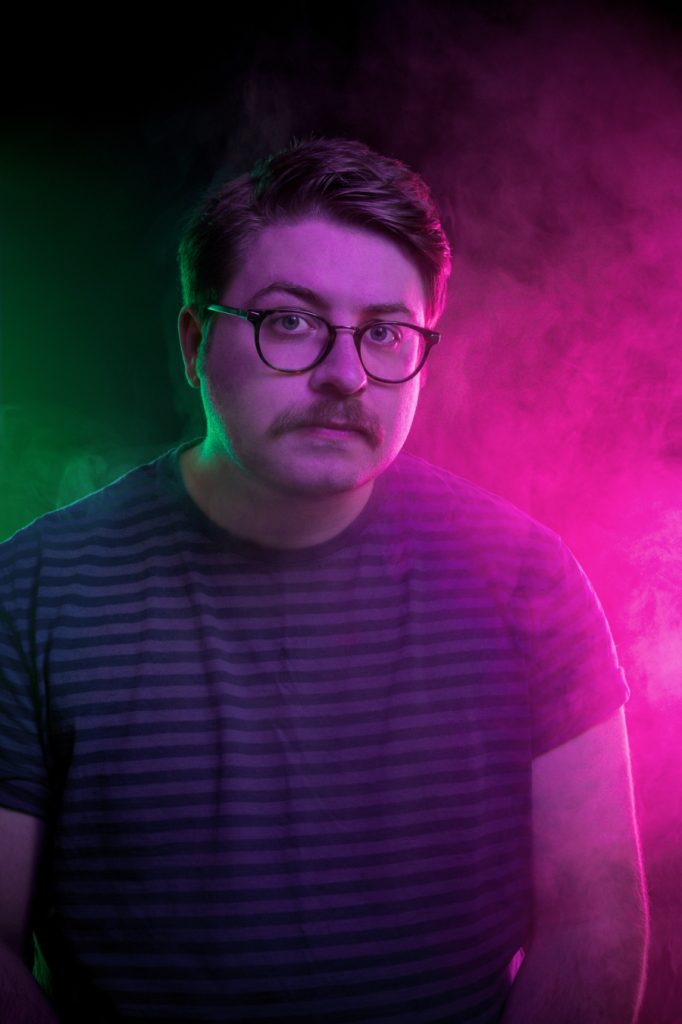
photo credit: Dashiell Silva
Are the books essentially another season?
Season 1 was loosely inspired by Book 1, and Season 2 was loosely inspired by Book 2, but we swapped many story beats around for the show in order to keep it fresh. Book 3 will feature a lot of what we planned for Season 3, but it’ll be a true ending for the books. I hope it gives show fans some closure, though.
Should we expect to see DeadEndia in other formats?
I’m planning to take a break from it and focus on new stories as I’ve been working on DeadEndia for over 10 years. But I’ve had discussions about bringing DeadEndia to the world of gaming, both video and table top.
How different is the process of creating a comic book from a TV show?
TV is all about collaboration. Making a comic can be a pretty solitary experience. I definitely feel lucky that I get to do both, as there are things I like about working with a team and things I like about just knuckling down on my own.
What can you do with the graphic novels that you couldn’t do with the TV show?
The books feel a lot more intimate, I feel a lot more connection from my thoughts and feelings to my readers. On any tv production, every aspect has to go through dozens of stages of approval, but in the book, I can really say what I want to say, unfiltered. Also, just from a technical point of view, in the comics, I can have my characters wear whatever I like and not worry about our character design and rigging team working over time!
The show tackled some pretty important themes. How is this reflected in the books?
All those important themes are from the books, although I think they’re handled a little differently. The books were originally written as webcomics on Tumblr, and as you can imagine, the LGBTQIA+ themes were more preaching to the choir than anything. I was writing a book for our community from our community. When it came to making the TV show, we had to assume a much wider and potentially less clued-up audience. In the books, Barney is just trans, and all his friends know, and it’s no big deal – in the show, we needed that coming out moment, that moment to potentially educate our audience.
Another big difference is Norma being on the spectrum. It’s an element of the character I feel is explored really differently in the show and the books. In the show, she feels younger, less jaded, and more willing to trust. But she has a bad experience when her special interest turns out to be a bad person. The version we meet in the books feels like the Norma who has already been through a lot of those tough experiences and is a little more world-weary. It’s kind of cool to explore different ways being autistic can affect your life all within the same character.
DeadEndia has some amazing characters. Who’s the most fun to write?
I find Pugsley the most fun to write because he’s so innocent. No matter how wild the storyline gets, it’s always nice to get his sweet, childlike perspective on it.
What sort of spooky stories inspire? What’s your favourite type of spooky / horror story?
I absolutely love horror, and DeadEndia was my take on the spooky story of the week style show like The Twilight Zone or Goosebumps or even The Simpson’s Treehouse of Horror. I’m a big fan of ’70s horror, stuff like Suspiria and Hausu, things where bright, gaudy colours sit alongside brutal, terrifying imagery. My all-time favourite work of horror, though, is BBC’s Ghostwatch. Some elements have aged poorly, but some still haunt me whenever I hear a loud bang or see the reflection of something that isn’t there.
Is there an element of the DeadEndia world that you haven’t had a chance to explore yet, and what would that be?
I never feel like I have enough time to show everything this world has to offer, be it because of page limits or episode lengths. There are 13 planes, and we’ve barely seen any of them. In Book 3, I really get to explore angel culture. But if I did books after this, I’d be tempted to make more of the main characters’ demons and see the world from their POV.
What other projects do you have planned?
I’ve just signed a deal for my next big book series, which I’m very excited about. I am being vague and cagey, but it’s my tribute to Godzilla, which is my all-time favourite series, and it has an autistic lead character. I recently got my autism diagnosis thanks to writing Norma in DeadEndia, but I’m excited to explore that even further in my next series. Other than that, I’m pitching several shows, working on games and writing a movie – so watch this space!
Hamish’s books are out in late June 2023. You can get your hands on them here.