Tying itself to what is unequivocally the best action film of the 21st century – if not ever – was always going to prove incredibly challenging. And while Furiosa might not reach the dizzying highs of Fury Road, director and co-writer George Miller succeeds in delivering a gritty, mean, and wildly unhinged origin story for his world’s most fascinating character.
Furiosa: A Mad Max Saga – Warner Bros’ prequel to 2015’s Mad Max: Fury Road – broadens the known horizons of the franchise’s apocalyptic mythology, riding deeper into and away from Australia’s reddened wasteland. Places like Gas Town, the Bullet Farm, and the Green Place (back when it was still green and not the putrid bog portrayed in Fury Road) are rendered on screen for the first time but feel lived-in, while old characters are given new dimensions. And while Furiosa enacts a leaner, meaner, and in many ways more primal vision of this world than its predecessor, as a two-part story, the two chapters wind together seamlessly.
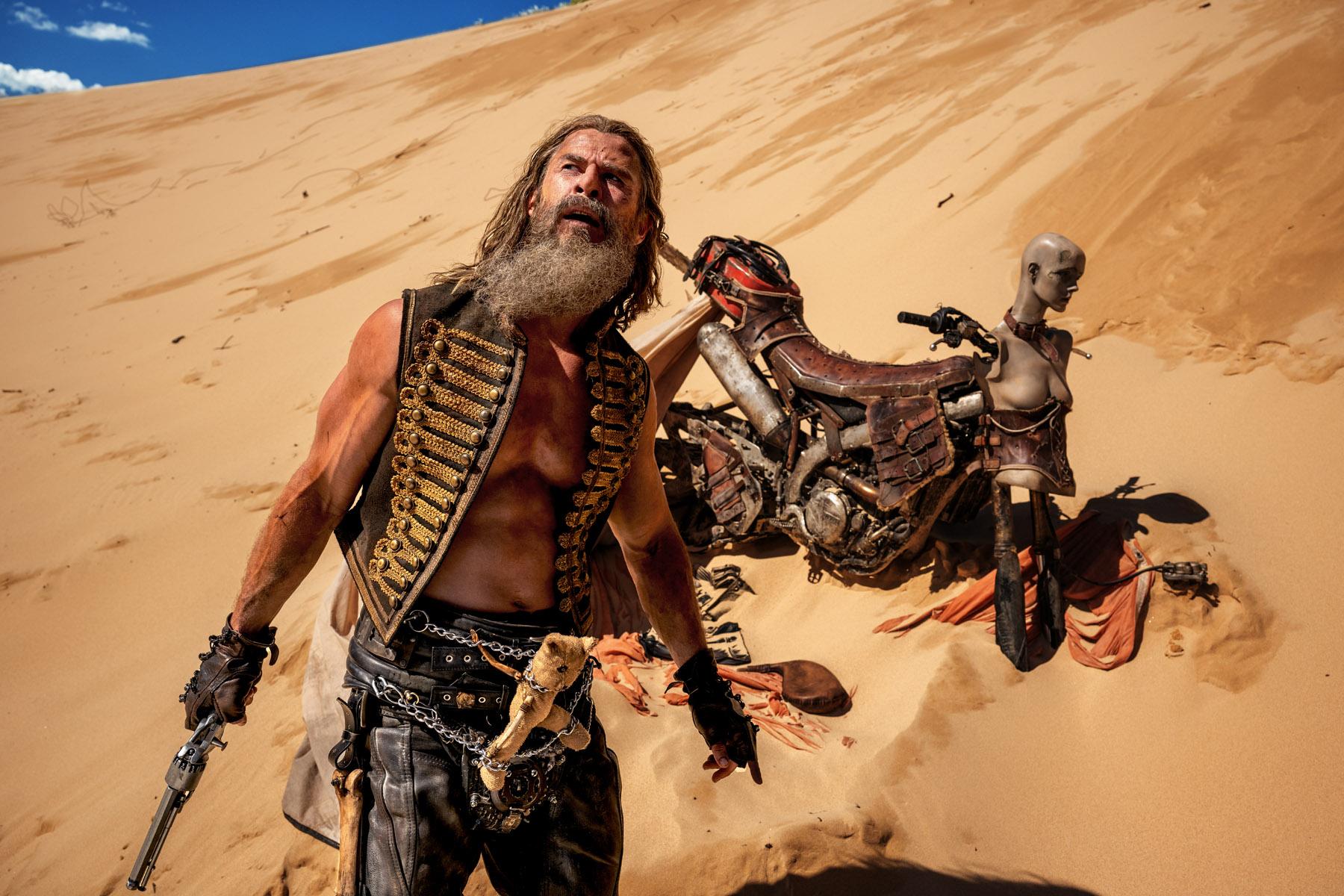
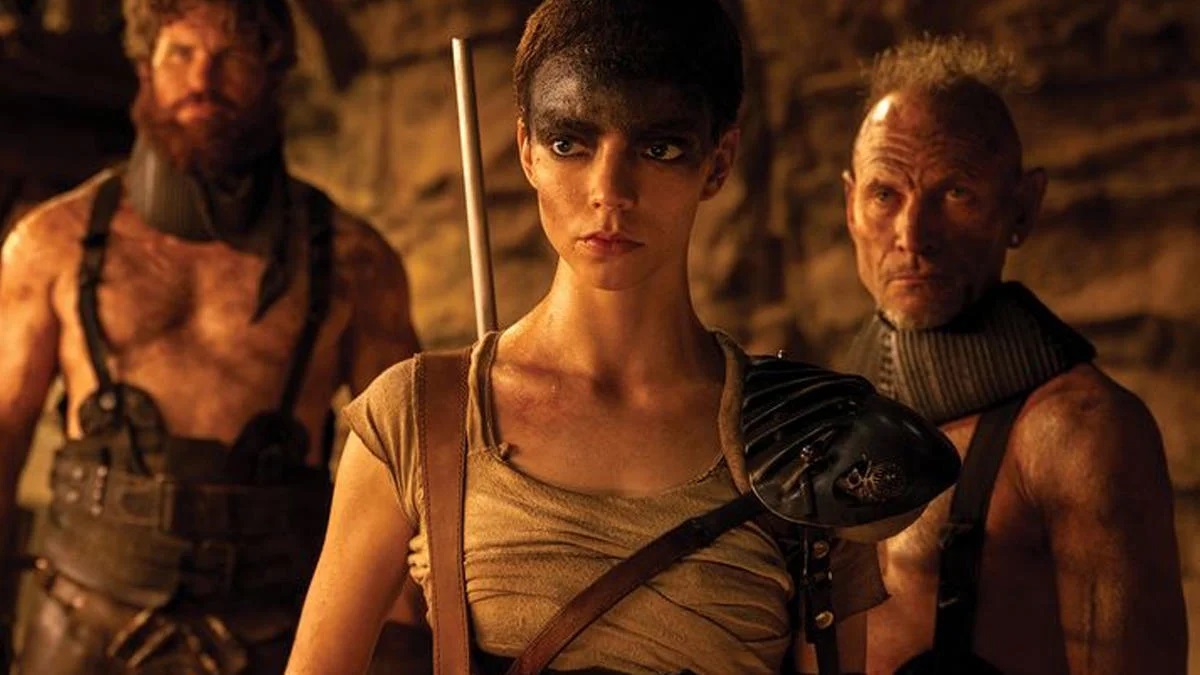
Played in Fury Road by Charlize Theron, her younger self is now played by a phenomenal Anya Taylor-Joy (and as a child by a well-cast Alyla Browne) whose inescapable gaze is a magnet for our undivided attention. Furiosa was just a child, born from a hidden community in a richly verdant oasis, when she was ripped away by Wasteland warriors and taken to the chariot-riding biker king Dementus, the strangely constructed villain played by Chris Hemsworth in a long beard and prosthetic nose. Furiosa then passes into the hands of a younger and more cautious Immortan Joe, now played by Lachy Hulme, as part of Dementus’ bid to take over Gas Town. She escapes a fate as one of Immortan Joe’s breeders by fleeing into the tar-smeared depths of the Citadel as a boy, eventually coming to assist Praetorian Jack (Tom Burke, with whom Taylor-Joy shares searing chemistry), a rig driver who quietly takes Furiosa under his wing.
It’s a story of survival and revenge, of cutting oneself up and rearranging the pieces into something harder to break, all while clinging to hope that the past might be returned to. Appropriate, then, that Furiosa is itself fragmented into five chapters, each an episodic glimpse at key points of transformation for the slave-turned-warrior. It’s both desolating and stirring, bleak and beautiful, and never does the fact that the audience already knows Furiosa’s fate lessen the journey’s gripping tension.
However, if you thought any of that meant that George Miller has fallen into a more reflective and quieter style of filmmaking, let us dispel any such notion. Furiosa is still deliciously, brutally, thrillingly action-packed with unbelievable (and, as always, practically rendered) set pieces. Though it lacks some of the comedic absurdity of Fury Road – no flame-throwing electric guitars in this one, sadly – the prequel still worships that same flavour of madness that makes this world so wretchedly engrossing.
Furiosa only falters with Hemsworth’s Dementus. While the imposing actor does infuse some interesting layers – like the spark of ill-expressed paternal care he feels for Browne’s young Furiosa – to his performance, Miller’ and co-writer Nico Lathouris’ characterisation is too erratic (and at times cartoonish) and makes his unpredictability more confusing than it is terrifying. Particularly when placed in opposition to Immortan Joe, it’s somewhat difficult to view Dementus as the real threat.
In the light of Taylor-Joy’s sensational performance, though, Dementus feels like a detail. With this dialogue-light role, the actress effortlessly affirms herself as an action heroine who’s as skilled in her stunt physicality as she is at flooding emotion into a lingering glance. Theron could not have wished for a more perfect predecessor (or is it successor?). Witness her.
Furiosa: A Mad Max Saga is in cinemas from May 24th. Watch the trailer here.