Zoe Bullock is a Glasgow-based writer and performer who grew up on a menu of Miyazaki, Star Wars, and Ursula le Guin. Their work often explores the intersection between climate crisis, class warfare, and human survival. Their latest show, Gracie and the Start of the End of the World (Again) is an absurd tragi-comic solo show about a horny immortal jellyfish looking for love after the end of the world. She also happens to be a massive fan of human culture, particularly Buffy the Vampire Slayer.
Beginning as an attempt at interspecies dating, it becomes a surreal revolution with horrifying consequences. The show is the winner of Assembly’s ART Award, which supports a Scotland-based artist to take work to the Fringe. We caught up with Zoe to find out more.
STARBURST: How would you pitch Gracie and the Start of the End of the World (Again) to someone who is really into Zombie movies?
Zoe Bullock: Zombie movies are awesome. They’re fun, action-filled, full of iconic characters, can stride the line between horror and comedy like nothing else, and the best ones are secretly about the biggest human questions – what does it mean to be alive?
Gracie is also awesome. It’s fun, action-filled, full of iconic characters, strides the line between horror and comedy like nothing else, and it’s secretly about a big human question – how much longer will we all be alive?
And how would you pitch it to someone who is really into recycling?
If you’re really into recycling, I’d guess you’re probably also a fan of the living world around us. Or at least, you’re into the idea of not destroying the planet we call home. You’re probably an empathetic, nature-loving, socio-politically-conscious soul. You’re also probably a little bit sick of being told to stop using plastic straws – you got that message years ago. Well, boy, oh boy, is this the show for you! Gracie is climate storytelling from left field. It’s about seeing the world from a fresh perspective, having a great time, and caring about creatures other than ourselves without shoving that down audiences’ throats. It’s the theatrical equivalent of a fun tote bag design – environmentally conscious, yes, but it looks good as well.
Is Cli-Fi (climate-inspired fiction) also apocalyptic science fiction, or is it more hopeful?
Ooh, what a great question. Personally, the apocalyptic sci-fi stories I love most all have elements of hope. Post-apocalypse is often about asking the question: can we do better next time? By its very existence, it imagines a world in which at least some of us have survived whatever disaster has befallen us. I think Cli-Fi has to do the same – I’m not interested in depressing people for some nihilist agenda (what’s the point). Imagination is the first step towards change, and climate fiction definitely has its part to play in our future; I think hope often happens organically within a good story.
Why a Jellyfish?
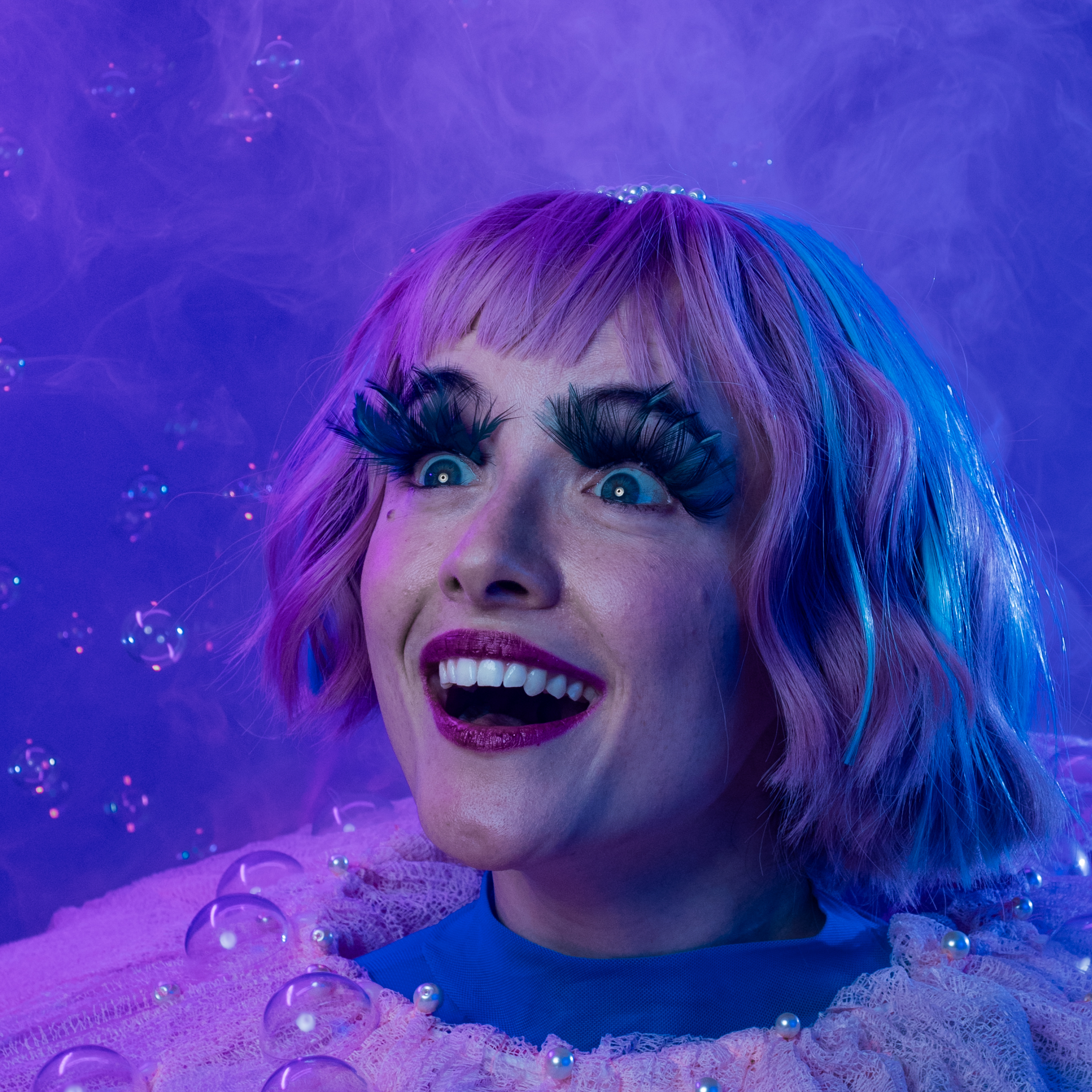
The show was originally inspired by real-life instances of jellyfish blooms blocking up nuclear power station cooling pipes, causing shutdowns (it’s real; google it!). We thought: what if they were doing it on purpose? It’s a fantastical question, but all the best questions are. It’s also allowed us to play in a beautiful visual space costume-wise, which is a bonus. I saw an article recently that jellyfish are apparently the next big thing in red-carpet fashion, so I reckon we’re just about catching that zeitgeist.
Why a horny Jellyfish?
At its heart, Gracie is about the tension between our human capacity for beautiful creativity and tremendous destruction. Gracie the jellyfish is obsessed with pop culture, and her fandoms largely have some kind of romance told through the female lens (she’s a huge Buffy fan). We really wanted to celebrate those stories as an expression of human culture because they’re the ones we grew up with and love. Despite the absurdity of being a jellyfish, Gracie is also a character we want audiences to relate to – and what’s more relatable than that feeling of being almost painfully turned on?
What’s been the hardest part of the production so far?
Learning how to move with the costume. It needs almost constant small movements (think shoulder rolls) to keep it alive. It’s basically like puppeteering your own body whilst trying to do all the other bits of acting – a fun challenge, though!
What is the most important lesson to learn during rehearsal?
Firstly, it’s very, very difficult to hold a script while wearing costume tentacles that cover your thumbs. You can rehearse some shows pretty well before you know all your lines – not this one. More generally, it’s phenomenally important to trust the team around you. Everyone has their expertise, and it’s all those moving parts fitting together at the end that make a show work. It’s sometimes hard to see the big picture when you’re in the thick of it, but you have to let it come together in its own time. You can’t rush a 1000-piece jigsaw puzzle, and you can’t rush the creative process either, even for the Fringe!
What has been the most ridiculous moment so far?
When you’re making a show about a nerd-turned-revolutionary-maniac jellyfish, it’s basically all one big ridiculous moment. However, there was a point where we thought we would try and get James Marsters (aka Spike) to play a voiceover part; Gracie’s love interest. Our wonderful producer emailed his agent, and there was a brilliant moment where the idea got sent to him, and we absolutely lost it at the idea of James Marsters receiving a request to play a sexy activist turtle. We worried he might think it was a joke – but they took it seriously. Unfortunately, he’s busy on tour and in Australia, so it didn’t work out. Sorry, Buffy fans.
Why the Edinburgh Fringe?
The Fringe has always felt like the perfect home for GRACIE – it’s a melting pot of whacky, experimental theatre, and you can get away with trying things that feel like a creative leap of faith. We also did a scratch night a couple of years ago and got a ton of audience feedback saying it would make a brilliant Fringe show, so we’re giving the people what they want.
What is your favourite moment in the show?
Gracie goes to Comic-Con and tries to seduce Timothee Chalamet. It doesn’t go well.
Where else can we see you?
Hopefully on tour with Gracie after the Fringe! TBC…
What’s your next big project after the Fringe has ended?
It depends a little bit – oh, the joys of freelance life – but I want to direct a short comedy-horror film I’ve written about a woman who finds herself in a toxic codependent relationship with a talking house plant. Think Little Shop of Horrors without the eating people thing.
Simpsons or Futurama?
Simpsons. The show of my childhood.
Sea Horses or Turtles?
TURTLES! (See above re sexy activist love interest)
The Little Mermaid or Lilo & Stitch?
The Little Mermaid. It’s more thematically appropriate.
Doctor No or Doctor Strange?
Doctor Strange. Not the Multiverse of Madness, though. Please.
Truth or Beauty?
Truth, always.
You can book tickets for the show (which is showing at this year’s Edinburgh Fringe) here. You can also follow the show on Instagram here.