
Dear readers: this column will be something of a departure from the last
several. Normally, I make it a point of reviewing movies, games or books, but
this review is as much a report on some breaking Internet news as it is about a
game, or rather, several games. If you are looking for snarky opinion, come
back next month when I rip apart The Smurfs 3: The Revenge of Azrael. If you
are still with me, sit down, put on your thinking caps, and be prepared to look
at the Big Picture.
It’s a game. It’s a business. It’s a future business model. It could
revolutionize the future of currency markets. It’s a threat to governments all
over the world.
It is Denarius.
Denarius is three things rolled into a package. It is a virtual world. It is a
virtual currency exchange game. It is also a revolution. This is not mere
hyperbole, dear readers. This is one of those rare games that shakes the
foundations of heaven and hell and promises change on a global scale.
Have I built it up enough for you? No…I can tell…by that smirk on your
face. You are skeptical. Very well; allow me to make with the exposition.
There have been a number of games over the years meant to simulate buying and
selling of goods. The intrinsic challenge of capitalism lends itself to
gamification: money is the way the world keeps score, after all. What makes Denarius unique is that it is the first game that allows trading of other
virtual worlds’ currency.
Blown away yet? Let me restate. If you play World of Warcraft, you can use
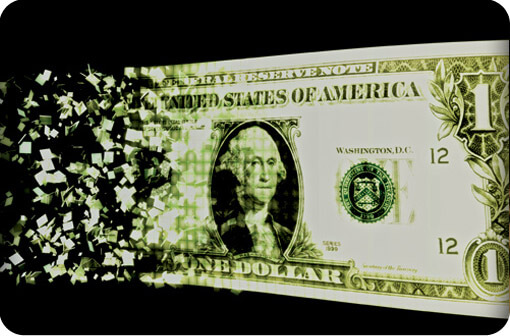
gold pieces in Denarius to invest in the Linden dollars of Second Life, the
Florins of New Renaissance, or even the U.S. Dollar. It is full currency
trading, regardless of source. Your guild can now purchase stakes in the economy of
ChampionsOnline, or buy stock in a real estate business in Second Life. You can
make money, then exchange it for real-world cash at they appropriate in-world
exchanges or sell your shares to another investor in-game. It is economy
without borders; the nations are virtual and real-world economies intermingling
in a way that would make Milton Freeman proud.
And your government is probably shitting itself over it.
Denarius is run by Swedish serial entrepreneur Sigurd Magnusson. How does
Sigurd manage to handle all this currency without being taken down by objecting
governments? Get this: the servers are housed in space. Yes…in space.
Magnusson was one of the early investors in Space X, the privatized spacecraft
venture owner by Elon Musk. When regularly scheduled orbital flights commenced
last year, Magnusson placed his own bank of satellites in orbit. These are the
currency exchange servers, placed well beyond the impotent grasp of more
Terrestrial governments.
I know, I know. Why, Chris, are you telling us about this? Shouldn’t you be
reviewing movies?
Yes, of course I should. But this will change your life…unlike the latest Superman reboot.
Imagine this: you have money invested in your favorite MMORPG. A new one comes
out. It has a trading station on Denarius. Instead of starting from zero, you
can purchase the currency of the new game in Denarius, and get a leg up on your
playing.
…or, your guild produces some high quality virtual goods. Investors who might
not play the game but who know a business opportunity when they see it can
invest in your business as you sell shares on Denarius.
…or you are looking to fund your own project. Cash poor but game-currency
rich can invest in your venture and you can exchange the currency for cash
through the Denarius Paypal exchange.
But Chris, you say, I thought this was a game?
Yes, yes. It is. You can use Denarius in one of two modes. The first is what
we’ve been talking about, called Live Mode. In Live Mode, all trade require actual verified capital (virtual or real-world) to buy in. You trade much as you would on Wall Street. The other is Fantasy mode, wherein you
gather virtual funds to invest, purchase, and trade. No actual money changes hands, but you can chart your success or failure over the long term to hone your skills. There are achievements,
there are scores, and there are very few rules. Both modes are the free market,
taken to a logical extreme. It is possible to move from Fantasy to Live Mode
for a small fee, when you feel up to getting some skin in the game.
It is making waves.
So, far, only France has openly outlawed the game, but it looks as though other
countries will follow. Why? They cannot collect taxes — they do not get their
cut. The British Parliament is openly debating the legality of mixing virtual
and hard currency. The U.S. Senate has taken on the subject from two angles:
the first, can they regulate it and if not, two, can they take campaign
contributions through it?
Ayn Rand would be so proud. I say that with only a small amount of irony.
Some economists have been sent into twitching fits by all of this. In the three
months since Denarius launched, certain early adopters (both technology and
business) have made a ton of money, and the mainstream economists cannot figure
out why. Not so for Kent State Professor Bryan Pirnat, himself a student of
virtual economy guru Edward Castronova. Pirnat suggests that all economies have
been virtual for a very long time.
“In the U.S., our paper money has had no actual value ever since Nixon took us
off the gold standard. Yet we all act as if it is something more than just wood
pulp and metal tracking RFID tags. Why? Because we can use it to get things we
want. That’s what value is…trading desirable objects for other desirable
objects.”
There have been other attempts at developing a generic online currency, but they have ultimately failed. The most well known, Bitcoin, finally collapsed in 2013 due to general apathy. The idea of basing an ecomony on CPU processing cycles, while novel, ultimately lacked something that Castronova pinpointed in this 2011 post:
“How do I know these things are bad? I know because I play games. Game designers could have made currencies on the Bitcoin model many years ago. They didn’t. One thing we know about game currencies: People like them. We know this because the objective of the game designer is to make people happy. Game currencies are good currencies. What are the features of those currencies?
- You get money only by doing things that can be interpreted as “productive work.” No freebies or handouts, and nothing abstract. You don’t solve puzzles to get coin, you run FedEx quests.
- Mild inflation. As in the real world, mild inflation makes people happiest. Small enough to be unnoticeable in the short run, yet gives people a sense over time that their wealth and power is rising (even if it isn’t).
It assumed that the currency will be hacked and exploited. A strong central authority is in place to seize illicit funds and roll back damage.
Bitcoins don’t have these features.”
How does Denarius measure up?
First off, they learned from Bitcoin: do not start a currency. Start an
exchange. While there were Bitcoin exchanges for buying and selling Bitcoins
with real-world money, the realization that the value proposition was not in
starting a new currency but in leveraging virtual currency against one another
was sheer brilliance.
Secondly, the users/buyers/sellers/players are trading coinage that is of
value, produced by actual work, be it working for a real-world business or as
part of a World of Warcraft Guild.
Third, fluctuations in the market, inflation and deflation of currencies is
possible. This is nothing new, just an extension of real-world economic
conditions. That sense of accomplishment that Castronova speaks of may be
coming over time; in truth, it is too soon to tell.
Finally, the idea that the technology will be hacked is part of any software
enterprise. The way to deal with this is simple; you take the exchange offline
until the problem can be addressed. All trades are frozen, no money is lost.
Magnusson may be on to something. What, exactly, is his goal? (Beyond the
businessman’s usual goal of PROFIT, that is…). In a recent interview with
Xeni Jardin of Boing Boing, he had this to say:
“It has been shown that the gamification of systems leads to more active participation in the system
and more dynamic evolution of the system in a shorter amount of time. The mingling of the
virtual and real-world economies has been coming for a long time, and it seems
to me that change on an economic level through a system like Denarius could wipe
out some of the cruft engendered in the current economic systems of terrestrial
origin. Understand, I am not saying that economic change in virtual space will
result in a utopia…on the contrary, it will be a bloodbath. However, our
older systems no longer serve any useful purpose; they are stuck in a morass of
antiquated regulations that stifle creativity and competition. By releasing
Denarius to the world. I am hoping that a better, more informed group of
motivated people who are invested in the current and future technologies yet
still grow and foster working communities will rise up and leave the old models
behind.”
Madman? Revolutionary? Savvy businessman? All of the above? You make the call. The reality is that the exchange is starting to take hold. According to sources inside the gaming industry, Valve is about to roll out the ability to purchase games on the Steam platform with virtual currency. The Electronic Frontier Foundation is accepting memberships purchased with virtual coin. Electronic Arts is reportedly working on a way to move virtual currency from other games into The Sims 4. Admittedly, we’re a long way from Amazon taking gold pieces to buy that new Jim Butcher novel, but if Magnusson is successful with Denarius, that day may yet come.
My advice to you? Check out the site. Follow the news on Boing Boing, on The Command Line Podcast, even in the mainstream media. See which politicians embrace it, and which attempt to squelch it. I will admit to being too cowardly to start putting my own funds on the line, but I am playing in Fantasy mode, and the results have been surprising. If you have a tolerance for risk in your virtual portfolio, you might be able to make this system work for you in ways you never thought possible.
At the same time, watch how the governments of the world react. Watch who benefits, and who is left behind. It is my firm belief that some system like this will take hold, if not this one, then one in the future. As the things we value become more virtual than real, it is only natural that the currencies we use follow the trend. We are a long way from a single currency, and if the past is any guide, it may never happen. Denarius will be a great experiment, and we have as much to learn from its possible failure as its improbable success.
That’s all for me this month, my little capitalists. Look for me in the usual places, the social networks, and now, inside Denarius on the trading floor. Until next time, be well, buy low, and sell high.