Casino games have always attracted people. For centuries, gaming halls have been filled with players testing their strategies at roulette wheels, blackjack tables, and poker games.
Even today, thanks to platforms like pikakasinot.com, online casinos are booming. These platforms carefully evaluate the top options and help people find matches that suit their playing style and preferences.
What’s often overlooked, though, is how deeply casinos have influenced cinema and TV. Their tension, risk, and high-stakes energy have become the perfect setting for stories built around gamblers and antiheroes. It’s worth taking a closer look at how this connection has shaped genre storytelling over the years.
The Casino as a Stage for Inner Conflict
Casinos are more than bright rooms full of games; they’re places where ambition, greed, and doubt clash. In films and TV, they show characters under pressure, testing how far they’ll go when chance meets choice. Every card dealt or chip pushed forward reveals what someone is really made of, turning a game into a test of character.
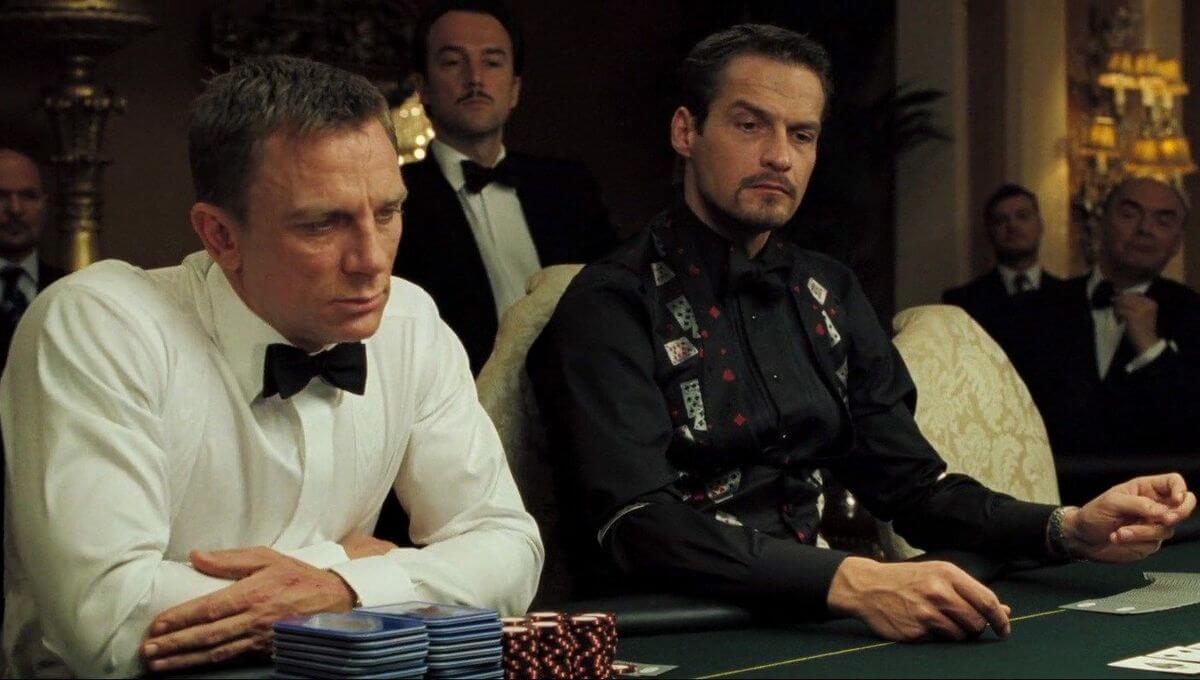
Casino Royale (2006) shows this perfectly. Daniel Craig’s Bond isn’t only fighting Le Chiffre over cards; he’s in a mental war where calm and nerve matter as much as the hand he’s holding. Each move shows hidden motives (Bond’s cold focus, Le Chiffre’s growing fear), which is something taht makes the poker table a stage for both strategy and emotion.
The Gambler (2014) gives another view. Mark Wahlberg’s Jim Bennett uses underground casinos not to win but to burn through his life. The neon lights and smoke reflect his chaos, and every bet drags him closer to disaster. Here, the casino works like a mirror of his own personality.
Smoke, Shadows, and Betrayal
In the 1940s and 1950s, casinos became key settings in film noir. They weren’t glamorous resorts but dark rooms filled with smoke, danger, and shady deals. Directors used them to show a world where temptation and betrayal ruled, and where antiheroes lost as much as they gained.
Gilda (1946) captures this mood. Rita Hayworth’s character draws Glenn Ford’s Johnny Farrell into a Buenos Aires casino that feels like a trap. The chips, the shadows, and the whispered deals frame a story of jealousy, loyalty, and obsession, giving the setting as much power as the characters.
In The Big Heat (1953), Glenn Ford plays detective Dave Bannion. The dimly lit tables and quiet exchanges in the movie build tension and show how dangerous and isolating this world can be.
When Thrills Raise the Stakes Beyond Money
From the 1970s onward, casinos turned into engines of suspense. Filmmakers raised the stakes beyond cash and made every hand a matter of survival.
Rounders (1998) shows this shift clearly. Matt Damon’s Mike McDermott gives up a safe path for underground poker, where every bluff feels like a risk to his future. The flickering lights of Teddy KGB’s club and John Malkovich’s strange intensity make the final showdown feel like a duel, not just a game.
Uncut Gems (2019) pushes the chaos further. Adam Sandler’s Howard Ratner moves through New York’s diamond district with the same reckless energy as a high-stakes player. His endless bets mirror his life: fast, risky, and close to collapse.
These thrillers show why casinos stay powerful in genre storytelling. They’re places where people reveal their real selves, where every bet matters, and where the line between winning and losing can vanish in a single moment.
What Casinos Really Represent
Casinos don’t only offer card tables and slot machines; they often stand in for deeper ideas. Writers and filmmakers use them to talk about fate, power, and the people left behind.
These places, with their bright lights and heavy risks, make it easy to show what happens when greed, fear, or escape take over someone’s life.
In Fear and Loathing in Las Vegas (1998), the casinos feel like a bad dream. Raoul Duke, lost in a haze of drugs, stumbles through places like Circus Circus, where everything is loud, chaotic, and twisted. The setting reflects his mental state, and the bigger message about America’s obsession with winning.
Why Casino Stories Keep Coming Back
Casino stories keep showing up in movies and shows because they boil life down to a few raw moments. People walk in with a plan (or no plan) and face luck head-on. Those scenes work because they feel real. Everyone knows what it means to take a risk, win big, or lose everything.
Movies like Casino (1995), where De Niro’s character tries to control a dangerous empire, or Molly’s Game (2017), where a former skier runs secret poker games for millionaires, show how personal and dramatic gambling can be.
Now that stories are told across streaming, gaming, and online platforms, the casino setting keeps finding new ways to fit in. The tension is what keeps the casino alive in fiction!