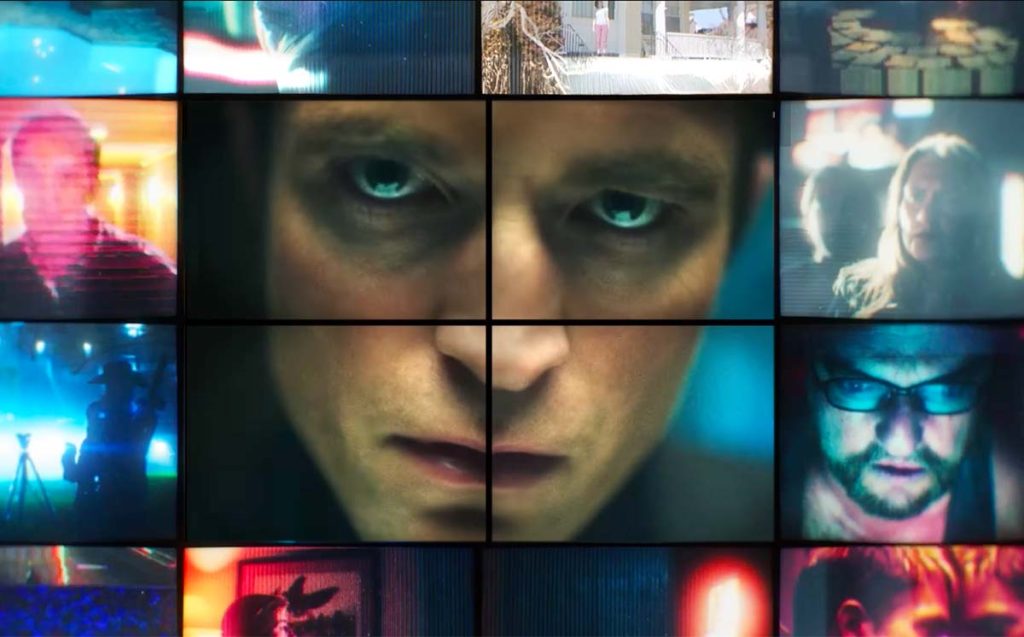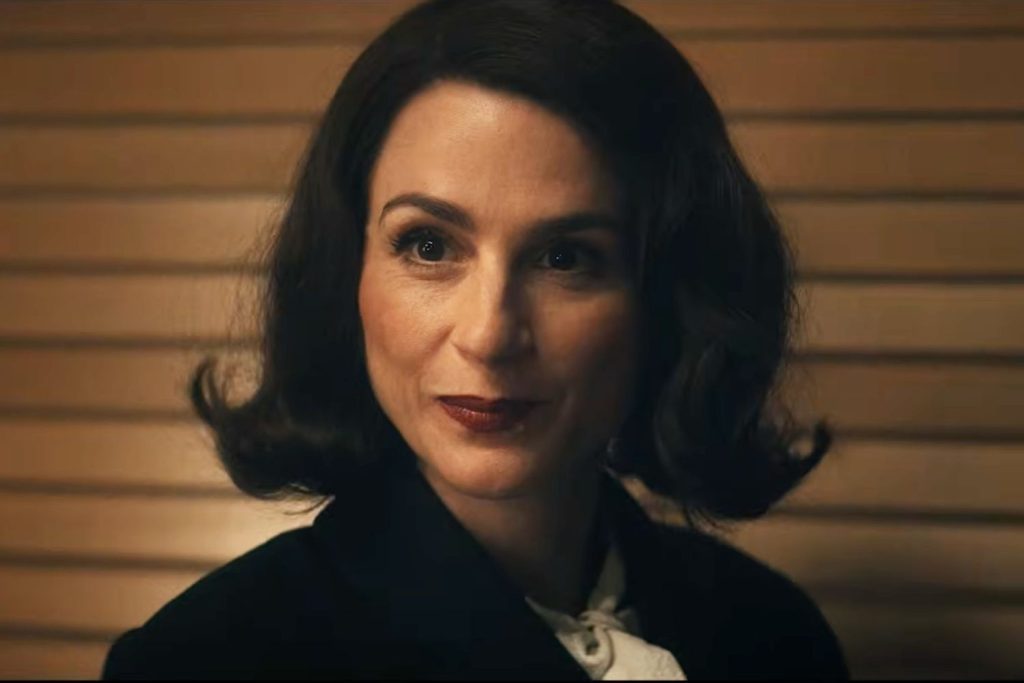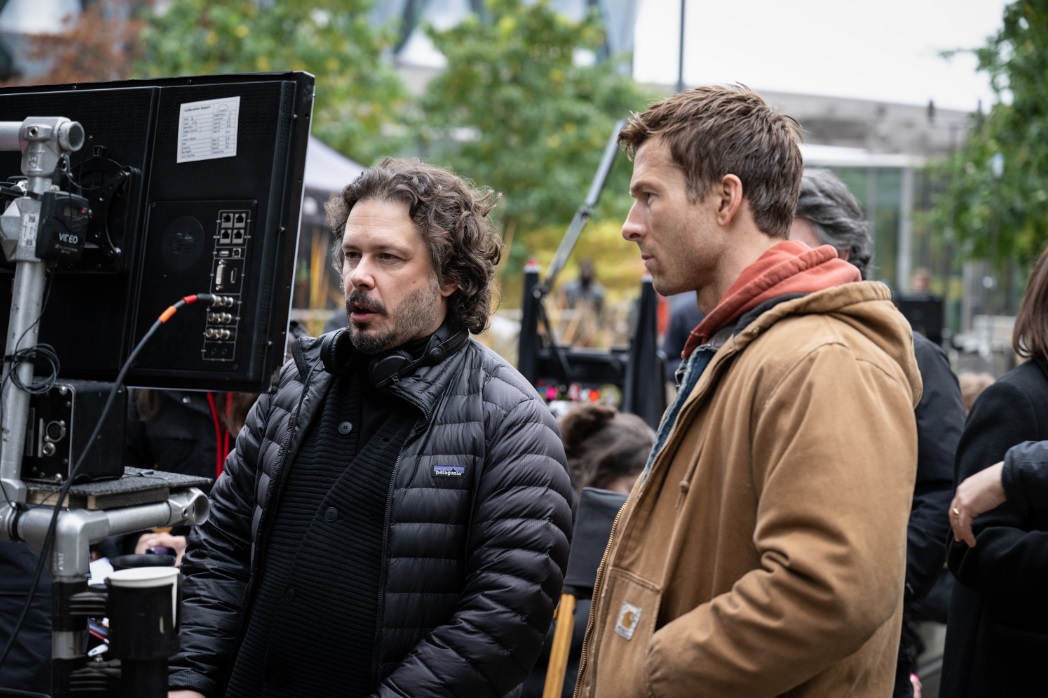
After falling in love with the book, and famously tweeting about how he wanted to remake the story in 2017, it’s clear that Edgar Wright has been a lifelong fan of the world of The Running Man. When the stars aligned and the project finally came to fruition, thanks to Paramount, Edgar and his team set out to capture this dystopian, heart-pounding adventure straight from the pages of the Stephen King novel on a unique and grand scale as you have never seen before.
The Running Man sees money-desperate factory worker Ben Richards (Glen Powell) dive headfirst into an unpredictable, nightmare game-show environment that unapologetically pulls viewers right through the screen and straight into the action. To celebrate its physical release (which is PACKED full of exclusive content), STARBURST caught up with Edgar to go behind the scenes on the incredible filming process…
STARBURST: You wanted viewers to see this from Ben Richards’ perspective, so can you elaborate on why you went with that style?
Edgar Wright: It was something that was in the original book that I found really powerful and intense. It was that the entire narrative is from his perspective. You only saw the game through his eyes. Usually, in films of this ilk, like a Hunger Games or a Squid Game TV show, and even in something like The Fugitive with Harrison Ford, you’ll cut to other characters. You’ll cut back to the pursuers or to the network headquarters. With the book being written entirely from Ben’s point of view, I thought that’s the way to go. If we could keep that ball in the air, it would just make it very intense. Also, in a film where you don’t really know what’s true and what isn’t, you can only go on the information that he has. It made it challenging in some ways and liberating in others, because it would force you to shoot it in a certain way, because you couldn’t really go anywhere else. A lot of my films are like that by design. Shaun of the Dead, Hot Fuzz, Baby Driver, they all stay with the main character for most of the film.
Ben Richards isn’t your typical protagonist; he’s more of an average citizen. Why did that idea appeal to you?
It was much more faithful to the book. The thing with the previous adaptation in 1987 is that it’s a completely different take on the novel. Arnold Schwarzenegger is playing the part, and at the start of the movie, he’s already a military policeman, an action hero of sorts. He’s already very capable and comes into the game as quite a formidable challenger. The whole point of the Richard Bachman book, and our film, is that Ben Richards is a guy who just comes in off the street. He’s an out-of-work dad; he’s tough because he works in construction and has a thick hide, but he’s not an action hero, he’s not a hit man, he’s not a trained killer.
I thought Glen embodied Ben really well; he’s tough and capable, but not infallible. He’s prone to making mistakes; sometimes, in the game, he’s completely winging it without any strategy whatsoever. He’s being thrown around like a pinball, and that was what was really exciting to us.
Beyond the book, we drew a lot of inspiration from action heroes that we like who have vulnerabilities. The two most obvious examples would be Indiana Jones, certainly in the first film, Raiders of the Lost Ark, and John McClane in the first Die Hard, where they both have a level of derring-do and bravery, but also fail frequently and fall flat on their face. That was something with Ben Richards; for me, it made it more exciting, that you needed to feel in the film that the chances of him winning were extremely slim.
In the behind-the-scenes features, we see that Glen Powell was trained to pull his punches, to steer him away from being an action hero, which also makes it much more true to the character Ben is…
I’ve made two films, Scott Pilgrim vs. the World and The World’s End, where there’s an element of martial arts in it, but I do think in the last twenty years, there’s a certain form of action that’s taken over. Not necessarily in a bad way, but I slightly tire of it at a certain point, seeing how everybody is able to suddenly do Krav Maga. And we thought Ben could be tough, but he’s not really a fighter. It’s only really in the finale, where he is fuelled by pure rage, that he blusters into a fight, with anger on his side. Anger and fury are like spinach to Popeye, but again, he’s not a trained fighter, and obviously, when he is fighting with trained assassins, they’re going to kick his ass.
At the start of the movie, the dynamic within the family is crucial in setting up what’s at stake. What are some of the elements that you remember the most from working with Glen and Jayme Lawson, who plays Sheila Richards?
I think I can speak for Jayme and Glen, to say that some of the hardest scenes in this film were when we were shooting with real babies. They were great! Having seen the infamous ‘fake baby’ in American Sniper – Google it! – we decided to go with real babies. So we had two-year-old twins on set. It’s definitely like a high-wire act, trying to shoot scenes with a real baby, with Glen and some of the other actors in the scenes, where there’s Jayme and David Zayas, for example, they were really patient, because obviously the twins have no awareness of what’s going on. It really added to it in those early scenes where Glen is watching TV, trying to figure out how to make some money, while holding and trying to calm down a real baby.
A lot of the stuff that’s in the film is really him. There’s the bit where he’s trying to watch Speed the Wheel, the other game show, because he is thinking, “How can I make some money fast? I need cash like right now.” You see his initial strategy is not to go on The Running Man, it’s to get on to one of the other games. He’s watching Speed the Wheel, thinking, “Well, I can get on that treadmill, I can make a thousand new dollars right now.” He doesn’t intend to do The Running Man. You see, on that game show, they have that big hamster mascot, and he’s trying to distract his crying daughter by saying, “Look at the fuzzy hamster!” In a way, we were doing that for real on the day.
When we were shooting the scenes with Glen, Jayme, and the baby, we hadn’t yet shot the Speed the Wheel scene, so there was nothing to play on the TV, which came later in the schedule. But I had this cuddly toy behind the camera, so whenever the baby needed distracting, we’d play the music from Speed the Wheel, and I’d be behind the camera with this fuzzy hamster. It’s amazing! There’s a bit in it where Glen goes, “Do you see the fuzzy hamster!?” and the baby goes, “No!” She did see me doing it, but it’s also that thing where babies can be mercurial; the baby was like, “No, I’m upset.” Those were some of the very first scenes that we shot. In fact, the scene when Glen is in the factory office, the opening scene when he’s begging for his job back after being laid off, was the first scene we shot. Obviously, it’s an important scene to do first, but also, Glen had a two-year-old child for the whole scene!
How did you decide on some of the key filming locations?
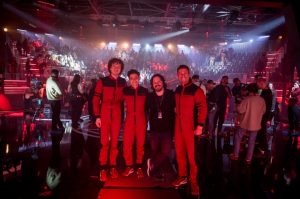
In the book, it’s all pretty much in the North East USA. Co-Op City is where Ben Richard lives, and that’s a fictional city. Myself and Michael Bacall figured out that if the rest of the film takes place in New York, Boston, and then Maine, including Derry, we thought maybe Co-Op City is another city where you’d get a train to New York from, which is the first journey that he does. So we decided that Pittsburgh had been rebranded as Co-Op City in this alternate 2025. Maybe it was a new development in Pittsburgh, so that was our idea.
The whole thing was set in the North East, but most of the studio stuff and some of the location stuff were in London for the uptown sequences, and then we used Glasgow for New York, Boston, and some of the Co-Op City downtown exteriors. Bulgaria came up because we needed to do some countryside sequences, some rural locations. It’s difficult to do American roads in the UK; English motorways just don’t look like the States. But in Bulgaria, weirdly, they do. I was quite happy because some people I know in the States and Canada were fooled. My friend, the director Sean Baker, saw the movie, and said, “Did you film that in Vancouver?” and I was like, “No, we’re in Bulgaria!” I’d never been to Bulgaria before, and they had long stretches of freeways that were not linked up to any other roads; they’d been built but never opened. So we had this long stretch of what we call the ghost freeway, where it’s just an empty stretch, with a bridge and ramps, probably about two miles of it. So all the sequences towards the end, when Ben carjacks Amelia Williams [Emilia Jones], were all shot in an abandoned freeway in Bulgaria.
The most ambitious thing in the movie was that it’s not just shooting Ben’s travels during the game, it’s also that you shoot the other contestants who are in other parts of the country. So you see Katy M. O’Brian in Vegas at one point, you see Martin Herlihy, who’s seemingly still in Co-Op City, he didn’t even leave the city he was in! We had to shoot so many other parts, for all of the other TV shows, like The Hardest Hits, or the other kills that you see, there are about 32 of them. Then The Apostle videos, where Daniel Ezra has his conspiracy videos about the game, which are like supercuts of other episodes. We had to cover a diverse range of locations throughout the shoot. We were shooting the main scenes with Glen, and we were always shooting something else as well.
There’s that brief little bit where Chi Lewis-Parry, who plays Negative Dude, blows himself up outside of a strip club, and that was shot in Glasgow’s Chinatown. It was very challenging for production because we had so many locations, something like 180 locations. So, the first people who were working on the movie were myself, Marcus Rowland, the production designer, and the location manager Eugene Strange. Literally the first thing we did, once the film was getting closer to happening, was get on the road and start looking at cities we could shoot in.
What was it like to work with Michael Cera once more, and what did you want him to bring to the movie as Elton Perrakis? Some of those Home Alone-style sequences looked incredible to do.
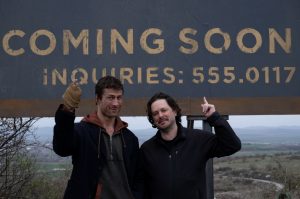
It was great! I co-wrote the script with Michael Bacall, and we did Scott Pilgrim vs. the World together. That character is in the book, and it wasn’t until the year that we were shooting, in 2024, when we started to think about who could play this part. As soon as we said Michael Cera’s name out loud, we were both like, “Wouldn’t that be great!” We’ve remained friends with Michael all this time; it’s been 16 years since we shot Scott Pilgrim. Obviously, I’ve remained friends with him for all of that time, but I haven’t had the opportunity to give him a part, aside from Scott Pilgrim Takes Off, so it was really great. Michael shot Barbie in London, and he really loved being there, so he was really happy to be back.
That scene turned out really well; it was definitely tough because Glen injured himself during the movie, which we talk about on the commentary track. There was a point where we were shooting that scene, where Glen was injured and had to take a few days off, Michael Cera had norovirus, and the only person who was around was Sandra Dickinson, who plays Victoria Parrakis. I think that scene is most people’s favourite, yet when we were shooting it, we started to feel like it was cursed because we were having so many difficulties starting it or getting through it.
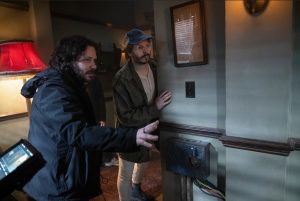
I’m really proud of the scene, I think it just cuts together great. It was so much fun to put together once it was going. It was one of the sequences, at the start of it, where everything that could go wrong went wrong, and you start to think, “Is this whole set piece jinxed?” I think my favourite moments in it are Michael Cera hitting this picture of a cat on the wall, which is a drawing of producer Nira Park’s cat, cracking the glass, setting off the infrared, and then jumping straight through a wall. I love it when it gets into all of that. The fake wall, the fire pole in the shower, all of that was so fun.
The sequences on the jet looked amazing and must have been claustrophobic to capture. In the behind-the-scenes footage, you described this as one of the toughest sets to work on for The Running Man. Can you tell us why that is, and what you remember the most from working on it?
Yeah, I think I say in the making-of documentary that I’m really proud of the sequence, but I’m really happy to not be on the jet anymore. It’s strange sometimes when you shoot a scene, and the intensity of the scene starts to bleed out over into the making of it. There were two different cockpits, one that goes side to side, and one that was made in foam, which could fully dive for the bits where Glen and the other hunters are briefly in zero gravity. Being on the set of a plane, with a gimbal that shakes and tilts, and a cockpit, yeah, it was really difficult. It was really difficult doing the close-quarters fight in the cockpit because you’ve got three actors in a scene, brawling in a very small set. It’s tough to shoot. You’ve got to get two cameras in there, because we have one camera that’s like the movie camera, and because there are all the drones, the rovers are all in there, we always had to have a second camera in there, sometimes two.
So, usually, whenever you’d see a shot with a TV screen in the background, we’d have to have a separate camera on like a pogo stick. It would usually be a little Osmo camera. A different operator would have it on a pogo stick and usually be hiding in a corner, pretending to be the rover. So yeah, it was complicated, and I think several people, myself included, had to step off the jet at some point and go and see the medic, because we had high blood pressure. It was definitely a thing where you had to take a break from being on the plane. I don’t know how else to describe it. So when I see TV shows and films that are entirely set on a plane – Ruben Östlund just did a movie like that [The Entertainment System Is Down] – it sounds like a nightmare! No airports for me, please!

Do you worry people will compare your film to the 1987 version?
I hope people will enjoy it in the spirit in which it was intended. We were really excited and really proud to make this film. As a Stephen King fan since I was 12 years old, the chance to work on an adaptation was just a total thrill, especially to work on this one, because I’ve loved the book since I was a teenager. I’d read the original Richard Bachman book before I saw the 1987 movie, because that film came out when I was 14, and it was an 18 certificate, so I didn’t see it for a couple of years until it was on VHS, by which point I’d read the book. The book and the film are two completely separate things, so I remember watching the film and being a little confused. That was really my whole inspiration to do it.
It wasn’t like I was remaking an ’80s film, or remaking that film, and even if I was, there’s no reason to do that. I’m not really a fan of remakes that are beat-for-beat the same movie. I always call them karaoke films. The best remakes are the ones that do something wildly different, and this was just a thrill to do, on every level, cast and crew. And, just the experience of making it. We only finished making the film in late October last year, like literally a few weeks before it came out. So, it’s crazy. I was doing signings and people were saying, “What are you working on now?”, and I said, “I just need a minute! I’m figuring it out” I feel like I only finished the film yesterday!
Is it true that you were given one of your shortest windows to date to put The Running Man together? It’s an incredible achievement.
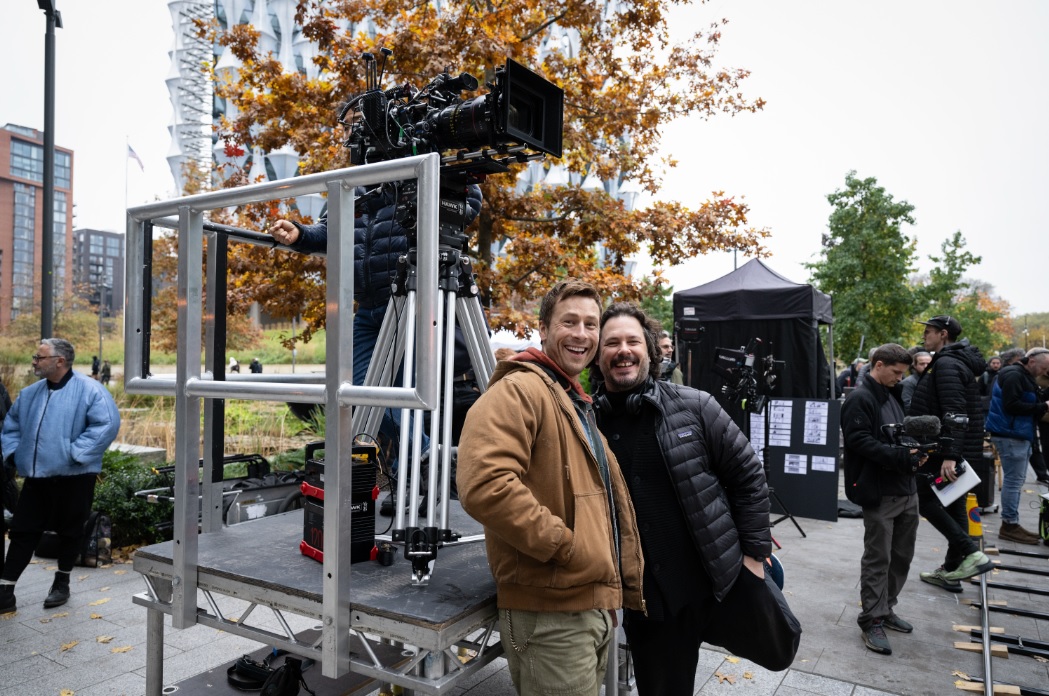
Yeah! I don’t want the takeaway from that to be that the film was rushed, because I think that we were incredibly thorough. We knew that going into it. It was actually one of the few times in my career when I had a release date for the film before I started; that’s a lot of pressure. It was before the whole merger and everything at Paramount.
It was actually Mike Ireland, who was the previous head at Paramount, who called me in early 2024. I’d been working on a different film, and The Running Man had been in development. Michael Bacall had done two drafts, and the other film I was working on had fallen apart schedule-wise because of the actors’ and writers’ strike. He called me and said, “Why aren’t you doing The Running Man? You could be in production by the end of the year, and we can have it out in November of 2025”. That’s a very rare thing for a studio head to say.
So we knew, going into it, what the schedule was, and, as such, even though that was tough on the shoot and particularly on the post, we were able to plan for it. The biggest part of that was editing as we went along, so we were constantly editing on set during the entire production. But also, for Industrial Light & Magic to finish all of their work – and I think their work on the film is just exceptional – we had to have all of our designs figured out before we started filming.
During the shoot, you would turn over shots. So that would mean you’d turn over shots before you finished, and you’d have started editing. That was easy to do, you’d sit there and watch a hero’s stunt shot, and say “Let’s look at takes one to four. OK it’s definitely take three, let’s hand that over.” You’re doing that as you’re shooting, so by the time we had finished filming in April, we went to CinemaCon and showed the teaser trailer and Industrial Light & Magic had finished some shots, which was amazing, so that really helped. I can’t say enough about how hard everybody worked on the post. I don’t want to say that it was a short time frame. I don’t want to make it sound like we rushed the movie or anything, because we were incredibly thorough, and I just think the work done in post was exceptional.
THE RUNNING MAN is available on 4K SteelBook, Blu-ray, DVD, and digital. You can follow Edgar Wright on Instagram.