PLATFORM: PC, PS5, XBOX SERIES (REVIEWED) | RELEASE DATE: OUT NOW
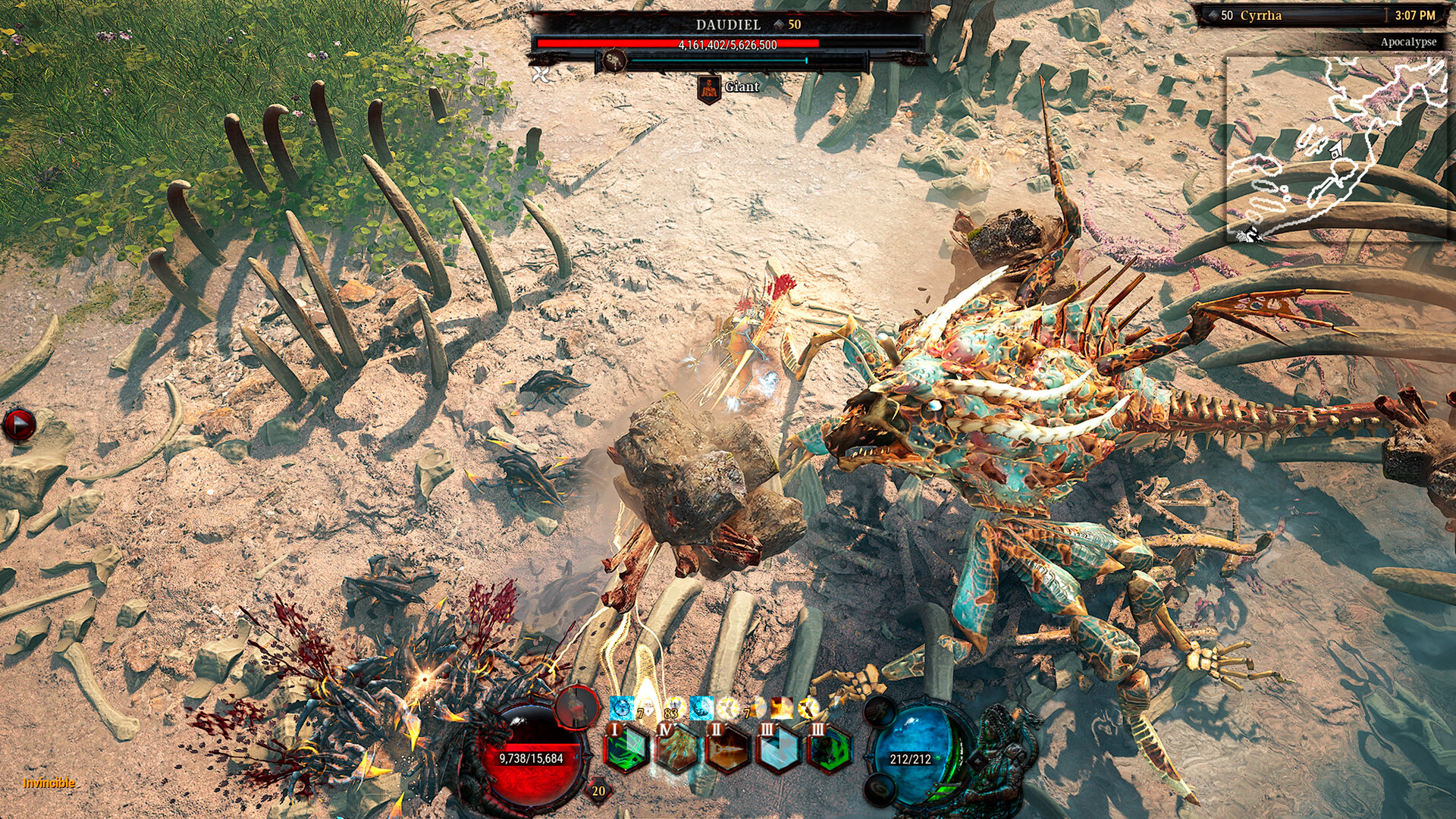
Closely following the familiar action RPG formula, Dragonkin asks players to save the world by stepping into the shoes of one of four classes – a knight (tank), barbarian (brawler), oracle (mage) or tracker (ranged) – and fighting through a roughly 12-hour campaign. An isometric looter along the same lines as Diablo, Torchlight 2 and Path of Exile, Dragonkin differentiates itself from its peers with its levelling system. Your skills, once acquired, must be slotted into a hexagonal Ancestral Grid which expands as you level up, allowing you to add more perks and mods to your five main abilities. Throughout the course of the game you’ll amass a huge variety of buffs and skills to choose from, all potentially linking to each other on the grid to add buffs to their neighbouring tiles. When combined with the huge amounts of equippable loot that you find during quests, you end up with an almost overwhelming amount of options when it comes to building your character, giving even the most demanding player more choice than they could possibly need.
The main campaign is fairly standard stuff as far as ARPGs go, and will feel familiar to anyone who’s played pretty much any other game in the genre. Alongside the Ancestral Grid though, you’re also responsible for multiple skill trees linked to not only your character’s attributes (health, energy, armour, that sort of thing) and those of your wyrmling (your pet / assistant) but also the entire city of Montescail, which acts as the game’s main hub. By upgrading the various different areas of the city, you’ll gain access to even more perks and buffs that affects your character, wyrmling and overall stats.
Post-story, you gain access to the War Room where you can continue to improve your character by going on hunts – quests with modifiers that affect your abilities, enemy behaviours and even the surrounding environment. Other than these modifiers though, there’s not a huge amount of difference between these hunts and the quests that you play during the campaign, but there are a couple of other mini-mission / dungeon crawling diversions and several difficulty settings so you can keep on grinding away to improve your gear if the game really clicks with you.
While not as fully featured as some of its contemporaries, Dragonkin provides a decent amount of fun. The Ancestral Grid adds an enjoyable way to customise your abilities, but the endgame might not quite live up to those found in similar games. If you’re looking for a break from any regular ARPG favourites, it’s well worth considering giving this one a try.