The Picture of Dorian Gray is, infamously, Oscar Wilde’s only published novel. Originally published as a novella in 1890, the full-length version was released in 1891. Since then, the story has been subject to frequent adaptations and has become a favourite among theatre-makers in recent years.
Here, the story has been adapted to become a musical, and elements of the story have been adjusted in order to make it contemporary. Most notably, Dorian (Alfie Friedman) is concerned with immortality, rather than merely the retention of his youthful appearance – although that is certainly a consideration for him.
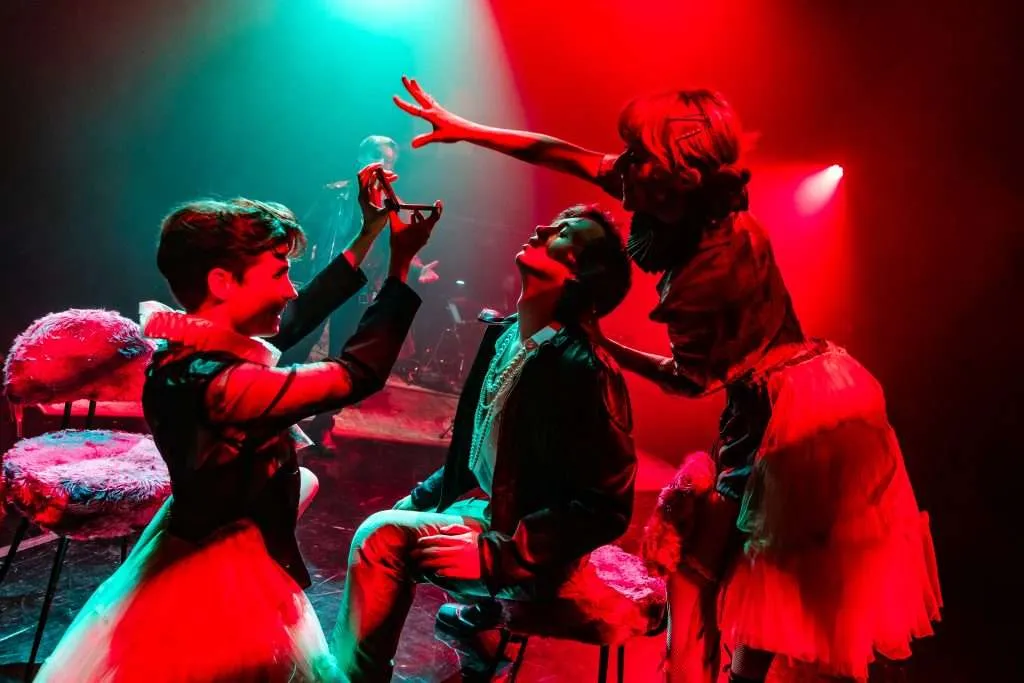
As it’s nominally 2024 within the world of the production, everyone is much more about being An Influencer, and Dorian becomes a budding rock star. His career is guided by Lord Henry Wotton (George Renshaw), and Dorian is styled by his wife, Lady Victoria (Gabrielle Lewis-Dodson), whose role has been greatly expanded from the original, where, it is fair to say, the female characters are almost wallpaper.
The character of James Vane is replaced with the non-binary Fabian – still a younger sibling of Sibyl (both played by Megan Hill, But I’m a Cheerleader – Turbine Theatre). Sybil is shifted from being a Shakespearean actor entertaining the working classes to an opera singer performing in Covent Garden. Basil is now Baz Hallward (Leeroy Boone), a photographer engaged to take early shots of Dorian, and make him appealing to the masses.
There’s a great idea here. The idea of trying to retain one’s youth is rendered less important in the age of botox, cosmetic surgery and hair dyes in such a rainbow of colours that many people go decades without knowing the true hair colour of their closest friends. So, changing the focus to how one attains immortality and situating that within the world of fame achieved through musicianship is inspiring. There’s the potential to say a lot through that lens, especially in this modern, social-media-obsessed era.
The problem is that the manifestation of that idea has been rendered poorly. There’s an overwhelming sense of confusion as to when we are. Sybil’s operatic career and Dorian’s attendance at her performances are straight out of the 1890s, whereas the cocaine use the ‘rock stars’ engage in is drawn from the 1980s. Neither of these conceits works when placed into the context of the story this production seems to be trying to tell. The modern is represented by the occasional passing reference to social media sites – including an actually very cleverly inserted reference to TikTok, but otherwise, characters just wave smartphones around occasionally.
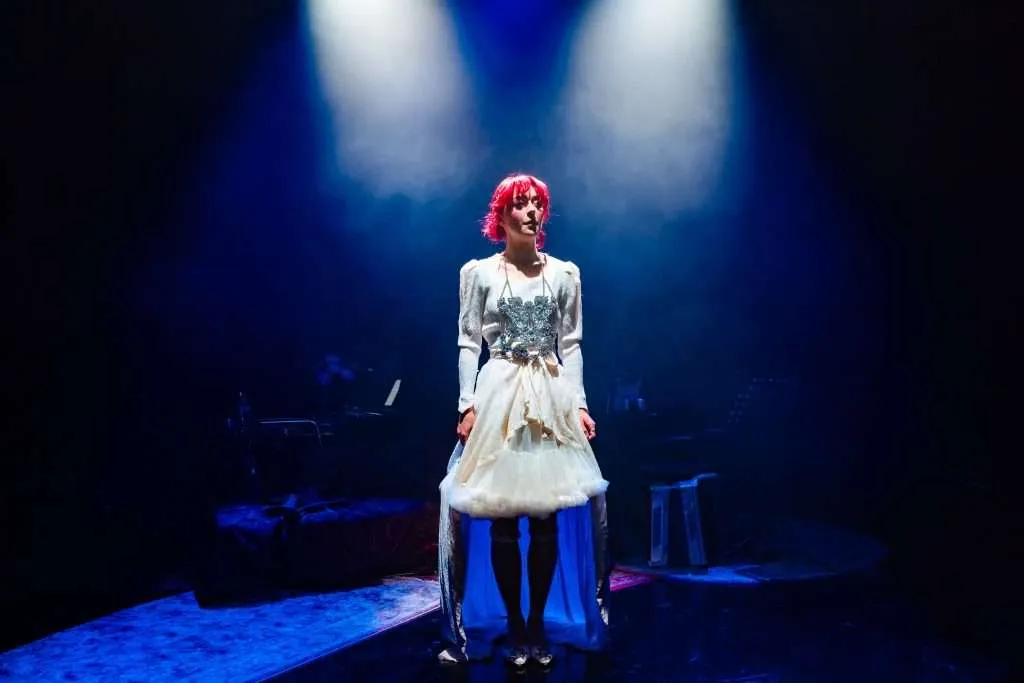
It’s very hard to see an emerging Harry Styles/David Bowie wannabe spending his free time hanging around the Royal Opera House, and all but unimaginable that Sybil would quit her career for a bohemian life with Dorian. Perhaps if Sybil’s character had in any way been developed, it might have been easier to understand what she sees in Dorian, but as it is, Sybil feels like one more tick-box on the list of ‘elements that need to be included’ by the writers. Further, was the change even needed? The media has an obsession with actors, and framing Sybil as a leading light of the West End stage, specialising in subversive Shakespeare, would have retained the spirit of Wilde’s original character and allowed commentary on the nature of celebrity relationships.
Dorian’s ‘descent into sin’, as led by Lord Henry, here called Harry, but still a Lord, just doesn’t ring true either. Repeated tabloid scandals, five seasons of The Crown, and a slew of Wikipedia articles have made it very clear that the upper classes frequently have affairs and very rarely feel the need to divorce as long as discretion is maintained. The fixation on huge amounts of cocaine is also misjudged, given that an emerging artist caught doing anything stronger than pot would find their career dead before it could flourish, such is the current ‘purity culture’ currently gaining momentum.
Unsure of where to situate itself in time, the script is also unsure of where to situate itself tonally in respect of issues of morality. Using the phrase ‘the love that dare not speak its name’ to refer to an MLM relationship in 2024 feels like a relic of antiquity.
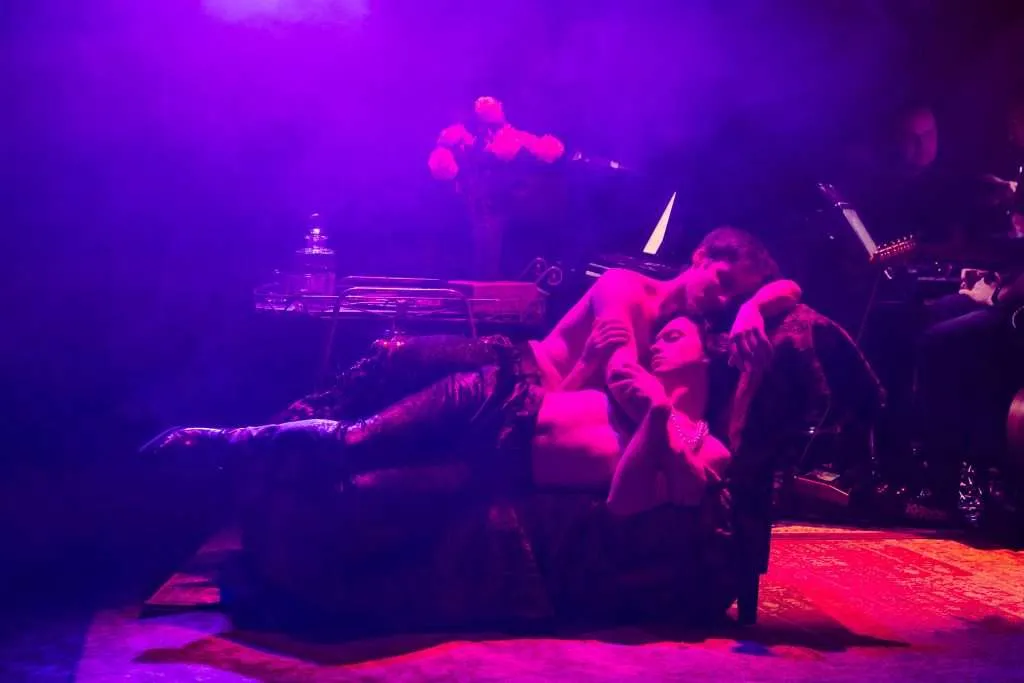
It’s possible, however, to read this Dorian as being aromantic. This would have been an interesting area to explore, as the ‘A’ in ‘LGBTQIA’ is often either omitted or misunderstood. Dorian’s frequent cries that he thinks there’s something wrong with him because he doesn’t feel love feels strongly like the confusion that arises when someone is aromantic, or on the aromantic spectrum, and trying to come to terms with themselves in a romance-obsessed world. Given the nature of the multiple relationships shown, we’d love someone to have given the writers a primer on polysexual and polyamorous relationships. If, as the programme notes suggest, you’re trying to ‘enjoy a freedom that Wilde could only dream of’, then pushing the boundaries of what’s considered acceptable today would have been interesting.
The music and lyrics are also interesting but, again, seem to fail to align with the aesthetic being presented. Dorian is channelling Hendrix and Amy Winehouse in a production that claims to be punk rock. It feels more like a 1970s concept album, given the mix of musical genres on display. There are some great songs in here, especially Son of Love and Death and the ethereal Where the Yellow Roses Grow. However, at times, the whole production feels more like a ‘gig musical’ than entirely just a ‘musical’.
What shines is the cast, who give it everything they’ve got. Alfie Freidman plays Dorian as a sort of dream-like Pan figure, causing chaos wherever he goes while being unsure as to how much he’s responsible for enticing others to their ultimate demise. It’s impossible not to watch him when he’s on stage, and it’s easy to see how so many people fall under Dorian’s spell.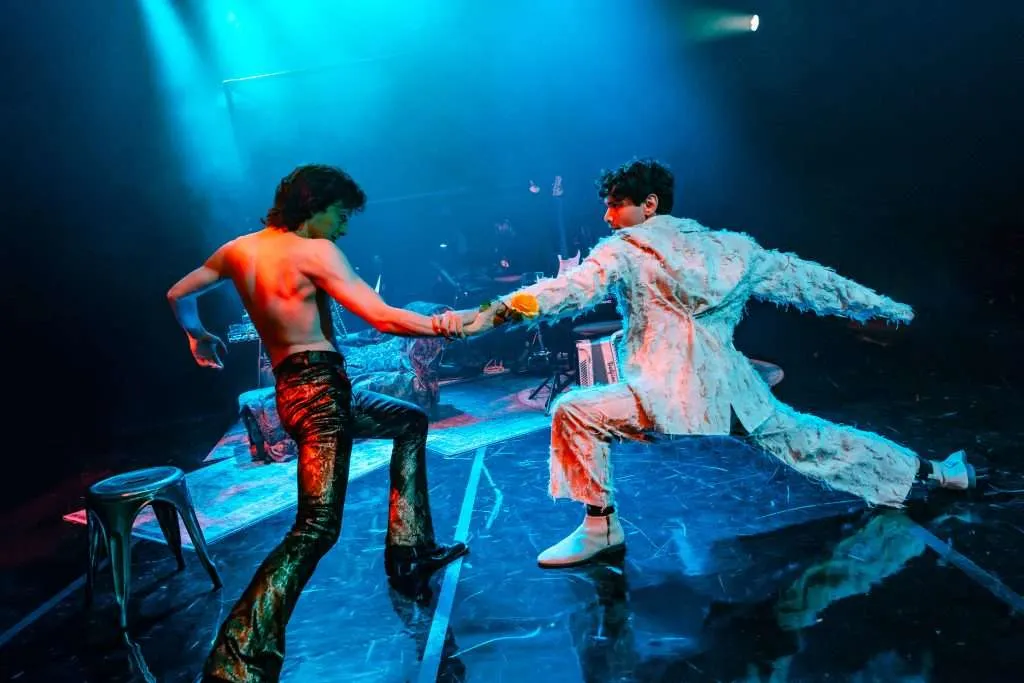
Megan Hill, appearing in the dual roles of the Vane siblings, gives a compelling interpretation of two very contrasting roles. They are a talent to watch. Gabrielle Lewis-Dodson and George Renshaw excel as the high society couple who can’t seem to stay married, but are equally bad at being divorced. More banter between them would have been delicious to see, to add to the existing moments when they cross barbs.
Leeroy Boone has less to do in the small role of Baz, who, once he becomes aware of the horrors being unleashed by Dorian and Harry, flees, only to return for the denouement of the action. What he does have, he delivers well, and there’s a lovely fluidity to his movement as Baz tries to capture Dorian’s soul on film.
Isabella Van Braeckel’s costume and set design do their best to draw all the disparate elements together. This is most successful in the costuming of Dorian, and the realisation of the ‘Club 27’ set. Adam King’s lighting design also works effectively to convey the various locations and emotions on display.
It’s always difficult to stage any new musical, especially one that, like here, is comprised of entirely new songs, and not reliant on a known back catalogue. For having the courage to stage this show at all, credit must be given. We just wish the idea had been thought through more, and stronger decisions made within the script of the exact story being told. We’d be interested in seeing a future iteration once this has been worked on, and we’d welcome the songs being uploaded to a streaming site to allow an audience to gain familiarity with them.
A strong idea that needed more attention in execution, this Dorian doesn’t age, and neither, unfortunately, does he rock.

DORIAN: THE MUSICAL continues at the Borough venue of the Southwark Playhouse until August 10th, 2024