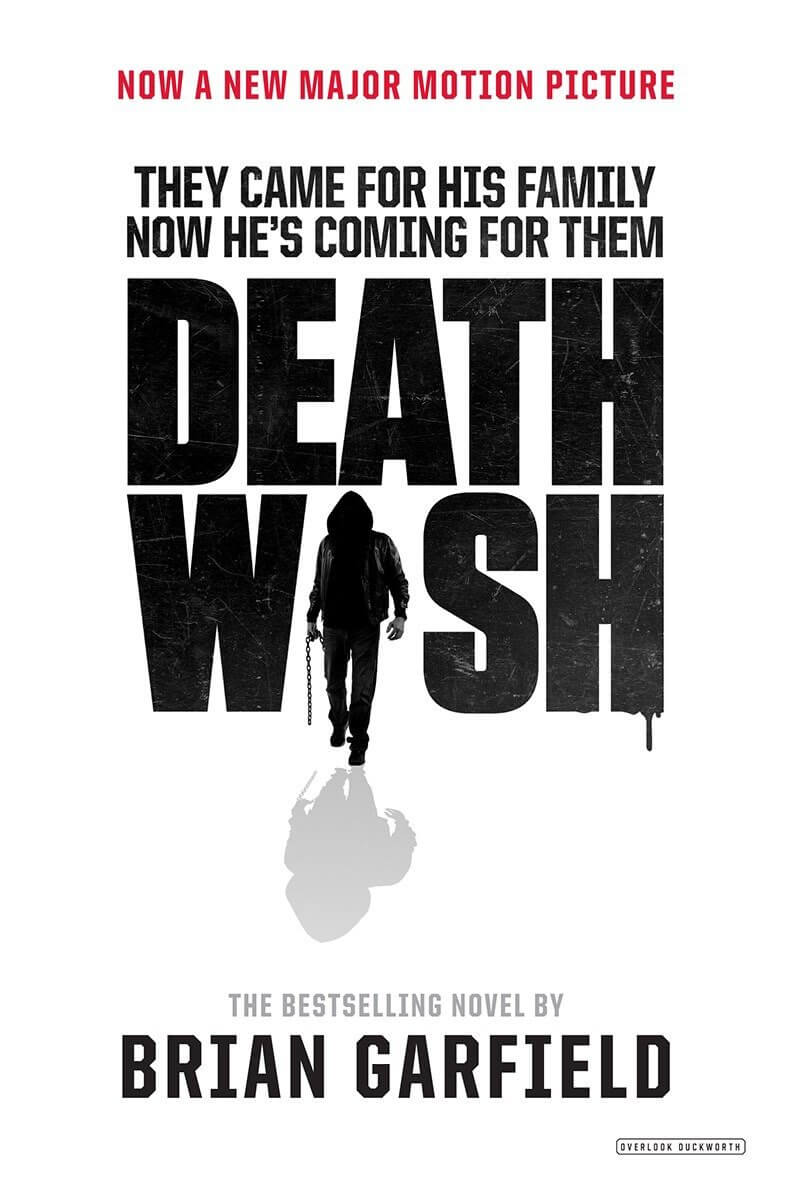
There are films that are famously based upon books, and then there are lesser-known books that are somehow lost in the shadows of the movies they inspired. Gordon Williams’ The Siege of Trencher’s Farm (better known as Straw Dogs) is one of them and Roderick Thorp’s Nothing Last Forever (aka Die Hard) is another. Both of those novels are swift, punchy, and add a whole new dimension to the films we thought we knew. Brian Garfield’s Death Wish, which has just been re-issued to tie in with the upcoming Eli Roth reboot, is – like The Siege of Trencher’s Farm – an especially pleasant surprise because it contains a lot more depth and humanity than Michael Winner’s notorious cinematic incarnation. Anyone looking for cheap thrills need not apply, but anyone willing to switch off their memories of Bronson’s Paul Kersey and lose themselves in the far more ‘emotionally real’ revenge quest of Garfield’s protagonist Paul Benjamin may find themselves examining the Death Wish they thought they knew in an entirely new light.
In its barest strokes the book and the film are essentially the same. Benjamin, a successful-but-soft-around-the-belly New York City accountant (probably the only real improvement Winner and screenwriter Wendell Mayes made was to make Bronson’s character a more visually-interesting architect), becomes a grief-stricken vigilante after his wife and daughter are attacked by a gang of drug addicted home invaders. They left his wife dead and his daughter comatose and the police seem unable or unwilling to bring any of the perpetrators to justice, which leaves Benjamin with no choice except to pick up a revolver and take matters into his own hands.
Before long, he is stalking the streets and indiscriminately gunning down bad guys, polarising the city with the news that a vigilante assassin is on the loose and relentlessly homing in on the punks who destroyed his family. The book is different from the film in many important respects, especially the climax (the book is arguably better), and Garfield handles violence with a lot more finesse than we’ve come to expect from the big-screen franchise. In fact, it’s Garfield’s restraint that makes the horror of Benjamin’s situation even more intense because (unlike Winner’s film) the violence isn’t crass or exploitative. We’re not cheering on some middle-aged terminator as he cuts a stone-faced swathe through the NYC mean streets, we’re fearful for a man who is deeply tragic and vulnerable, who has no regard for his own safety because his entire world has been pulled down around him.
In the films, there is never any question that Bronson will be the last man standing. The book isn’t so certain. Even if Garfield’s prose does veer towards pulp a little too often it never loses sight of what’s spiritually and morally at stake for a man whose relentless thirst for revenge is endangering his own soul, and although the 1970s-era NYC locale does occasionally make the novel feel a little dated, everything else about this story feels bang-bang up to date.
DEATH WISH / AUTHOR: BRIAN GARFIELD / PUBLISHER: GERALD DUCKWORTH & CO LTD / RELEASE DATE: OUT NOW