Before it acquired its current name, Dawson City was Tr’ochëk, a small settlement where the Klondike meets the Yukon. The site was an important summer gathering spot for the Tr’ondëk Hwëch’in First Nations people, until gold was discovered at Bonanza Creek in 1896 by American prospector George Carmack and his First Nations wife Kate. As was the way with such things, the Tr’ondëk Hwëch’in were moved off their ancestral lands, and a claim was staked to build a town by Joseph Ladue, who grew rich off the goldrush.
The town’s fortunes waxed and waned over the ensuing decades, from the ‘Paris of the North’, a conglomeration of theatres, bordellos, and dancehalls at the end of the trail, to a dwindling after the Alaska Highway was built in the 1950s. By 1978, Dawson was a sleepy town of less than a thousand people until another discovery revived interest in the area, and that is what brings us to Bill Morrison’s feature-length documentary film, Dawson City: Frozen Time.
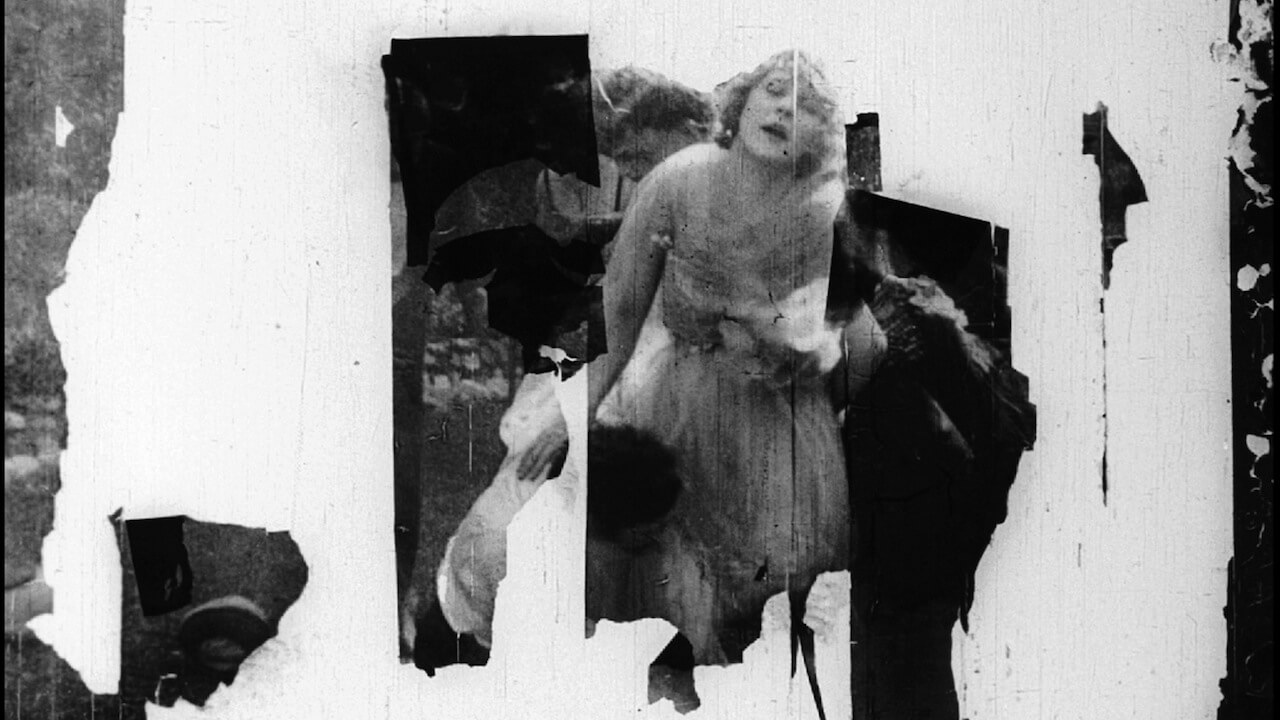
When a digger-operator unearthed a cache of silent-era films behind Diamond Tooth Gertie’s casino, historians’ hearts were set racing. Once the find had been sorted, over five-hundred film reels from the first two decades of the twentieth century had been secured, many of which thought lost to time and some of which lost to record. Alongside serials, shorts, and features starring Lionel Barrymore and Douglas Fairbanks, was footage of the 1919 ‘Black Sox’ baseball scandal, clips of which open Morrison’s movie.
Using the recovered film, alongside other contemporary footage and still photography, Morrison weaves a narrative not only of the discovery of the films but of the complete story of Dawson City, the gold rush, early cinema, and more, contextualising and giving weight to the cache outside the interest of film historians.
He does this using techniques that would have been familiar to early filmmakers. Outside a few voiced interviews with surviving witnesses from the Dawson of 1978, the film is told as if it were a silent movie, with evocative music and on-screen captions giving meaning to the vintage images. The music is stunning, provided by Sigur Rós collaborator Alex Somers, rising and falling with the plot, atmospheric and tangible, and the captions weave a tale that features some infamous, larger-than-life figures, such as Klondike Kate Rockwell, Fred Trump (Donald’s grandfather, who began the Trump empire in Dawson), and Sid Grauman, who built the famous Chinese Theatre in Los Angeles but got his start in the frozen north.
It’s not always a happy tale; besides the First Nations people, and the sad story of their land being stolen, disaster strikes often. The Yukon was not a place for the fainthearted, and many died even trying to make it to a place where life could be hard. With so many people crammed into what we would now call “shanty towns”, fire was a constant threat, especially in the picture houses where the super-flammable film reels would often burn quick and hot, causing the deaths of many pleasure-seekers. Morrison does not shy away from these events, making good use of the photographs of Eric Hegg to illustrate the aftermaths.
The result is a beguiling, often hypnotic documentary, overstepping its initial premise into unexpected territory, much like the initial prospectors had done over a century before. Morrison is a master filmmaker; the film’s two hour running time falls away as you are drawn into the story and it’s easy to see why his previous feature, Decasia, was the most recent film named to the Library of Congress National Film Registry. Dawson City: Frozen Time is a recommended watch for fans of documentaries, history, and film – or just anyone who fancies a couple of hours in another time, another place.
DAWSON CITY; FROZEN TIME / CERT: E / DIRECTOR: BILL MORRISON / SCREENPLAY: BILL MORRISON / RELEASE DATE: OUT NOW