An ancient artefact is the subject of WHISTLE, the latest from director CORIN HARDY. In the film, a group of teens fall foul of a Mayan death whistle that, once blown, unleashes a demonic force that brings their eventual horrific deaths forward to the present day. Hardy takes us behind the scenes of the hit movie…
STARBURST: What drew you to the project?
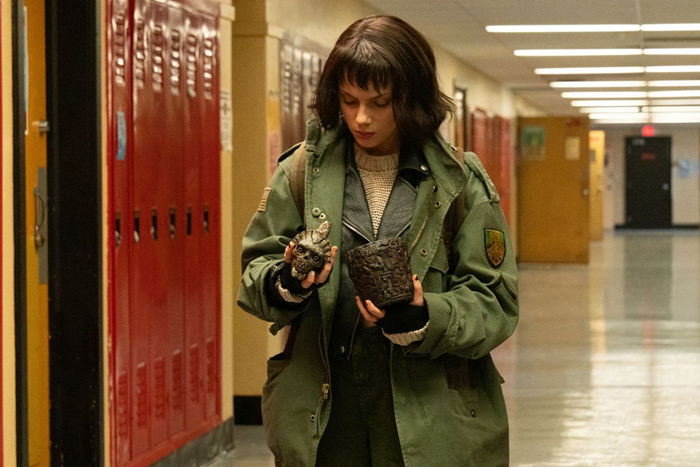
Corin Hardy: I read Owen Edgerton’s script, and I loved the simple but strong mythology surrounding an ancient, cursed object, an Aztec death whistle, and I hadn’t seen the movie of that object before. It’s so hard to find new mythologies in horror. I loved what the script had going for it. The balance of emotional stories about the teenage characters and commentary on death itself, as well as the simple mythology. If you hear the whistle scream, it calls upon your future death to hunt you down. I was like, “I can say that in one line, and it’s got its own mystery and fear about it”. On top of that, there’s also a handful of very kind of tantalising death sequences. They’re quite imaginative and visual. And as a fan of special effects, I was thinking how am I going to create some of these things? That’s what got me to sign on board.
The film’s sound design is great. Were you hands-on with that side of things?
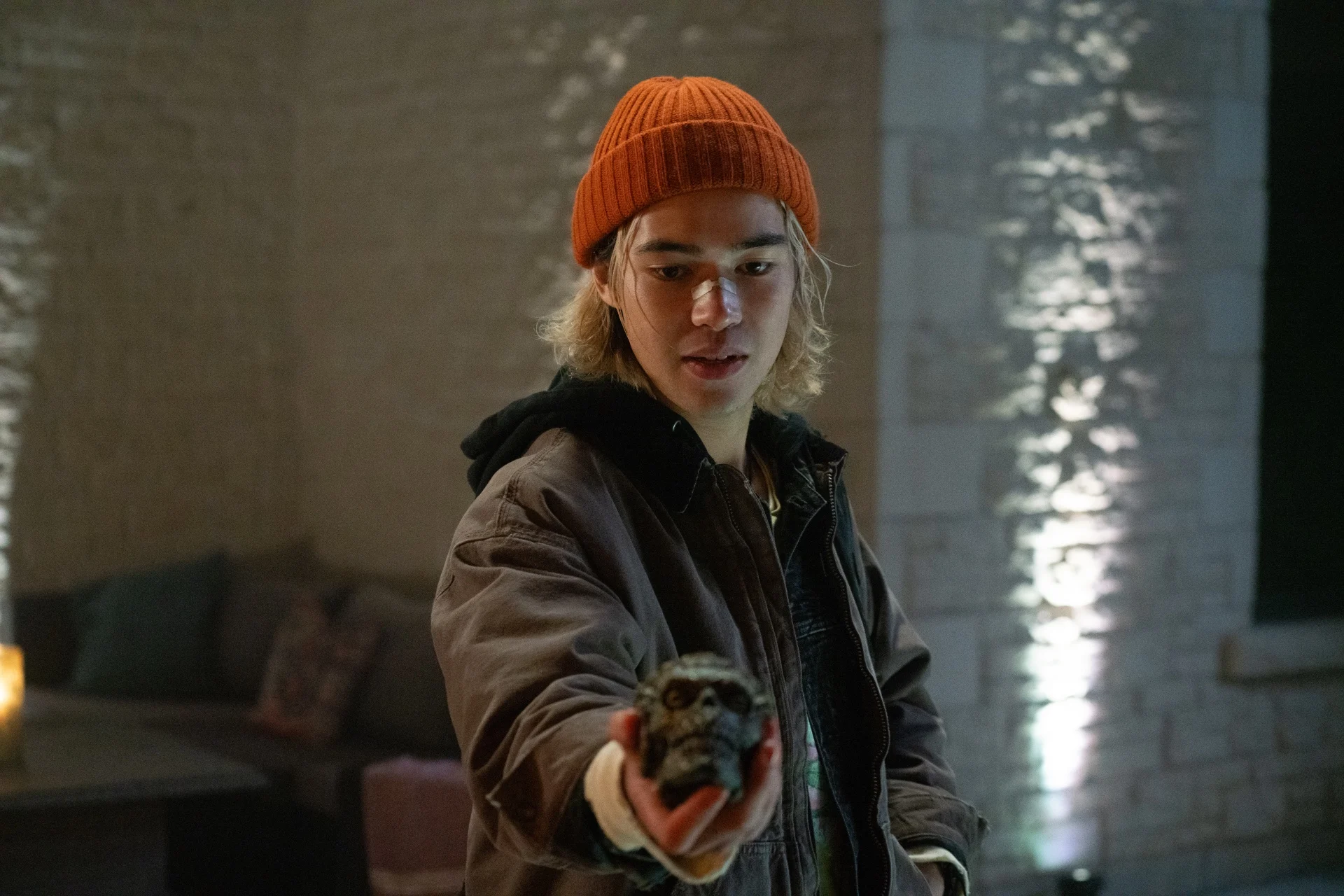
It’s such a big part of the movie. It’s a big part of any horror movie, the sound design, you know, 50% of it, the experience is coming from the audio. If you go on YouTube and search death whistle, you can hear some of the sounds, and they’re pretty unnerving, and the mythology behind them and the reasons is very mysterious. I knew I needed to create a multi-layered sound that had to be scary. It’s a given that it’s going to be a terrifying sound. But what really did it for me was informed by the narrative. The idea is that this object is ancient, and has been responsible for probably hundreds of thousands of deaths, because it’s been around for thousands of years. I like the idea that it claims their voice in the next scream. And the idea that what you’re hearing is the victims of the whistle in this culmination.
How did you create the sound of the whistle?
We used many layers of sound for the different times you hear it. Of course, you don’t hear all of these nuances. But I got the actors themselves to perform screams that go back into the whistle. We had voice artists performing languages played backwards and slowed down, and there are animal sounds. All trying to reflect the idea of something ancient with a history. And it’s almost like the sound moves around you. Hopefully, you’re in the cinema when you see it, and its sound will consume you.
It feels like one of those ensemble films from the ‘80s…
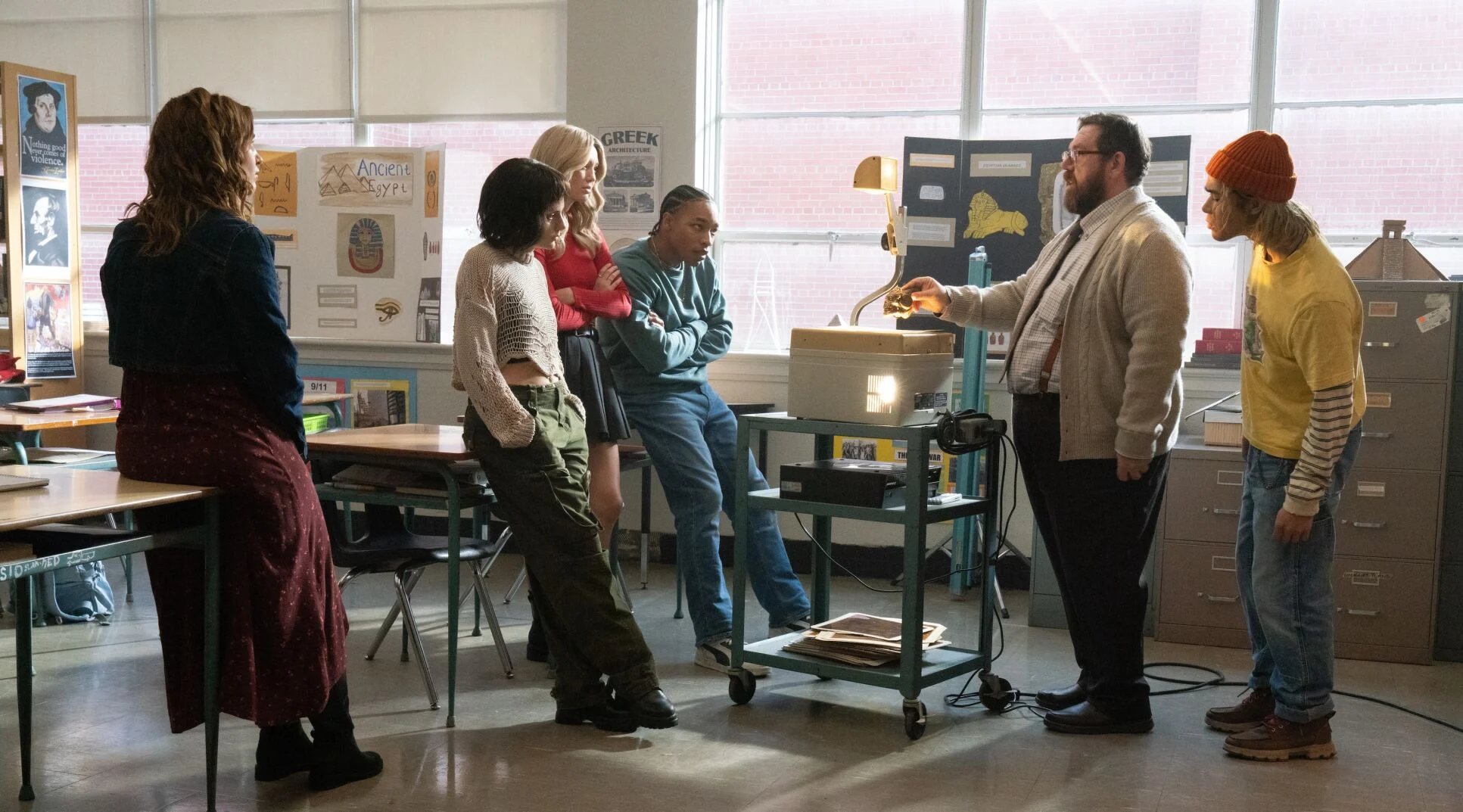
We were looking at films like The Lost Boys, A Nightmare on Elm Street, or The Breakfast Club, wanting to capture that teenage feel of bubbling energy amongst them. We didn’t have very much time to prepare, so rather than do lots of rehearsals, I took them to an escape room. Nick Frost wasn’t there yet, so I played his Mr Craven part. I said, “Let’s do the escape room, but in your characters, not doing the lines from the movie, just embody your character”. So they all enjoyed a kind of playtime while being those characters. Some of them had crushes on others, some of them didn’t like others, some of them, Sophie and Dafne were having this early stage of attraction. It was very helpful. And then two days later, when it was minus 15 degrees in the swimming pool at night, they were able to concentrate on the scene as opposed to what they were like with each other.
It’s very good to see that it’s not all just CGI effects.
Yeah. Steve Newburn and Paul Jones were our practical effects guys, they’re doing phenomenal work at the moment. They’ve just done Frankenstein, Ari Aster movies, and What We Do in the Shadows. They did such great work on Whistle, sculpture and animatronics and stuff. And combined with Björn Charpentier’s cinematography, where we really looked at movies from the ‘80s, like The Lost Boys, to kind of get that colour. There’s a real beautiful look to the cinematography of The Lost Boys. There’s almost silver in there. And Björn did an incredible job with that world. And Jen Spence, who’s a production designer who did The Nun, also worked on Whistle.
We’re glad you mentioned Björn, as the cinematography is fantastic, and the film looks amazing. We assume you brought Björn on board from working with him on Gangs of London?
That’s right. Yeah. Björn and I worked together on Season Two and hit it off. And when I got Whistle, I asked if he’d do a horror movie. He’d done the folk horror film Blood with Brad Anderson, who did Session 9, but he wasn’t a massive sort of horror trivia guy. But he’s an absolute cinematography fanatic. He really studied certain looks that we were going for. He came and lived with me when we were in Toronto during production. I loved the way he mixed light and colour, because I knew I wanted Whistle to be a colourful movie, not a kind of bleak, washed out movie. I want it to feel although I like, you know, you can achieve a scarier look in horror when you kind of like, almost degrade the image or make it look like found footage. I wanted this to feel like a classic movie, some of the movies I grew up on, whether it’s The Thing or A Nightmare on Elm Street, or Fright Night, or The Blob, and give it a really solid cinematic look, so I’m pleased you like the look of it.
It certainly comes across…
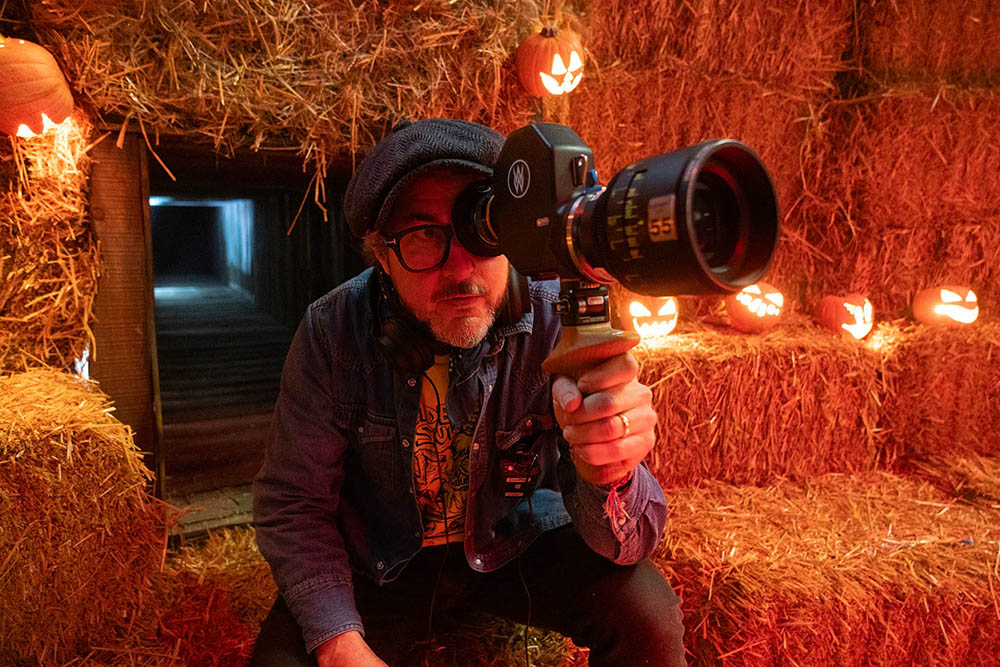
Yeah, particularly in the Harvest Festival sequence, I love this idea of the middle of the movie taken off into a different world outside the high school. I grew up loving Bonfire Night and going to festivals with the fireworks and romance in the air. And having that as a place they all go while their death is hunting them down felt exciting.
WHISTLE is in cinema from February 13th.