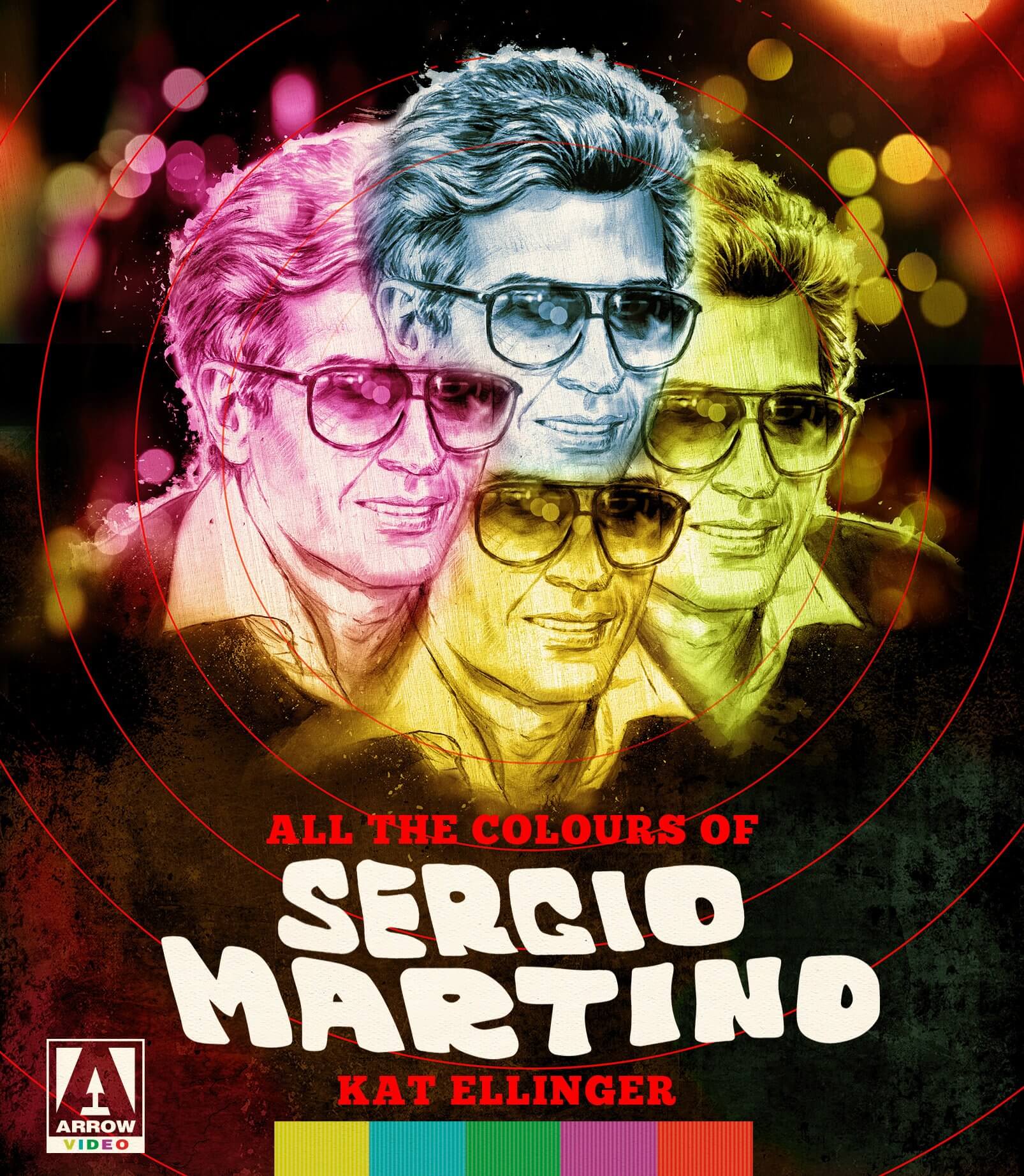
Despite over 60 films as director to his credit, as an auteur figure Sergio Martino remains elusive. Not as celebrated as fellow countrymen Dario Argento and Lucio Fulci, Martino has nonetheless in the last forty or so years made important contributions to a number of Italian exploitation genres. He’s best known for his giallo films All the Colors of the Dark and Your Vice is a Locked Room and Only I have the Key (both 1972) (and to a lesser extent Torso, 1973); but, as Kat Ellinger illustrates in her excellent new book, Martino’s colourful career spans westerns, sex comedies, crime movies and even cannibal horror films. Ellinger portrays him as one of the great journeymen of the Italian cinema, ready, in her words, ‘to embrace any new popular fad’; but, equally, films like The Violent Professionals (1973), A Man Called Blade (1977) and The Mountain of the Cannibal God (1978), as Ellinger argues, mark him out as much more than a hack, even if at first glance he seems to have no readily identifiable directorial signature.
Ellinger divides her book by theme, focusing first on Martino’s late ‘60s/ early ‘70s gialli before going on to look at his work in the poliziotteschi (crime thriller) genre of the early ‘70s; followed by his sex comedies later that decade, his entries in the Italian cannibal and science fiction cycles of the late ‘70s/early ‘80s, and finally his notable television and film work of the ‘90s (which includes episodes of the mini-series Private Crimes [1993] and popular cop show Carabinieri [2006-2007])
Through careful analysis, Ellinger pinpoints those aspects that distinguish Martino’s work from others in the Italian exploitation field. His early gialli, for example, build on the thrillers of Mario Bava and Umberto Lenzi, but at the same time pave the way for the later works of Argento. What’s more, Martino’s gialli, as Ellinger points out, belong within a tradition of specifically female-centric thrillers that explore elements of sadomasochism in their women protagonists. In this way they differ markedly from Argento’s male-orientated gialli. Martino’s four poliziotteschi, by contrast, show his affinity for the action-thriller movie and his admiration for such directors as Costa-Gavras, with their shared theme of police corruption.
Ellinger includes chapters on some of the key performers in Martino’s films, including Edwige Fenech, whom Ellinger argues was the backbone of many of Sergio Martino’s major works, and the stars of Martino’s Italian sexy comedies. This later chapter in particular highlights the problem of trying to survey the career of such a prolific director, many of whose films are unavailable in home video format. Rather than attempt a complete survey of Martino’s sex comedies (which account for approximately a third of his output) Ellinger instead groups the films thematically around the director’s key collaborators in this genre.
Ellinger’s study emerges as an intriguing portrait of Martino which also leaves room for extra discovery; and for those who want to track down his films for further exploration Ellinger includes a useful guide to Martino’s key works on disc. Missing from this volume’s appendices is a complete filmography, which would have been handy to have as much of Martino’s work remains obscure, with a number of his movies known by alternative titles. That minor quibble aside, this is a beautifully written and highly informative companion to the director’s films, which vividly highlights the many colours of Sergio Martino.
ALL THE COLOURS OF SERGIO MARTINO / AUTHOR: KAT ELLINGER / PUBLISHER: ARROW BOOKS / RELEASE DATE: OUT NOW