Set against the growing tensions between the US and Palestinian activists Black September, this action/disaster film takes real-world situations to the extreme and builds to a fantastic finale.
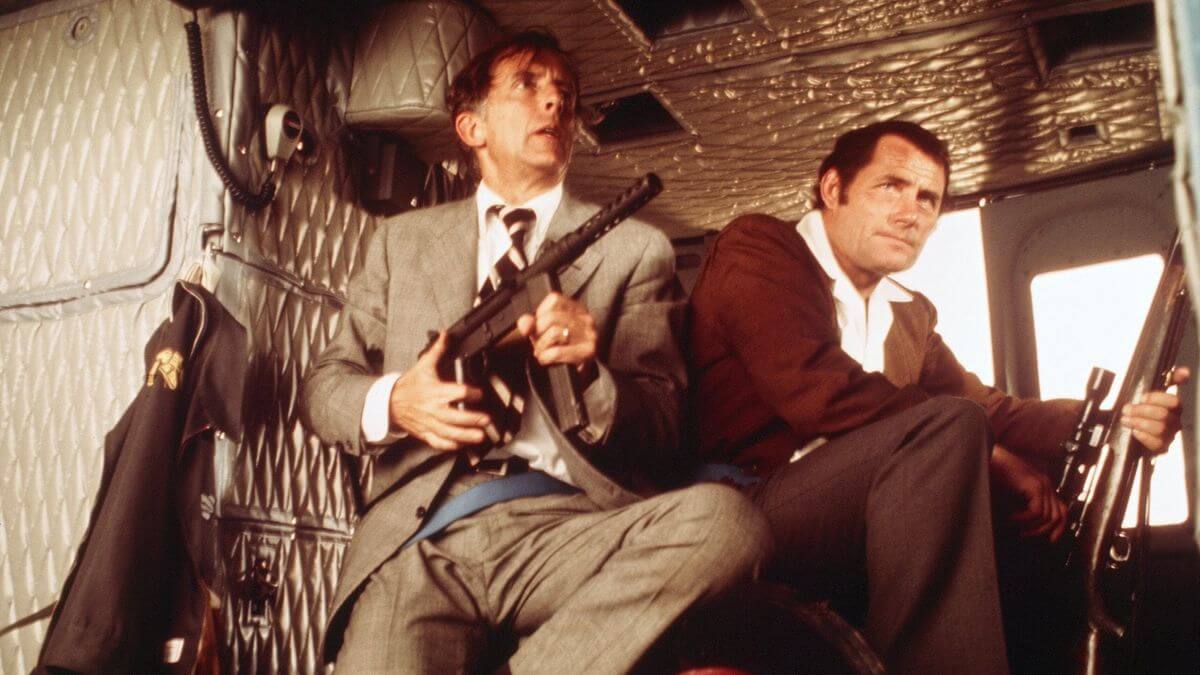
After a mission in which Major Kabokov (Robert Shaw) let one of the leaders of a terrorist group, Dahlia (Marthe Keller), escape, he and the CIA race against time to stop the next atrocity planned on US soil. Dahlia has seduced Michael Lander (Bruce Dern), a disturbed Vietnam veteran, into joining their plight. His treatment following the war giving him more than enough venom to attempt to blow up the Goodyear Blimp and kill as many people as possible during the annual Super Bowl.
Black Sunday is unique in its approach to both the foreign and domestic terrorists, pretty much confirming that it is the actions of the US and ally countries that create the unrest that leads to the terrorists wanting to commit atrocities. The original novel was written by Thomas Harris, long before he would hit the mainstream with his Hannibal Lecter books, and the adaptation manages to produce one of the best examples of the genre. Director John Frankenheimer (The Manchurian Candidate) knew how to film action to get the most from every element and the widescreen image is packed with detail. Both Shaw and Dern are at the peak of their talents; Shaw understated and authoritative while Dern plays deranged better than almost anyone else. It’s a shame, then, that Shaw would be dead the year after release. The climax involving the blimp and the Super Bowl is spectacular – Paramount were allowed to film at the actual event – heightened by John Williams’ superb score.
It’s likely that something like this happened at the time of production was speculative fiction. We’ve seen in recent decades that the reality can be often much worse, making this escapist action flick look minor league. It’s still incredibly exhilarating, though, and is in the same vein as ‘terrorist disaster movies’ such as Rollercoaster. The Blu-ray release, from Australia’s Imprint label, boasts a fascinating commentary from Stephen Prince highlights a lot of Frankenheimer’s framing choices and is recommended listening for budding cinematographers.