Like a more enigmatic The French Lieutenants Woman but made by John Cassavetes on speed, Black Bear takes the concept of a film within a film to explore the creative process and the potentially damaging result of creativity on personal relationships. It is a complex, exciting, powerful mind-fuck held together by an absolutely riveting central performance from Aubrey Plaza, who is stunning.
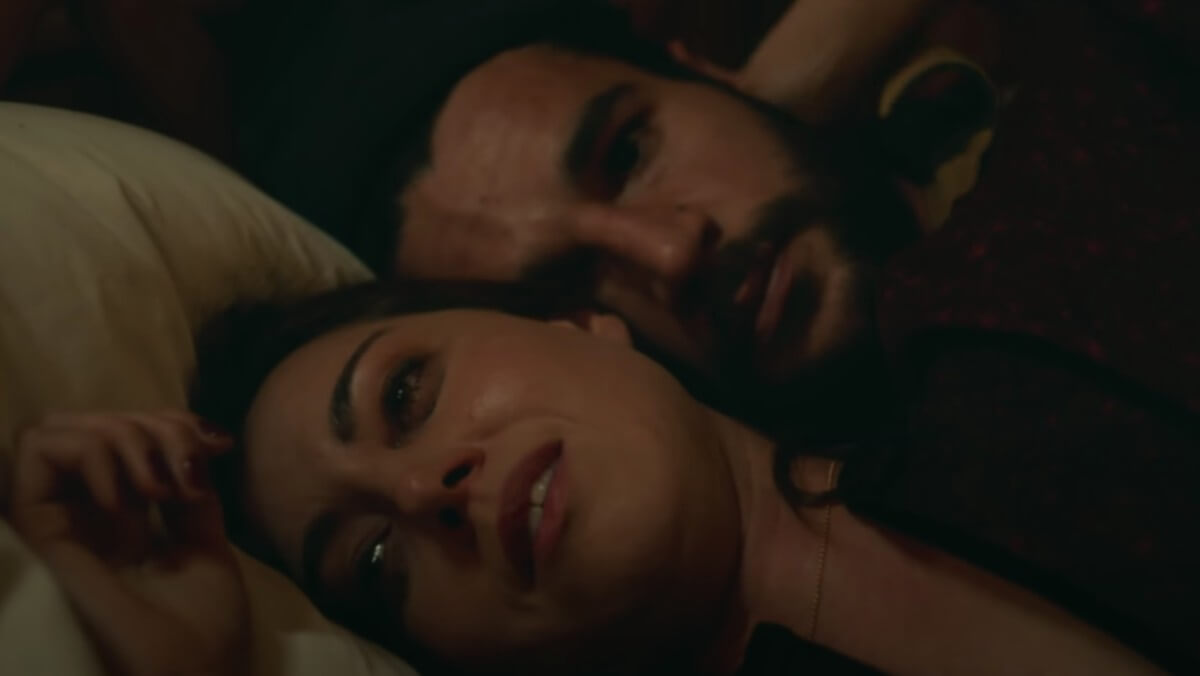
A writer/director suffering from writer’s block (Plaza) retreats to a lakeside country house to find her muse. In Part 1, she’s sharing the space with the owners, a couple who are about to have a baby but whose relationship seems to be breaking down. Over wine and discussions around creativity, world views and relationships, emotions run high and a shocking event seems to bring the story to a second act close. But then Part 2 begins, and what emerges is something connected but very different to the first part – not a repetition but a re-presenting.
Writer/director Lawrence Michael Levine has crafted something brilliant here; a film about the creation of Black Bear, about artistic choices and personal cost. It’s also about creative authenticity and how far you’ll go for your vision, about manipulation and about the audience’s complicity in all of that.
Yep, there’s a lot going on here and yet, for a film that makes you feel like you’ve been holding your breath since it started, it’s a hugely enjoyable, wild, crazy, enthralling ride.
What helps smooth that ride are three performances which carry you along on this shifting journey. Christopher Abbott, who was so good in Possessor, and Sarah Gadon are both excellent. But it’s Plaza who the film follows, it’s her who is both the creator of these worlds and the star of them, and Levine gives Plaza the role of her career so far. Her performance is something marvellous that you cannot take your eyes off and, when she’s on screen (and she almost always is), you’re as drawn to these worlds as the characters on screen are.
Most of the talk around Black Bear has presented it as a film of two halves and that’s true to some extent. However, a repeated scene that bookends the film and appears part way through suggests, to this reviewer at least, that there’s a third part, one which starts directly after the film’s ending shot, another revised version of Black Bear that is going to be played out in our own minds once the end credits roll.
It’s all tremendously entertaining, stunningly executed, and features one of the best performances of the year by far. See it.
Release Date: April 23rd (Digital)