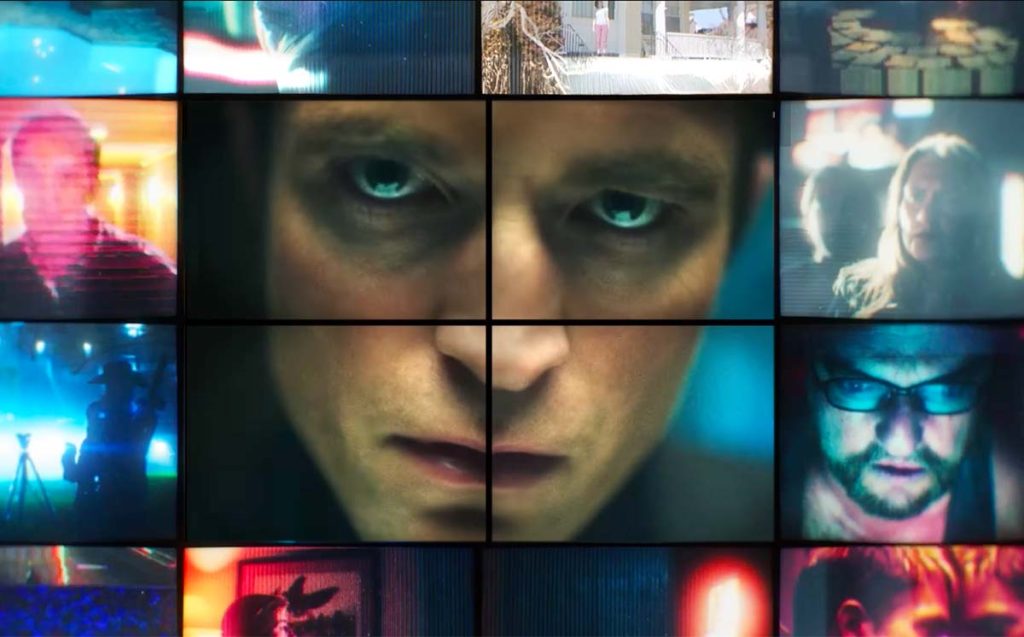
Inspired by the release of CENSOR, a film set during the heady days of VHS, STARBURST’s Rob Martin looks back at the impact of his very first experiences of home video rental…
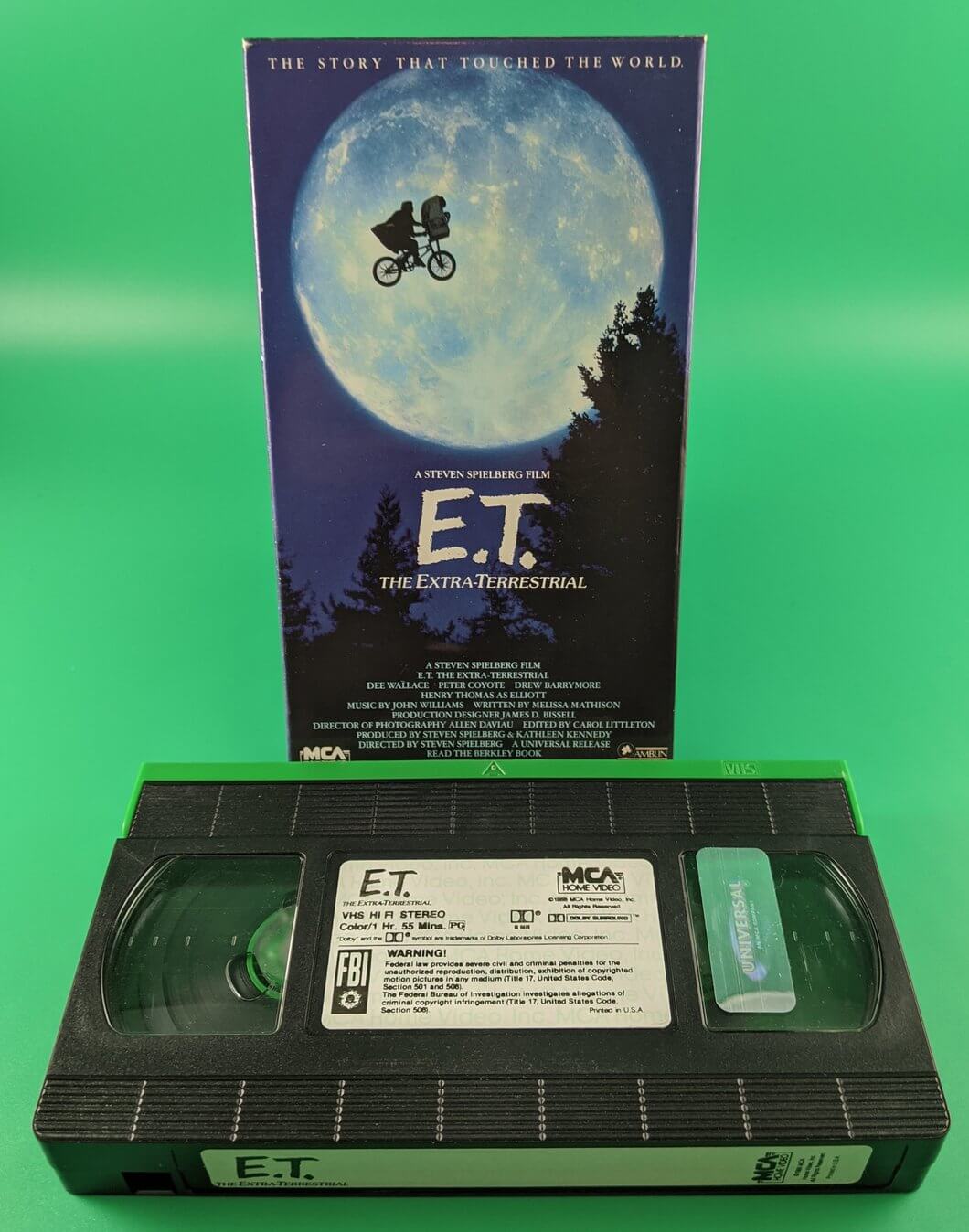
In June 1982, ET, afraid, alone and 3,000,000 light-years from home, pointed its glowing finger at little Elliot’s head and broke the hearts of a generation. It also broke box office records at the same time. This smash hit was a summer phenomenon, a film that everyone was going to see. At least, that’s what was happening in the States.
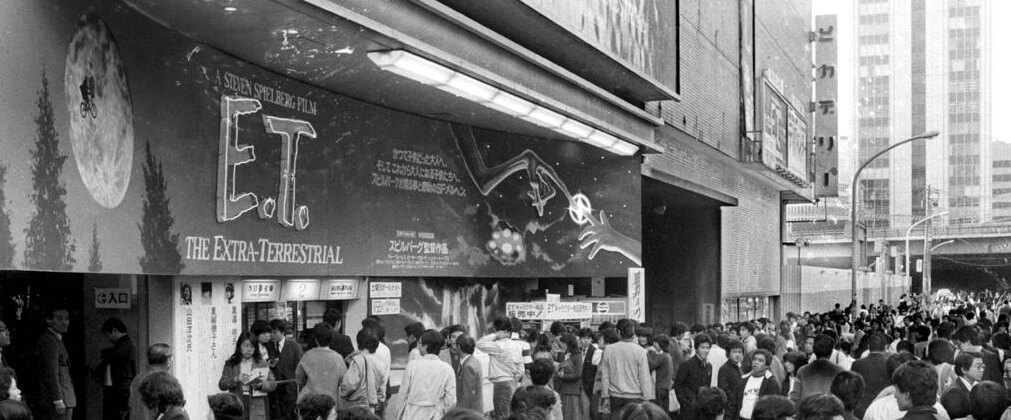
If you lived elsewhere, you had to wait, and it wasn’t until December of that year that UK audiences got to see what the fuss was all about, an agonising wait of half a year for film fans across the world where it became a Christmas, not summer, hit.
Except, that is, for those who had already watched the film on something dangerous and new: a pirate video.
If you were around back in the summer of ’82, you might well remember that ET was the home video to see. It didn’t matter that the quality was awful. It didn’t matter that it had been covertly filmed directly from cinema screens so you had people getting up and going to the loo throughout. It didn’t matter that these videos were illegal. All that mattered was access to a film everyone wanted to see and were not prepared to wait for.
Except for me. I chose to wait. I was a film nerd. I liked my films to look crisp and I liked to be able to hear them properly. I’d had enough experience of dodgy pirate videos.
A couple of years before, my Nan had died and had left me a little money. Not much, but enough for me to give it to my dad and ask him to use it to start renting a new thing I’d heard about called a Video Recorder. It was something which allowed you to record things off one of the three channels on your TV and, more impressively, you could actually rent films and watch them at home. This was a film fan’s dream.
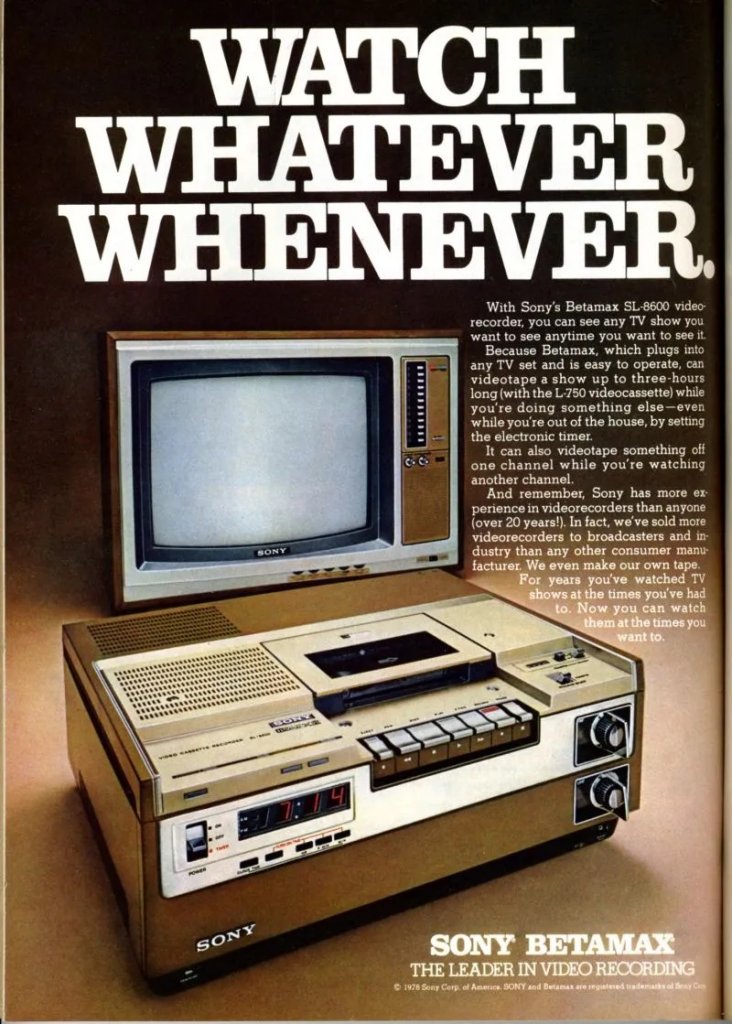
So we got one and, even though I lived on the scummy council estate, I was suddenly very popular at my Grammar School.
Those of a younger nature must think this sounds like the Middle Ages. I grew up on the Wirral – it was. Even so, it’s impossible to convey what a huge revolution video home rental was. Previously, you went to see a film at the cinema and then had to wait for it to make it on to TV a few years later. When it did, you had to watch it as and when it was broadcast. No video, no internet, no mobile phones, nothing on demand. What a nightmare, but one we which we didn’t know we were experiencing until we were given options.
Being the entrepreneurial type, my Uncle Alan set up a video rental shop in Birkenhead, the very first on the Wirral. I was his Saturday boy and I got paid in all of the videos I wanted. Can you imagine the joy that this was for a young lad obsessed by films? By joyful coincidence, I won a colour TV in a raffle on the set of Chariots of Fire in which I was an extra (yes, I met Ian Holm).
So, there I was – a film fanatical hormonal teen with a small colour TV, video recorder, and access to all the films I could possibly want.
At the time, the technology came before the legislation the industry demanded, and pirate videos were all the rage. Not surprising – I remember asking how much it would be to buy a legit copy of Poltergeist and the answer was £60. In 1982. Many video rental stores would set up a couple of connected machines in the backroom and run you off a nice copy for a tenner, my uncle included.
It was also the time of the video nasty, something which Censor so wonderfully pays homage to. Without legislation, kids of all ages could rent what they liked if they had membership and money. Hello top-shelf videos. It’s also where some of the notorious nasties ended up after public outrage – films like I Spit on Your Grave, Driller Killer, The Evil Dead. As kids, we all became very adept at putting our heads down but keeping our eyes up…
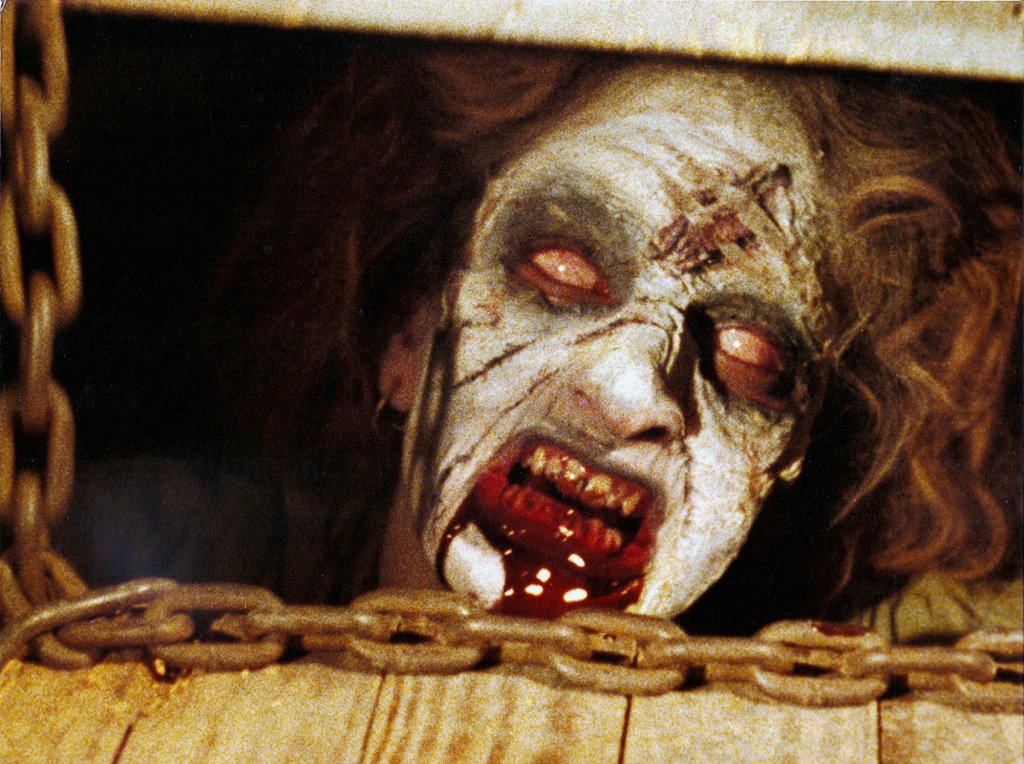
The Evil Dead (1981)
Meanwhile, I’d arrive home on a Saturday evening armed with a stack of films, mostly pirated but who knew? I’d watch them throughout the week, sometimes with the rest of my family.
‘What are we watching tonight?’ Mum would ask as she brought the egg and chips in to eat in front of the telly.
‘This is something called Shivers by someone called David Cronenberg’ I’d say, or something similar. Thirty minutes later we’d all be squirming uncomfortably as, for the first time, explicit sexual shenanigans played out in front of us. It was enough to put you off dipping your soldier into your egg yolk…
So I learned quite early on that I needed to do some censoring of my own before agreeing to watch things with my Mum and Dad.
Still, we managed to also get through Rabid and The Brood so it wasn’t all bad! But the quality was usually pretty dreadful.
By the time that video piracy had made ET the most-watched not-yet-released film in the UK, everyone had a video recorder in their home and I was no longer special. Film rental stores like Blockbuster emerged, became chains and then franchises and legislation tried to limit the kind of access a 13-year-old could have to Flesh Gordon and other soft-core titillation.
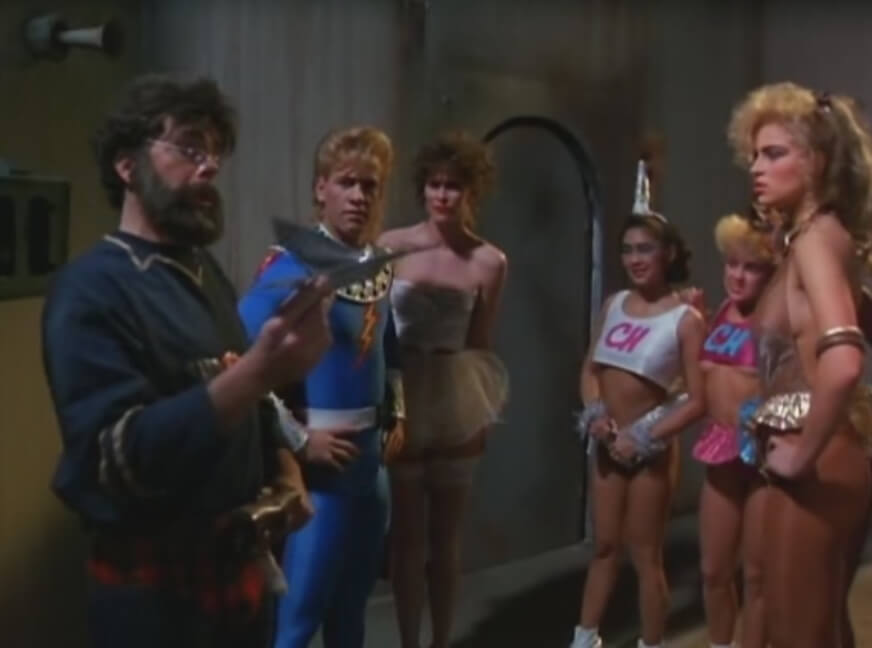
Flesh Gordon (1974)
But the two things I remember most about that time are the films I watched on a loop – Alien and Blade Runner. I think my copies wore out eventually. The ability to do that, to re-watch, to rewind, to re-view, it was a revolution and, like the impact of most revolutions, it’s something we now all take very much for granted.
Another wonderful thing that came out of that time was this: my dad was a very working-class man who had a job as an engineer for the GPO (General Post Office, the equivalent of BT). He loved films but wasn’t in any way a buff. One day he opened the paper and there was an advert for a new film. He showed me and said ‘Shall we go and see it? I liked his other films.’
It was Scanners. My Dad had become a Cronenberg fan, without even knowing it.
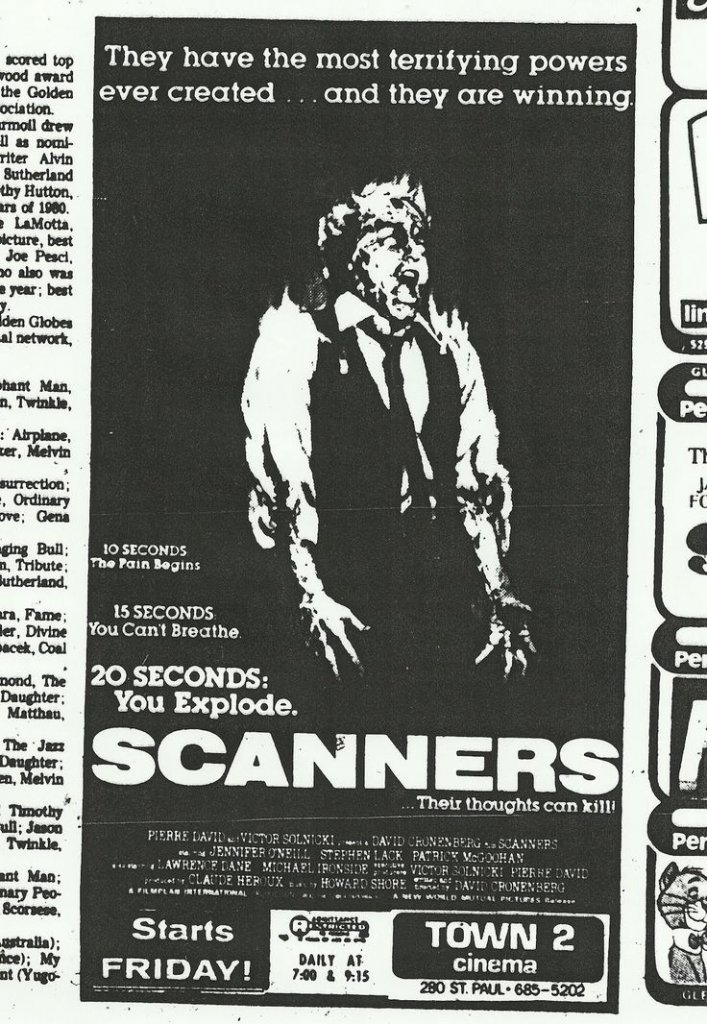
So we did go – we even dragged my Mum along. It kick-started a couple of wonderful years when Dad and I would go to the cinema together to see all sorts.
When home video happened, they said it would kill cinema but, as my Dad proved, it merely fed it a new audience.
Now, we watch what we want, when we want. Gone are the days when you grew up with an automatic knowledge of Hollywood in the ‘50s, of silent cinema classics, of old Westerns and film noir. We watched it collectively because that’s what was on TV and it’s what we all saw because we had no other choices.
Netflix is the at-home equivalent of stepping inside a Blockbuster – all that choice, so much browsing. But without the horrible carpeting and a sweaty youth behind the counter…
At least some things have changed for the better.