Is it possible for a film to be transgressive and critical if said film also comes with a multinational corporation’s stamp of approval? It’s a conflict that was always going to be at the heart of Greta Gerwig’s Barbie, which finds itself in a tug-of-war between its desire to challenge the doll’s relationship with women and its status as a Mattel, Inc. toy movie.
Helen Mirren’s cheeky narration sets the scene with satirical sparkle. As the camera sweeps across the hot pink tones of Barbieland, she’s on hand to introduce Barbie – in the much-discussed homage to Kubrick’s 2001 – and to congratulate the doll on single-handedly solving sexism in the real world.
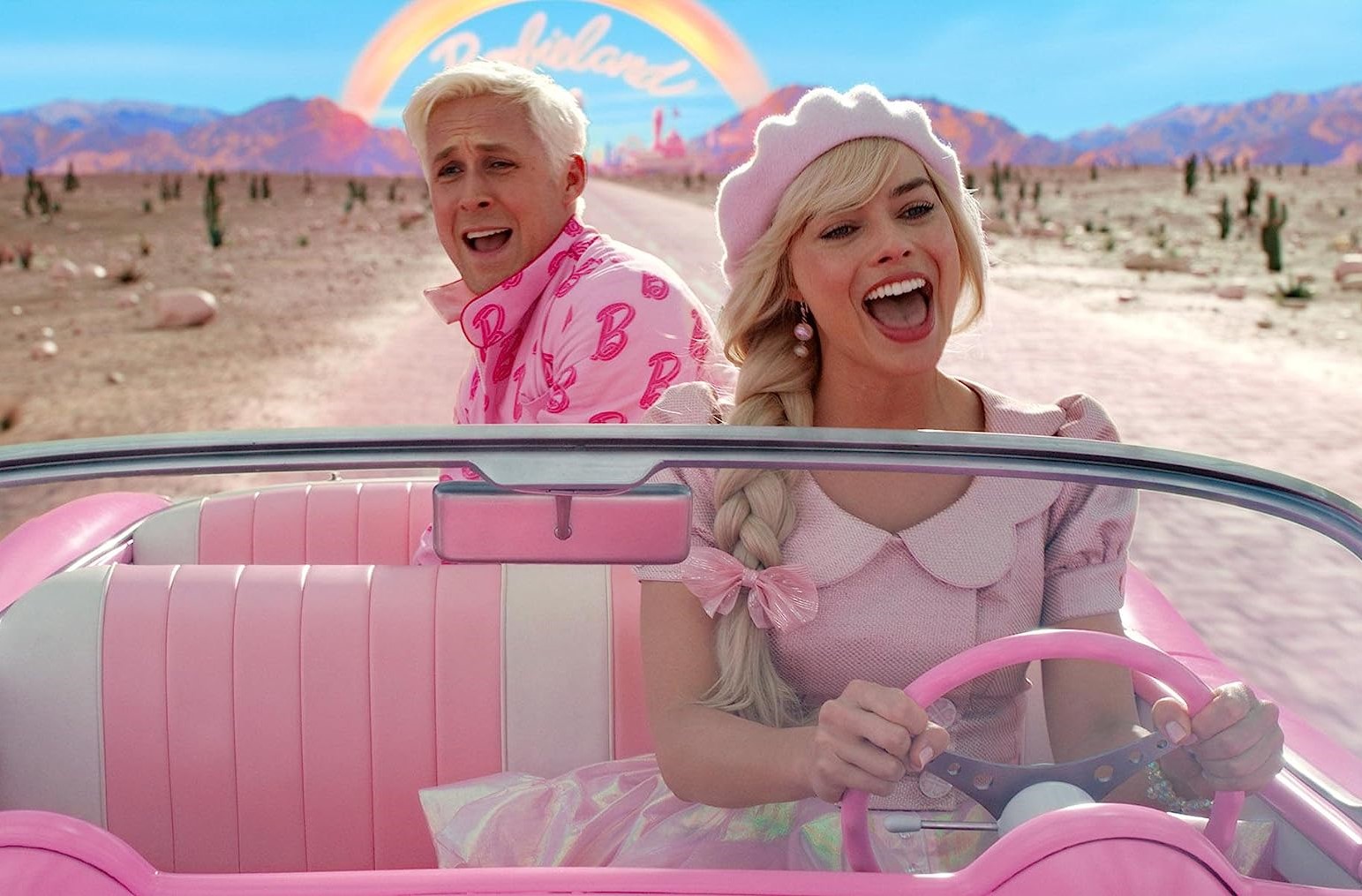
We’re introduced to the hero of our tale, “Stereotypical Barbie”, played by the only actress who could ever pull off this role, Margot Robbie. She’s pretty, confident, adored by Ken (Ryan Gosling), surrounded by accomplished friends, hangs out at the beach all day and celebrates all night. In short, everything is perfect. At least, until she interrupts a whirlwind dance number under a disco ball with an innocuous: “Do you guys ever think about dying?”.
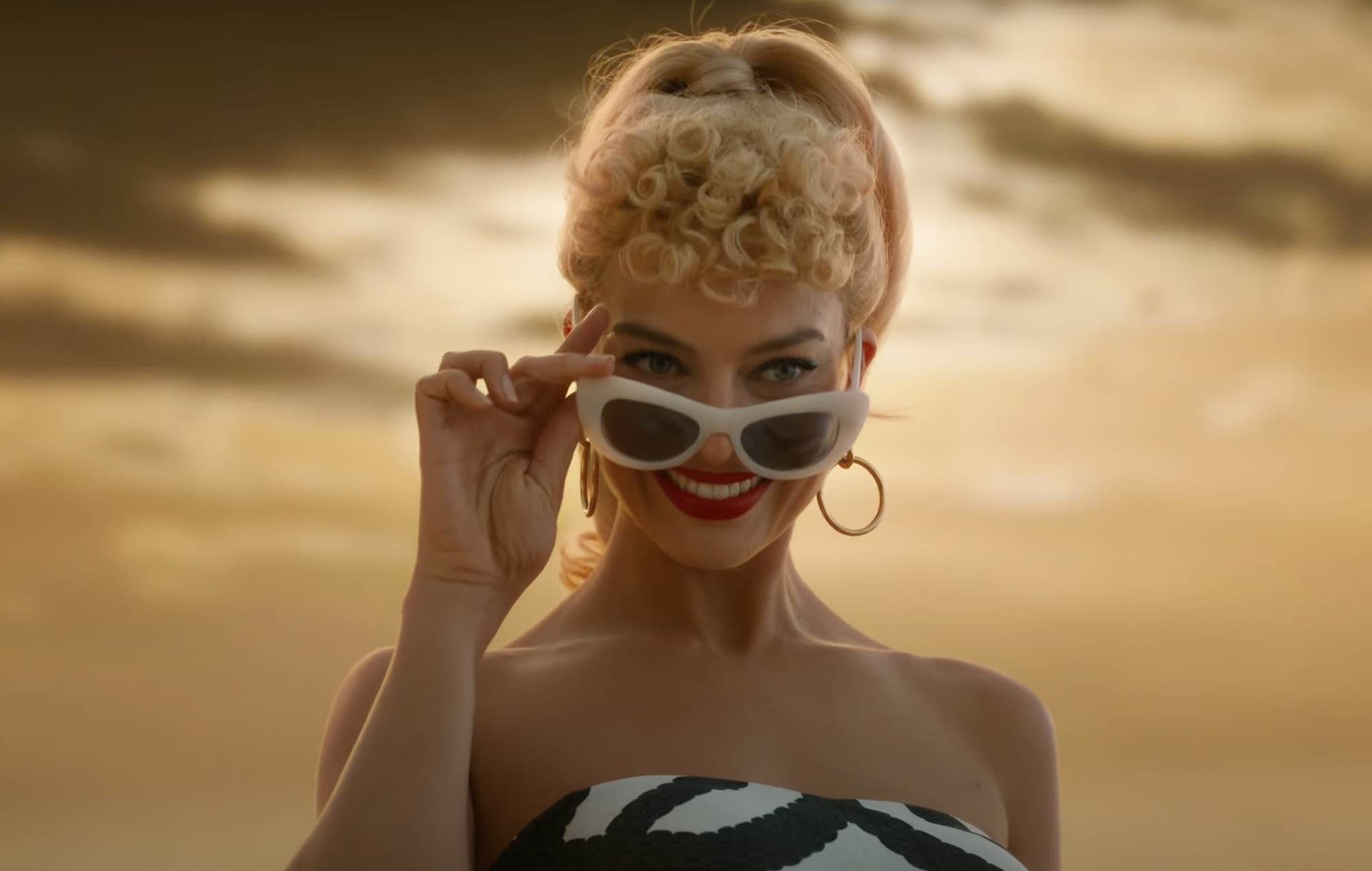
Thus begins an existential quest into the real world, as Barbie (Ken in tow) ventures to find her human and fix whatever is wrong with her. The reprieve from the pastel-toned landscapes of Barbieland serves a dual purpose: for Barbie to be confronted with her complicated legacy, and for Ken to be introduced to the patriarchy’s intoxicating allure – horses, brewskis, and mink coats included. The idea that men should rule the world proves a particularly potent export for the Kens living within the implicit matriarchy of Barbieland. Chaos, hilarity, and a peerless comedic and musical performance from Gosling ensue.
The casting is undoubtedly one of Barbie’s most decisive assets. Robbie flawlessly portrays Stereotypical Barbie’s deepening humanity and balances her arc’s laughter, angst, and heart with conviction. Still, it’s bleach-blond Gosling who proves the ultimate scene-stealer, providing the film’s biggest laughs and most memorable moments – even as Robbie gets its most emotionally and thematically meaningful scenes.
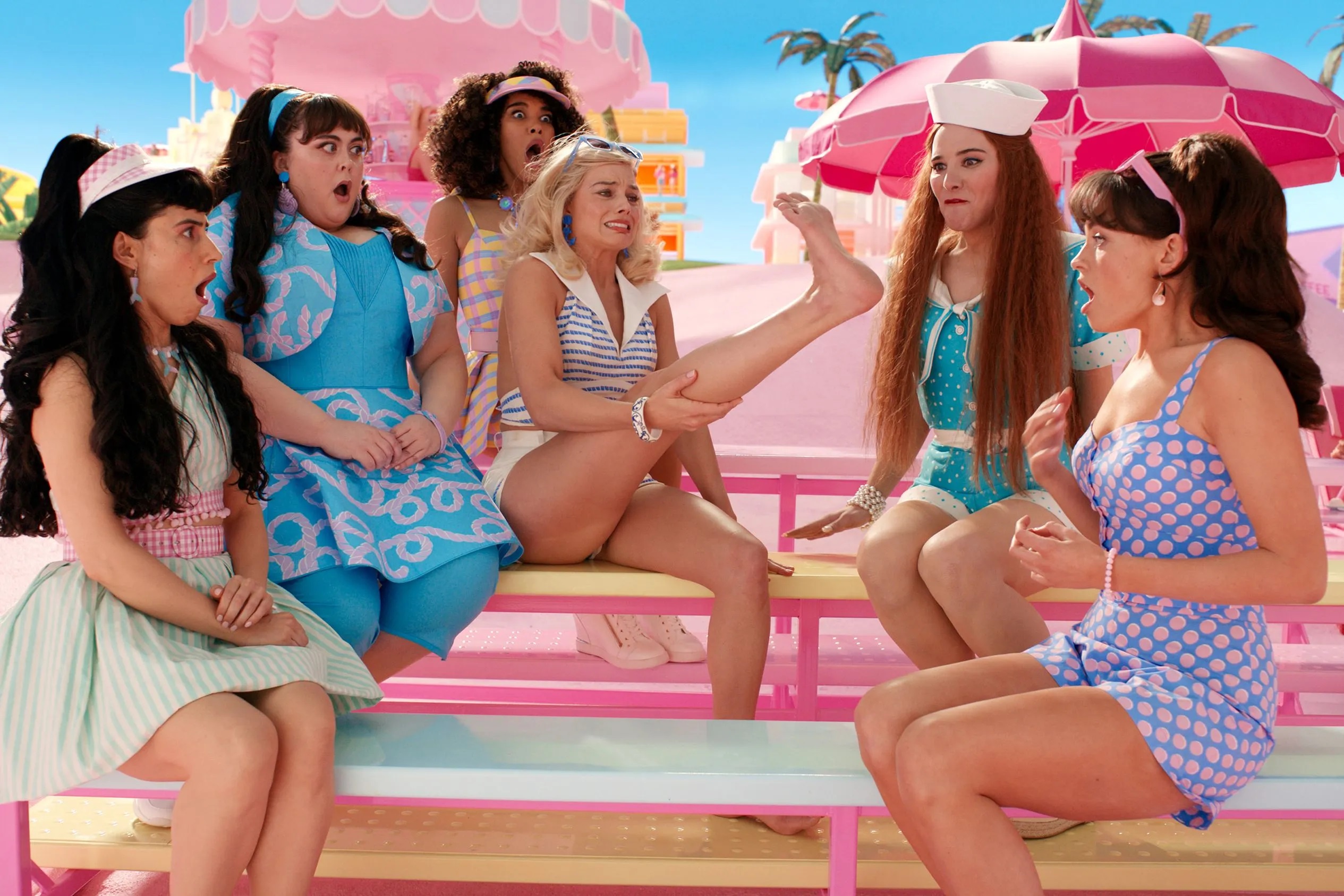
The production and costume design are intelligently rendered and enjoyably bizarre – the Dreamhouse shower doesn’t produce water, Barbie floats to the ground rather than using stairs, and ocean waves are solid plastic. It’s also why Barbie and Ken’s detour into the real world feels like a (thankfully short-lived) loss of momentum before the action returns to Barb– correction, Kendom.

Unfortunately, however, Barbie is also a film plagued by contradictions. On one hand, it’s an earnest take on the nuances of womanhood and the constraints society places on women. It’s also a sharp dissection of how, while Barbie promised young girls that they could be anything, it also contributed to the unattainable expectation that women be everything, all at once. On the other hand, it can’t quite shake the oily sheen of a Mattel advertising campaign, especially when companies have long since caught onto the idea that a self-aware, in-on-the-joke attitude is good business practice.
Barbie pokes fun at its sponsor without ever cutting too deep. It lays out the hopeless impossibility of being a modern woman: to be a girl boss but people-please; a homemaker and mother who is also ambitious and career-driven; be attractive, but never look like you’re trying too hard – all wrapped up in a grand speech delivered by America Ferrera that’s reminiscent of Laura Dern’s Marriage Story tirade. The thing is, it’s just the same old virgin, mother, whore paradox of womanhood that’s been at the centre of feminist discourse for decades but repackaged in a pretty box with a big ‘Girl Power’ sticker slapped on.
Perhaps reconciling the conflicting imperatives of a 2023 Barbie movie was always a hopeless task. Perhaps it was silly to expect a transgressive, boundary-pushing film from a major Hollywood studio. And perhaps Gerwig is just a little too in love with the iconic doll to meaningfully interrogate its cultural legacy.
But if it’s not the uncompromising bastion of feminist cinema we might have wished for, then Barbie still leaves plenty to commend as a laugh-out-loud, amiable, endearingly sincere, and extremely entertaining summer blockbuster, complete with snappy dance numbers and pitch-perfect performances. And maybe that’s Kenough.
Barbie releases in cinemas from July 21st.
By Laura Potier