PLATFORM: PC, PS4/5, SWITCH (REVIEWED) | RELEASE DATE: 25TH FEBRUARY
Atelier games seem to appear at an almost alarming rate these days. Multiple ports of older titles from the series’ 25-year (and almost as many individual mainline titles) history have arrived on the Switch over the last few years, alongside brand new entries on several platforms, with pretty much all of them being greeted with a positive reception. Yet, despite its numerous appearances on many different systems, Atelier still remains quite a niche series. Often released in trilogies, this latest addition to the series slots itself between 2015’s Atelier Sophie: The Alchemist of the Mysterious Book and 2016’s Atelier Firis: The Alchemist and the Mysterious Journey, but a handy “story so far” video is included for anyone who needs it. At the start of Mysterious Dream, we find Sophie and Plachta (a talking book turned living doll…) investigating a mysterious tree which Plachta had seen in a dream. Pulled into another world and separated from each other, Sophie must now find her friend, re-learn the secrets of alchemy, unravel the mystery of the strange dream world of Erde Wiege and find a way home.
There are a few things you can pretty much guarantee when it comes to Atelier games; extravagantly-named characters, a chilled and slightly whimsical orchestral soundtrack, lots of high-pitched anime-style squeaking, shrieking and yelping, gameplay systems and mechanics that often aren’t very well explained, female characters with almost comically large frontal appendages (complete with occasionally-questionable camera angles and double entendre-laden dialogue that may or may not be intentional. In Sophie 2, these are all very much evident in abundance, but although the main strands of DNA might be shared amongst pretty much every game in the series, each title has its own unique combat and crafting systems.
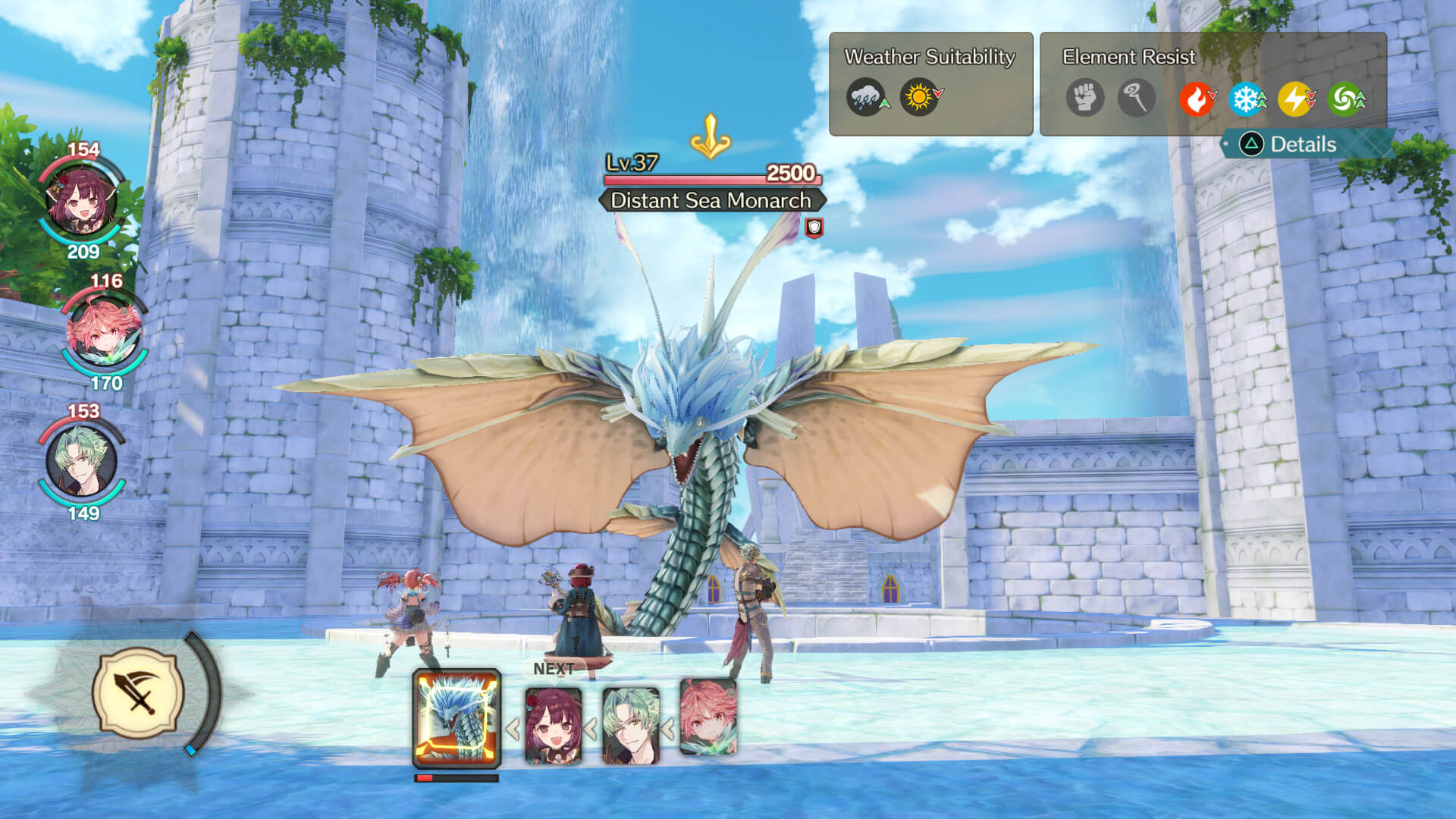
Atelier Sophie 2‘s turn-based battle system will feel rather standard if you’ve played pretty much any other game that features turn-based combat. You’re able to take up to six party members on your quest, with three placed up front to deal damage with standard attacks, special moves and items, while the others provide backup from the sidelines. “Twin Actions” allow two characters to act at the same time in a single turn, and super-powerful double-team moves become available when a meter has been built up to a sufficient level. It’s a solid and satisfying system and there’s nothing too complicated, but in a light-hearted game like this you don’t really want anything too taxing. The main noticeable difference here is that there are no loading screens when you enter a battle, which might not sound like much but really does help to make the game feel a lot more sleek (although the game does make you sit through many, many loading screens at pretty much every other opportunity). On the crafting side of things, ingredients gathered out in the field are placed on a grid in the most effective positions possible to achieve the best quality results. New recipes become available during the course of the game, allowing you to create more powerful items, but as usual, the full ins and outs are left for you to discover yourself. A handy auto-fill button allows you to bypass the item placement part and just drop everything into the grid if you’re not in the mood to figure everything out, and also serves as a useful example of how best to place your items if you do want to fully get to grips with how it works.
If you’ve played any other Atelier games you pretty much know what you’re getting – a laid back adventure with an endearing and completely inoffensive cast of mildly titillating characters who travel across a variety of imaginative and nicely-drawn locations to solve some sort of borderline nonsensical but nevertheless delightful mystery. Atelier Sophie 2 follows the exact same formula, and while it doesn’t quite reach the highest points of the series so far (that title still very much belongs to Atelier Ryza and its sequel) it still makes for a very pleasant distraction.