Some game universes feel like complete worlds the moment they appear. The Witcher’s Northern Realms, Halo’s Forerunner-haunted galaxy, Mass Effect’s Citadel and Bloodborne’s Yharnam all share a quality that goes beyond level design and character roster. They feel like places that existed before the game began and will continue existing after the credits roll. That quality is what separates a game with a strong story from a game with a universe worth expanding into novels, comics, film adaptations, spin-off titles and decades of fan creativity. The ingredients are surprisingly consistent across franchises that have made the jump from single product to durable fictional ecosystem.
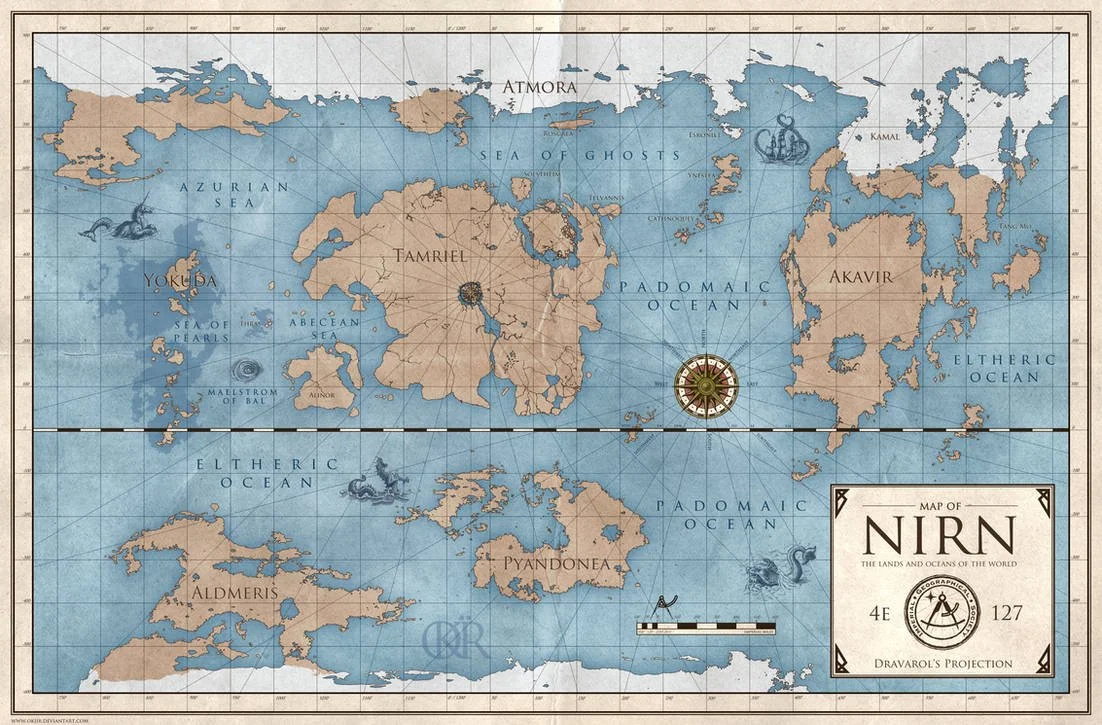
The first ingredient is lore that suggests far more than the game itself shows. A world that survives beyond its origin game has to imply depth at every level. The Elder Scrolls became a transmedia engine partly because Bethesda’s writers buried so much history into in-game books, tablets and ruins that the visible game was always understood as the tip of a much larger iceberg. Players ended up reading fictional academic texts about Tamriel’s prehistory and writing fan essays about competing in-universe theories. That kind of hinted-at-but-never-fully-explained depth is what allows future writers and game makers to add material without breaking the established world.
Memorable game universes also draw their longevity from having recognizable identity hooks that can survive being repackaged into other media. The most popular games are typically the ones whose visual language, music cues and worldbuilding shorthand can be lifted out of the original product and dropped into a comic, a novel or a streaming series without losing what made them resonate. Compare the easy media translation of Resident Evil or The Witcher to franchises that struggled to leave their original form because their identity was too tied to a specific mechanic or perspective. A universe that survives migration is one where you can describe the rules, the factions and the central conflicts in a paragraph and still feel the texture of the world intact.
There are two directions of expansion. Some universes begin in games and expand outward to other media, while others begin in comics, novels or film and arrive in games carrying decades of established lore. Games like DC Universe Online represent the second direction, bringing the established DC Comics universe into an MMO format and leveraging characters, factions and continuity that predates the game by decades. The first direction is much harder because it requires the game’s universe to generate its own gravitational pull without an existing audience or canon to anchor expectations. Mass Effect, Halo and the Elder Scrolls all managed this in their own way, and looking at what they share is instructive.
Memorable universes always have characters who can operate independently of the player character. Mass Effect’s universe survived novel adaptations and animated series partly because the species and political factions had enough definition that writers could tell stories about turians or salarians or the Citadel Council without needing Shepard as the viewpoint. Halo’s expanded fiction works for similar reasons; the Covenant, the Forerunners and the broader UNSC bureaucracy can each carry their own arcs without Master Chief present. Game worlds whose only meaningful character is the silent protagonist tend to struggle when they leave the game, because the universe was always experienced through the player rather than as something with its own life.
Themes that resonate beyond plot are another ingredient. Halo became a transmedia property partly because the underlying themes of human survival, alien religion and ancient predecessor mystery had emotional weight independent of the specific Master Chief narrative. Fallout’s themes of nuclear apocalypse, social satire and American mythology survive across every spin-off because the themes themselves are more durable than any particular Vault story. Game worlds with theme-light universes, where the appeal is mostly mechanical or visual, struggle to find purchase in other media because there is nothing for the new medium to translate beyond surface aesthetics.
The mythological structure of a universe matters as much as its plot. Universes that survive long-term tend to have something like a creation myth, a central conflict that predates the game, and at least one major event that ended an era before the game began. The Elder Scrolls has the Daedric princes, the Dragon Break and multiple eras of imperial collapse. Mass Effect has the cyclical Reaper invasions and the Protheans. Halo has the Forerunners and the Flood. These aren’t just background details; they are the structural skeleton that lets writers from other media find footing without having to invent everything from scratch. A universe with a flat present-tense focus and no implied deep time has nowhere for new stories to attach.
Community is the final and often overlooked ingredient. The universes that survive longest are the ones whose fans become active interpreters and contributors. Mass Effect, The Witcher and Fallout all benefit from massive fan-wiki ecosystems, fanfiction archives, mod scenes, theory channels on YouTube and tabletop game adaptations created by communities rather than studios. The official media releases are feeding an already-active culture rather than creating one from scratch. Studios that recognize this and engage with community contribution, official or not, see their universes treated as living mythology by their audience.
Why the strongest game universes feel like history that happened to you
The universes that survive beyond a single game share a quality that is hard to manufacture but easy to recognize. They feel less like a story being told and more like a history the player happened to live through. The events of the game become one chapter in something much larger, and the world keeps existing in player imagination after the controller is set down. That sensation, the feeling that the universe has a past, a present beyond the player and a future that is not yet written, is the foundation everything else builds on. Studios chasing the durable-universe outcome would be wise to focus less on telling a great story and more on building a world that feels like it has been telling its own stories for centuries before the player arrived.