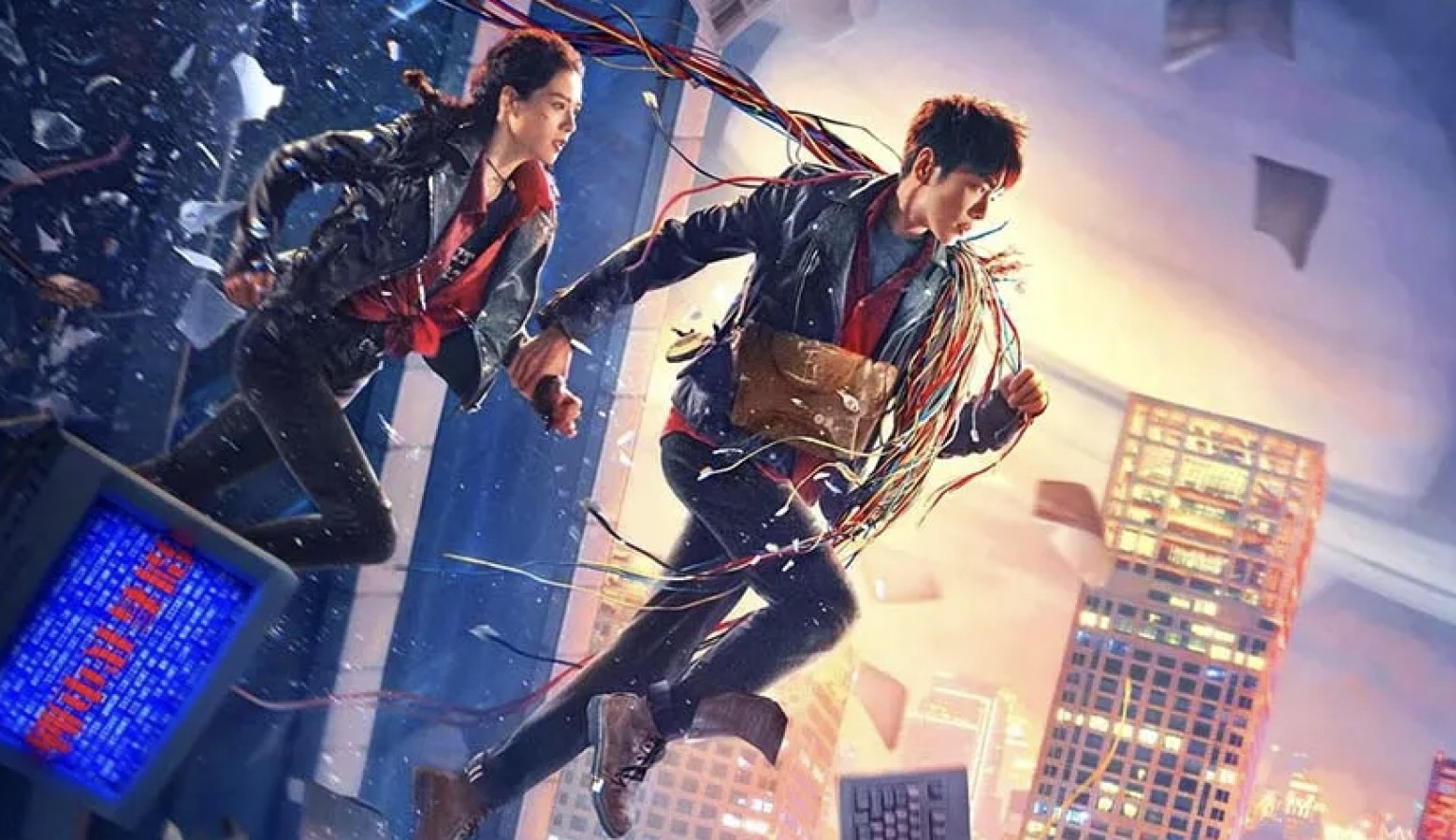
Set on a distant Earth-like planet that really is quite a lot like Earth, and whose 1999 seems to be playing it out in a distinctly Earth-like way, Chinese director Li Yang’s debut feature film Escape from the 21st Century is a whirlwind of action, silliness and teenage angst right from the word go. When three friends – Wang Chengyong (the cool one), Paopao (the slightly overweight and thus insecure one), and Wang Zha (the ordinary narrating one) – get into a fight for the honour of Yang Yi (the cool one’s girlfriend), they accidentally develop the power to sneeze themselves into a coma… and twenty years into the future.
Here the three discover that the future for all of them is less than ideal and that growing up, for all that they long for it in 1999, is far from what it’s cracked up to be. Despite the very silly central conceit, the dark future of 2019 is often surprisingly brutal. The film builds an unanticipated amount of depth and heart out of the three teenage boys’ simplistic yearning for a better, cooler future. With its exploration of time travel as a way to change and better the future, all while not being able to remember who you lent your copy of Street Fighter II to, Escape from the 21st Century could have an intense poignancy for anyone currently going through an early mid-life crisis.
The performances – of both adult actors playing unworldly teens and teenage actors spanning from start of the summer holiday hopefulness to despair and dead-eyed determination – are all very strong, but it really is the direction that stands out. Leaping back and forth in time without confusing the audience and hurling cultural references (western audiences will definitely get many, while some are almost funnier for being so unfamiliar) and both goofy and spectacular visual effects at the viewer, Li Yang refuses to give us a chance to get bored as we rollercoaster around from teen angst to brutal martial arts violence to cyberpunk to anime to Bond movie to goofball silliness. It’s easy to imagine this combination putting off some more sober cinephiles, as it can feel like the sugar rush of a pre-teen let loose with adult money in a sweet shop, but the earnestness of both the performances and Li’s exploration of lost childhood sell it far beyond mere dazzle and spectacle.