With the entire series of Agatha All Along now available on Disney+ in the UK, we felt it was time to cast our gaze over what has been one of Marvel’s most hyped TV series to date.
Taking Agatha Harkness, who burst into focus in the second half of 2021’s WandaVision, Agatha All Along weaves a story around a journey along ‘The Witches’ Road’, a mysterious place that we learn more about as the series progresses.
Agatha Harkness (Kathryn Hahn: Spider-Man: Across the Spider-Verse; Glass Onion) has always given off Main Character Energy, and here Hahn takes the opportunity given to her and runs with it. In a performance of often astonishing depth, across the nine episodes, we see Agatha experience around four centuries of American history. We also witness Agatha’s purported role in creating many of the myths and ‘old wives’ tales’ surrounding the stereotypical images of witches as embodied in popular culture.
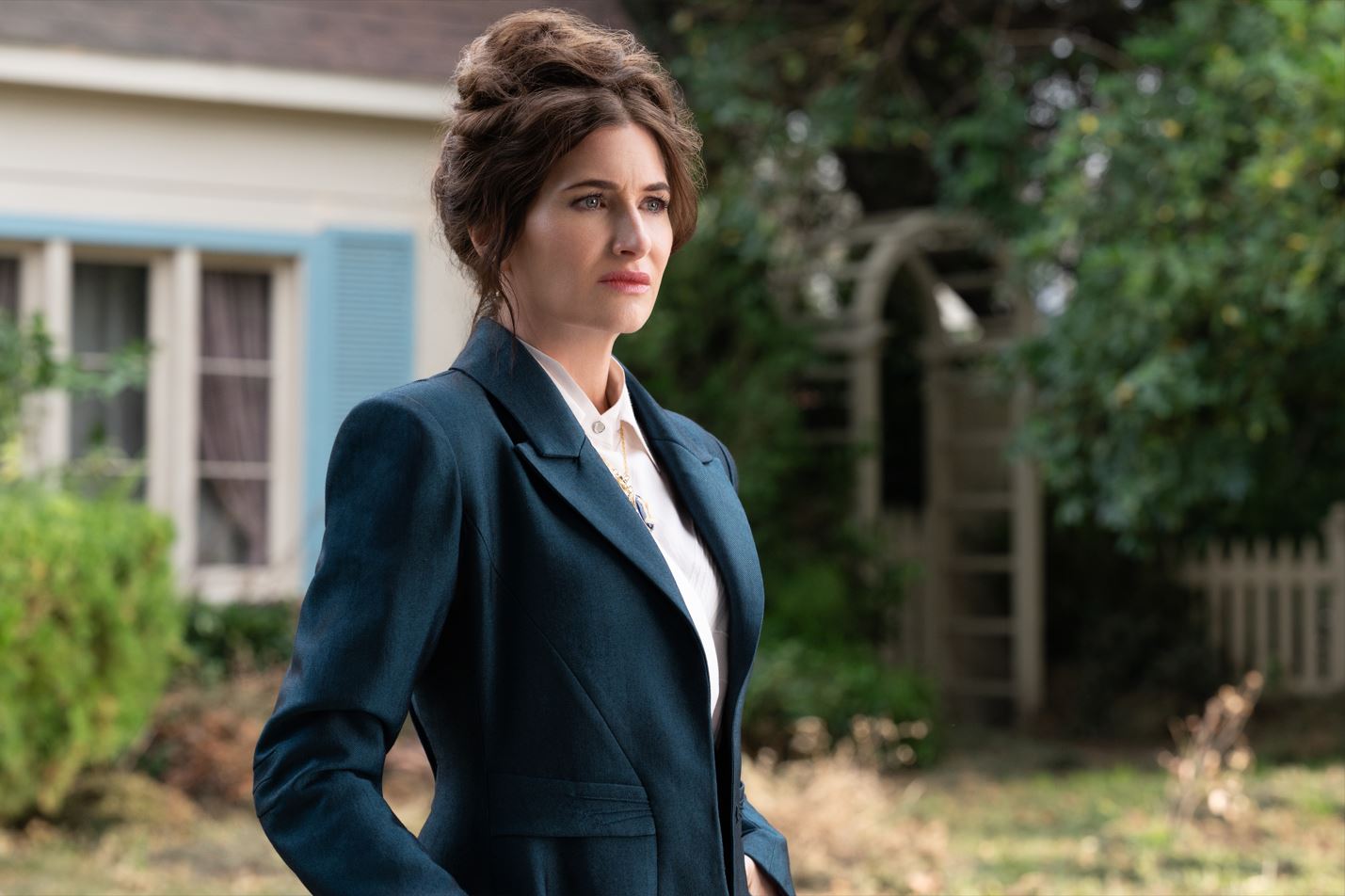
It is quickly established that Agatha represents a tonal departure from other entries in the MCU. Some will argue that television series are a different beast from the individual films, but it seems as if the current phases are seeking to blur those boundaries and perhaps experiment with how their stories are told.
Here, the intrigue starts early and builds as the series develops. Each episode raises fresh questions, appears to answer previously raised queries, and provides more background on the various members of Agatha’s coven.
Whilst Agatha All Along has been billed as a series that stands alone and requires little to no foreknowledge of the MCU, we do think that having watched WandaVision would be helpful. This is not least because Agatha is a spin-off from that homage to sitcoms, which is where non-comics readers will have first encountered Agatha.
Another reason to have watched WandaVision is that the first twenty minutes or so of Agatha episode one (Seekest Thou the Road) pick up on that spirit of paying tribute to television genres by placing Agatha as her Wanda-created avatar of ‘nosy neighbour Agnes O’Connor’, into a New England Noir television show, as a Detective with the Westview police force. Whether familiar or not with the world of Wanda Maximoff, it’s very apparent from the first frame that the town of Westview is more than a little creepy.
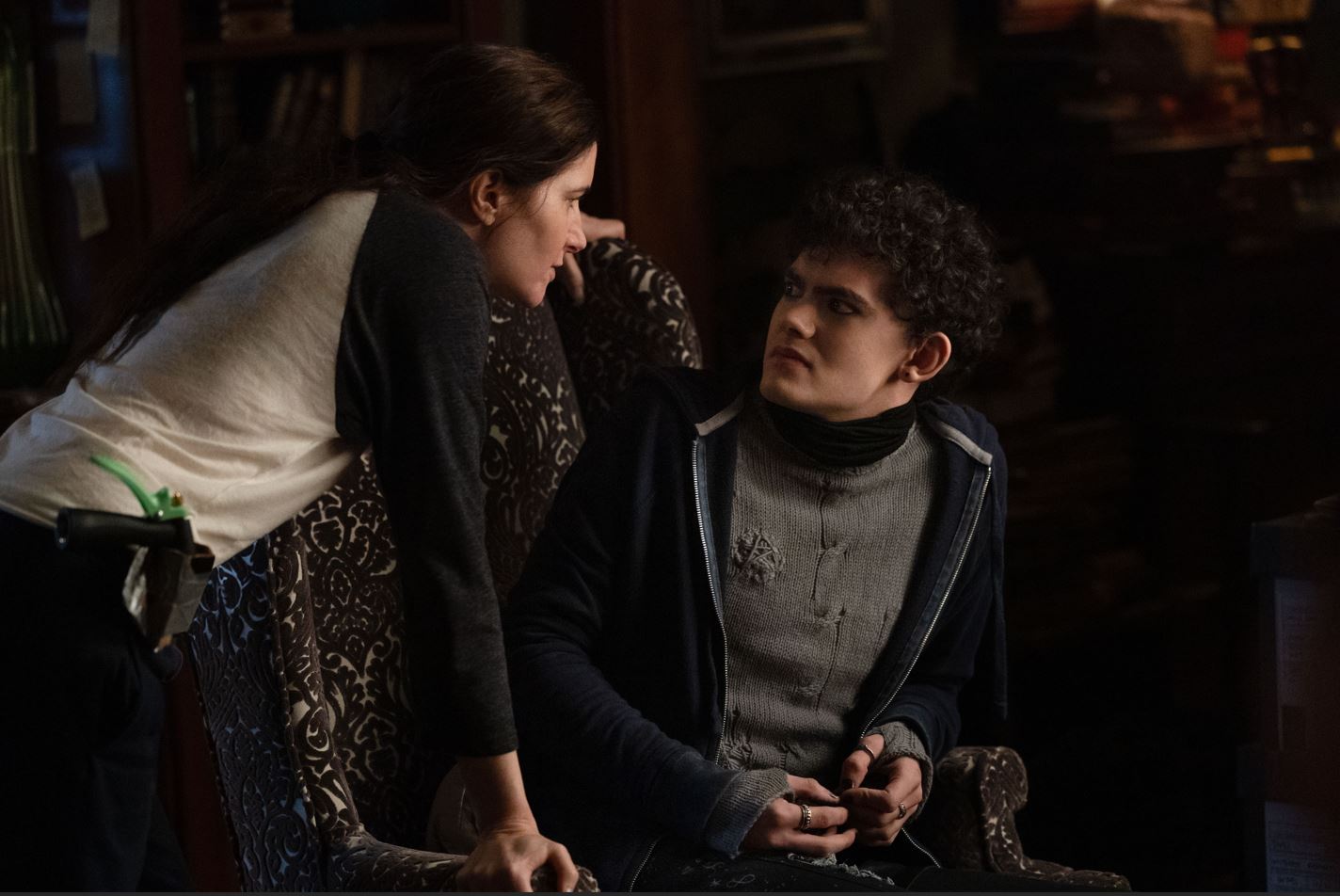
This first sequence might feel like it bears little relation to what is to follow, but it sets in motion many of the strands of the ‘puzzle box’ that the series as a whole is constructed as.
Indeed, while many of the questions that eagle-eyed viewers might have after watching this Mare of Easttown/True Detective/true crime podcast are answered quickly, not all of them are. This section of the episode also serves to remind us that we should not trust everything we see in this show. The curious elements that seem strange even for a gritty police show should clue viewers into the fact that all is not what it seems.
Also introduced in episode one are Rio Vidal (Aubrey Plaza: Megalopolis; Scott Pilgrim Takes Off) and ‘Teen’, a mysterious Goth-outfitted, well, teenager, played by Joe Locke (Heartstopper; Sweeney Todd: The Demon Barber of Fleet Street).
Despite both appearing in Parks and Rec, Hahn and Plaza have, until now, had regrettably little screen time together. Here, initially in the roles of ‘embittered local detective’ and ‘Fed’, Hahn and Plaza instantly convince you that their characters have a past history, even if, like Agatha, you have no clue what that history is. Locke, in only his second screen role, bursts onto the screen as his character seeks to release Agatha from the spell Wanda Maximoff placed her under at the end of WandaVision.
Hahn is superb. In these initial scenes, Agnes is so deeply under Wanda’s spell that she has no idea who she is, and she totally sells her role as a New Jersey Cop who’s not afraid to bend the rules. The transformation back into Agatha allows Hahn to display her comedic chops, and once she’s fully shaken off Wanda’s binding spell, a level of bile and spite, mixed with moments of vulnerability, combine to make an anti-hero you root for, even against your better judgement.
Locke holds his own in these initial scenes as he sasses his way through some delicious banter with Agatha’s increasingly distorted Detective personality.
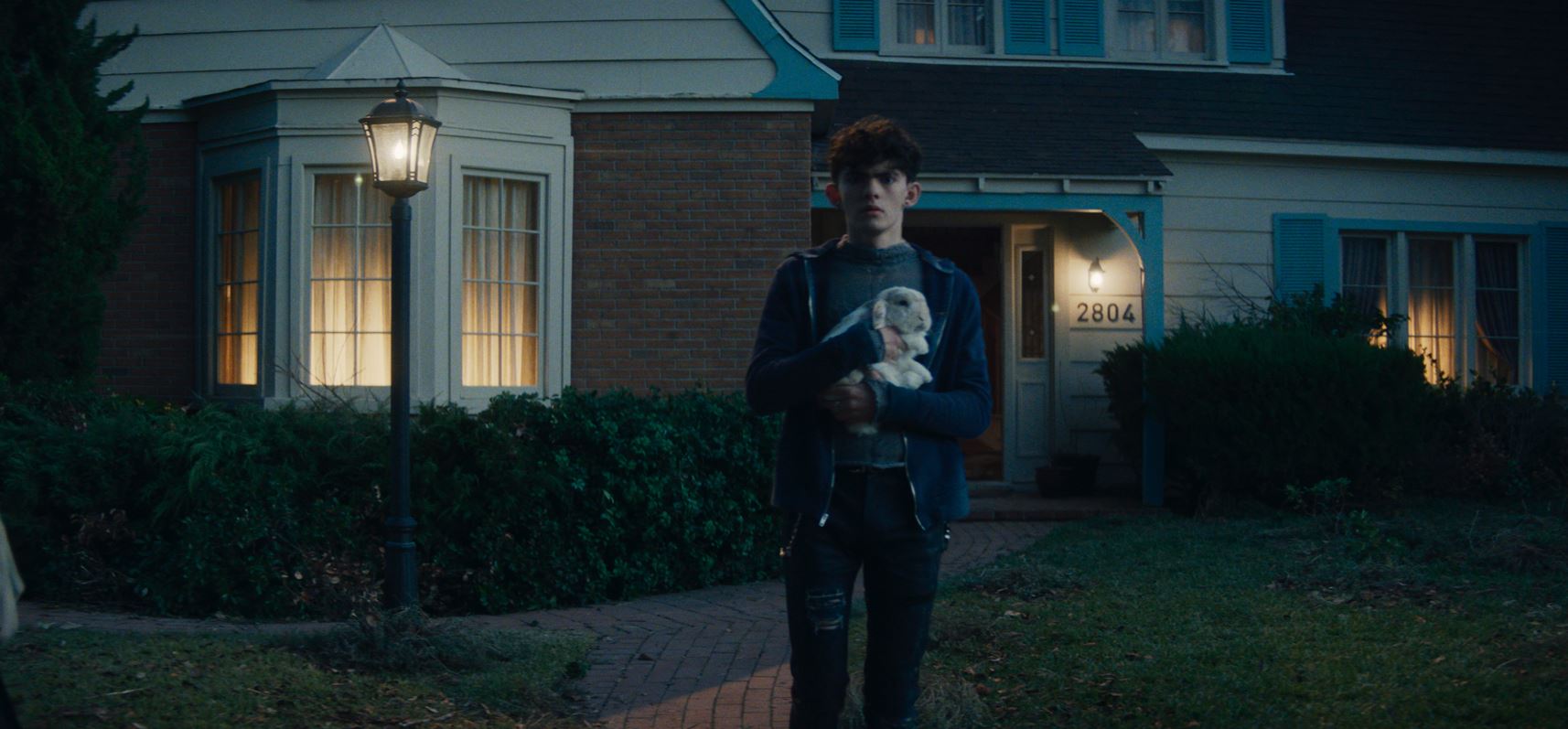
What these opening scenes also establish is the way that women are often portrayed in popular media: the lonely cop with the troubled past and the stalling career; the anonymous crime victim; the catty and dowdy town librarian; the older neighbour who can be all but ignored. All of these representations are all too common, and we can easily recognise the conclusions we are being asked to draw about these women.
With the world reset and Harkness aware of who she is, we need more plot. This is helpfully supplied by Locke’s ‘Teen’, who convinces Agatha to journey along the mysterious Witches’ Road to regain her sorceress powers. Even though Agatha is renowned as a ‘coven-less witch’ following the events of Episode 8 of WandaVision (Previously On), tropes cannot be argued with, and so we move on to ‘get the gang together’, with ‘the gang’ in this case being a coven of local ‘witchy-enough’ people.
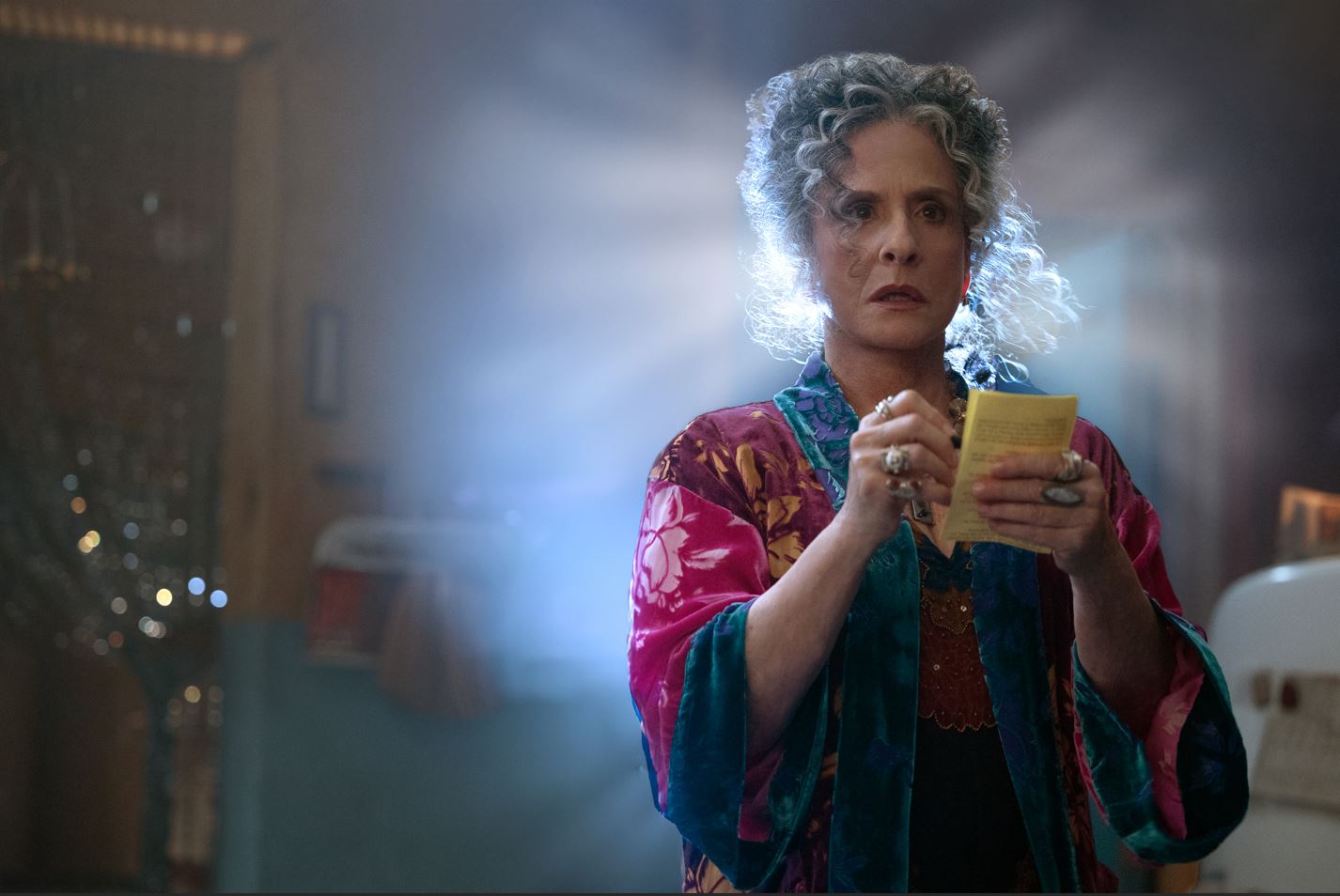
Those other coven members include musical theatre icon Patti LuPone (American Horror Story; Steven Universe). Here, as Lilia Calderu, she’s the first person to be invited to join Agatha’s gang, recruited for her divination skills. Making an early bid to provide clues about what may be to come, Lilia occasionally blurts out warnings about the future, seemingly without having any knowledge of what she’s saying and without any ability to control her outbursts.
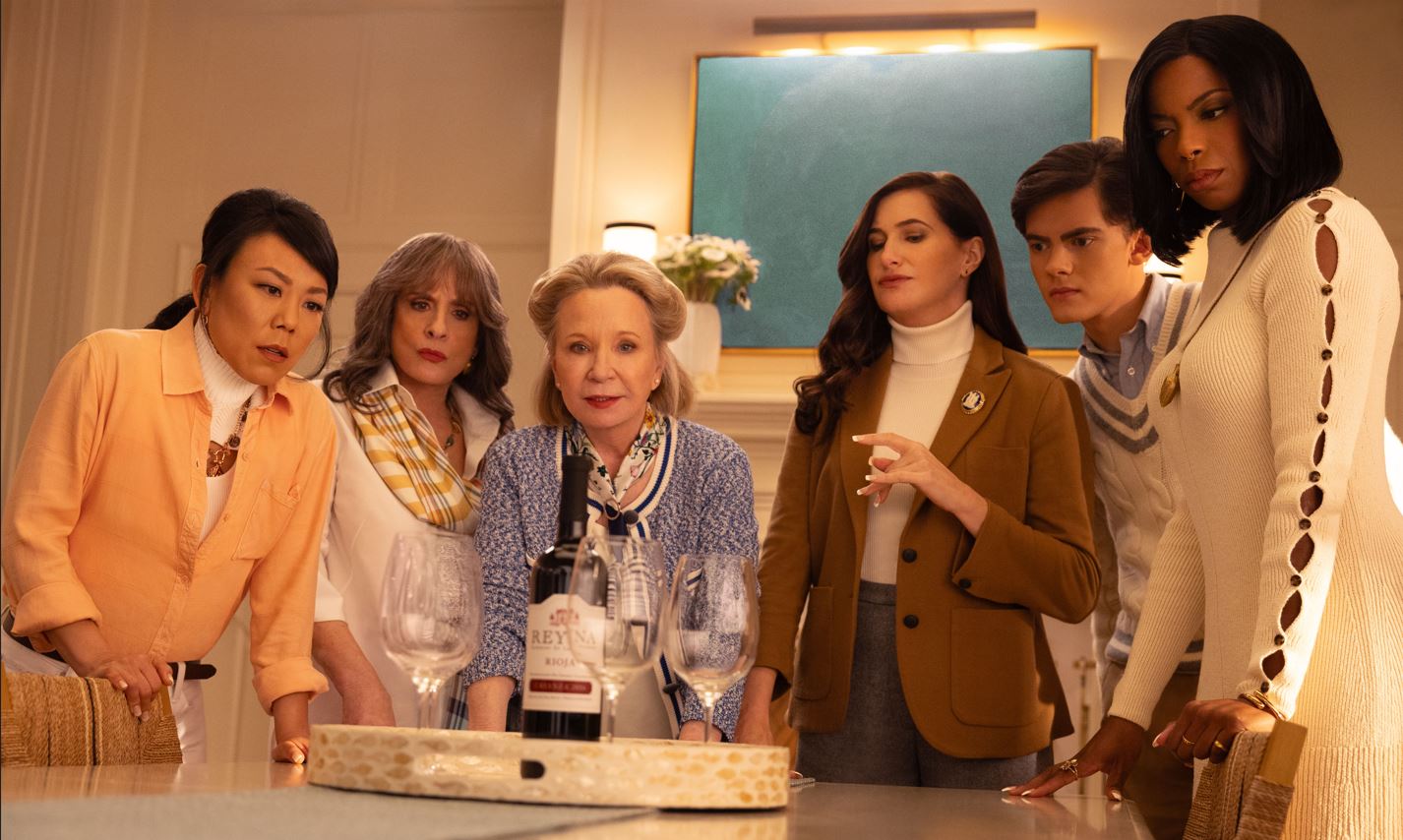
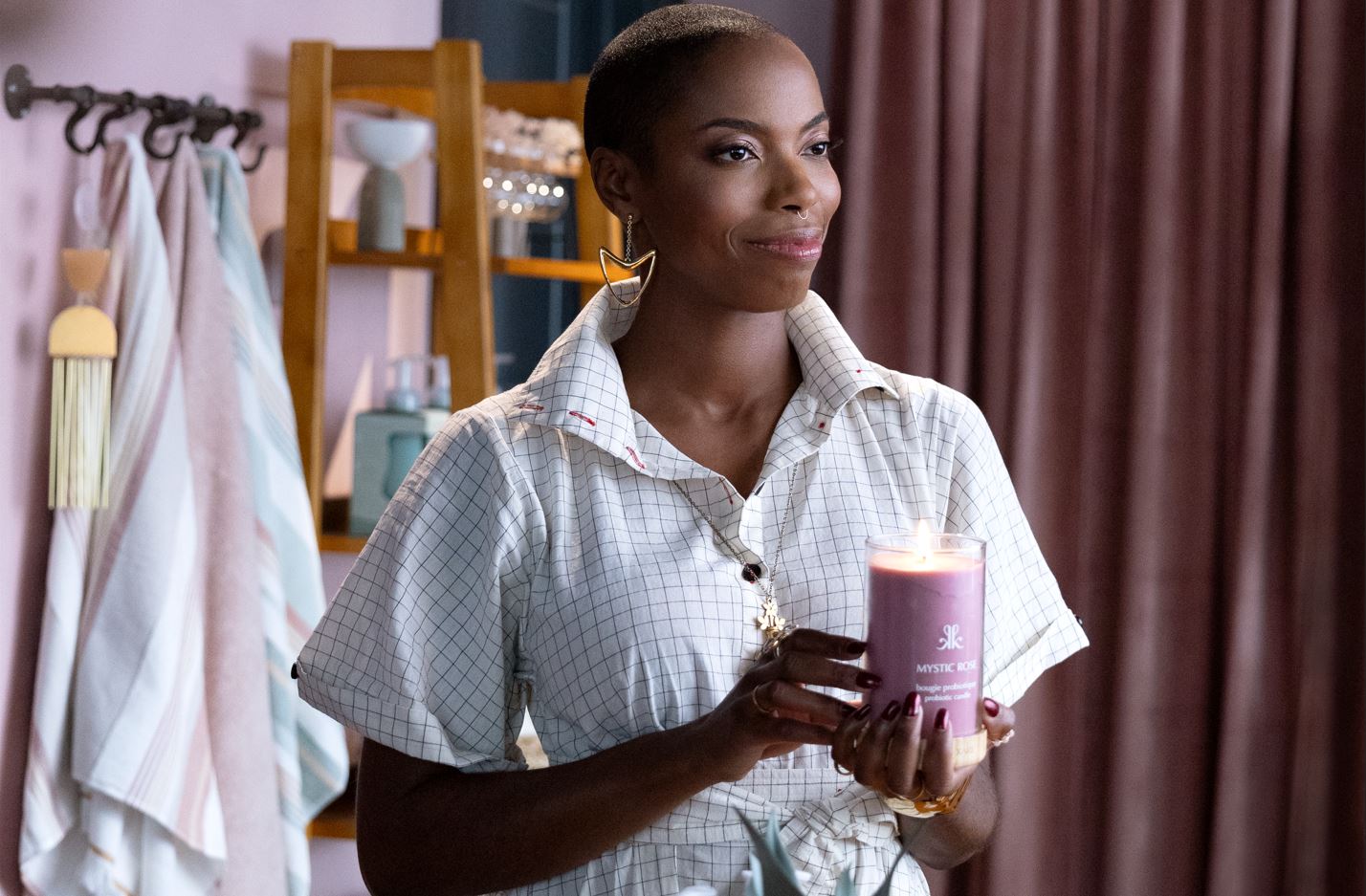
Remaining coven recruitees Jennifer Kale (Sasheer Zumata: Unfrosted; Moon Girl and Devil Dinosaur) and Alice Wu-Gulliver (Ali Ahn: Little Demon; Raising Dion) are also somewhat reluctant to join the forthcoming trip along the Witches Road, but Agatha and Teen work together to get them interested enough to at least show up at Agatha’s Westview home. With neighbour Sharon Hart/Davis (Debra Jo Rupp: That ’70s Show; Garfield: The Movie) added as a substitute for a bonafide green witch, the coven convenes to open the door to the by now much mentioned Road.

And so begins the first rendition of a song that is an absolute earworm. The Ballad of the Witches Road is this series’ signature tune, and if you don’t like it, then you’re going to want to watch this scene, and some parts of the later episodes on mute. Composed by Kristen Anderson-Lopez and Robert Lopez (Coco; Frozen), there’s a clear attempt here to make a break-out hit, and indeed, by the time the final two episodes aired, at least one version had appeared on the Billboard Charts, the US equivalent of the Top 40.
The formula for the story-telling is quickly established. The Coven must pass a trial – one for each ‘witchy’ skill. Alongside this, there is banter, both convivial and snarky, as the group travels along the wooded trail that is leading them towards, well, that’s not clear actually, but it’s established that surviving The Road will give you what you most desire. For most of the coven, this is power, with all of them being either low on sorcery or without it altogether due to events in each of their respective pasts.
The trials themselves are a melting pot of pop culture references and ‘witchcraft mythology’. with LuPone’s divination witch making frequent mention of how witches are portrayed. There are been numerous references to witches being deemed evil, dangerous and the cause of many societal ills.
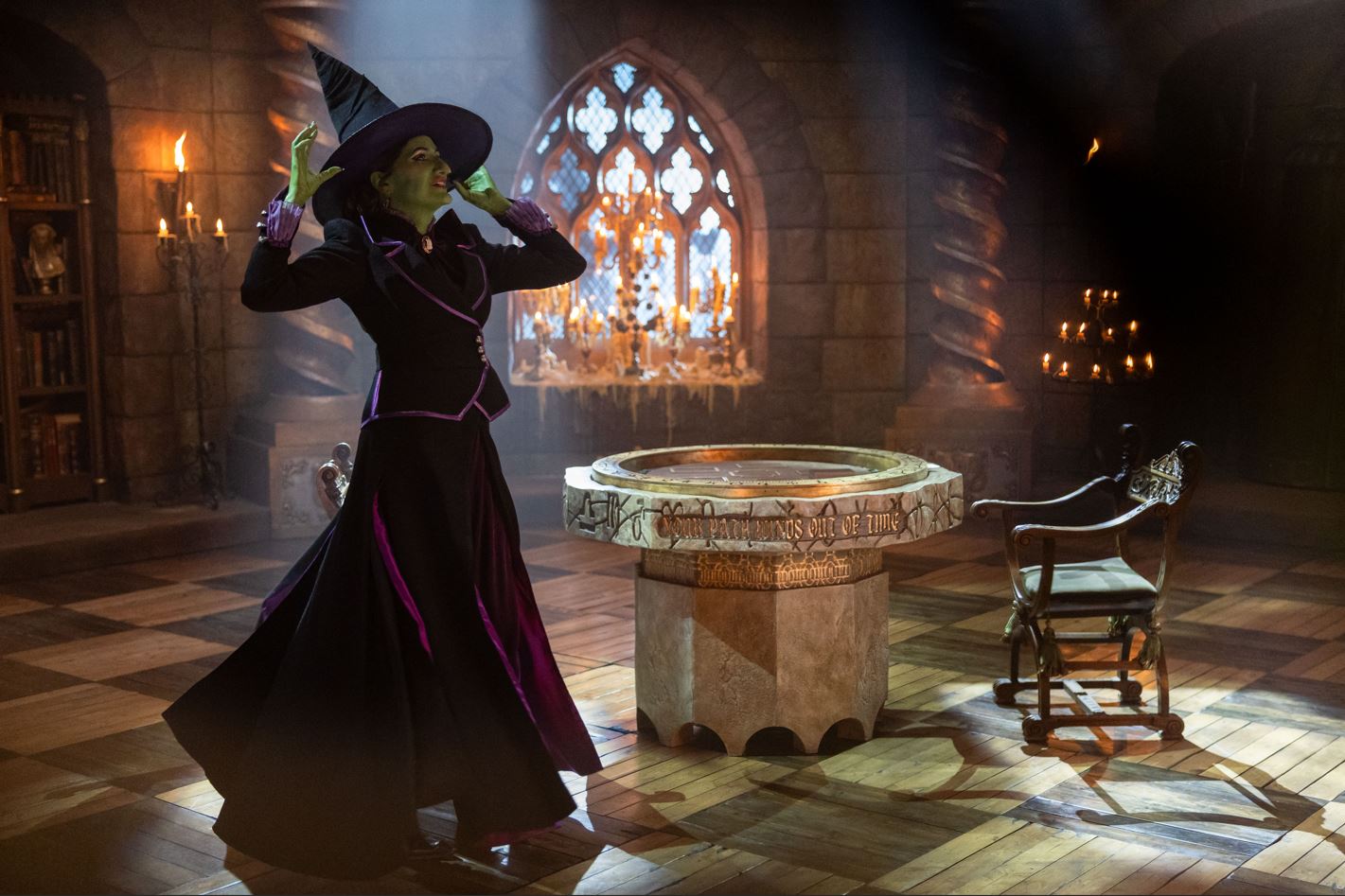
That these charges can be widened to defame all women is a more subtle point, as is the fact that the majority of the coven are played by women over the age of forty. It’s rare to see so many strong roles for older women in one show, and even rarer for that show to be a drama or a spin-off from a franchise that celebrates youth and vitality in its heroes.
In showing these women working together and in showing older women as having valuable roles to play within their communities, Agatha All Along has the potential to shift representations of women on screen in an opportunity which being a part of the MCU affords – and could be very difficult to achieve in an increasingly fractured media landscape. That the programme specifically asks its audience to consider how ‘minority’ groups are portrayed and why those portrayals are often negative is a sub-text that should make us all give thought as to why we think of groups of people the way we do.
There is also much going on here with how stories become embedded in culture. As we learn throughout the show, in this world, Agatha is responsible for many of the negative ideas associated with witches. That Agatha seems to revel in this is questioned by both Plaza’s Rio Vidal and Locke’s Teen. We are never given any easy answers here, although the inference that Agatha has found it easier to not just go along with society’s view of her but also eventually embody it should also make us pause to consider how we treat others.
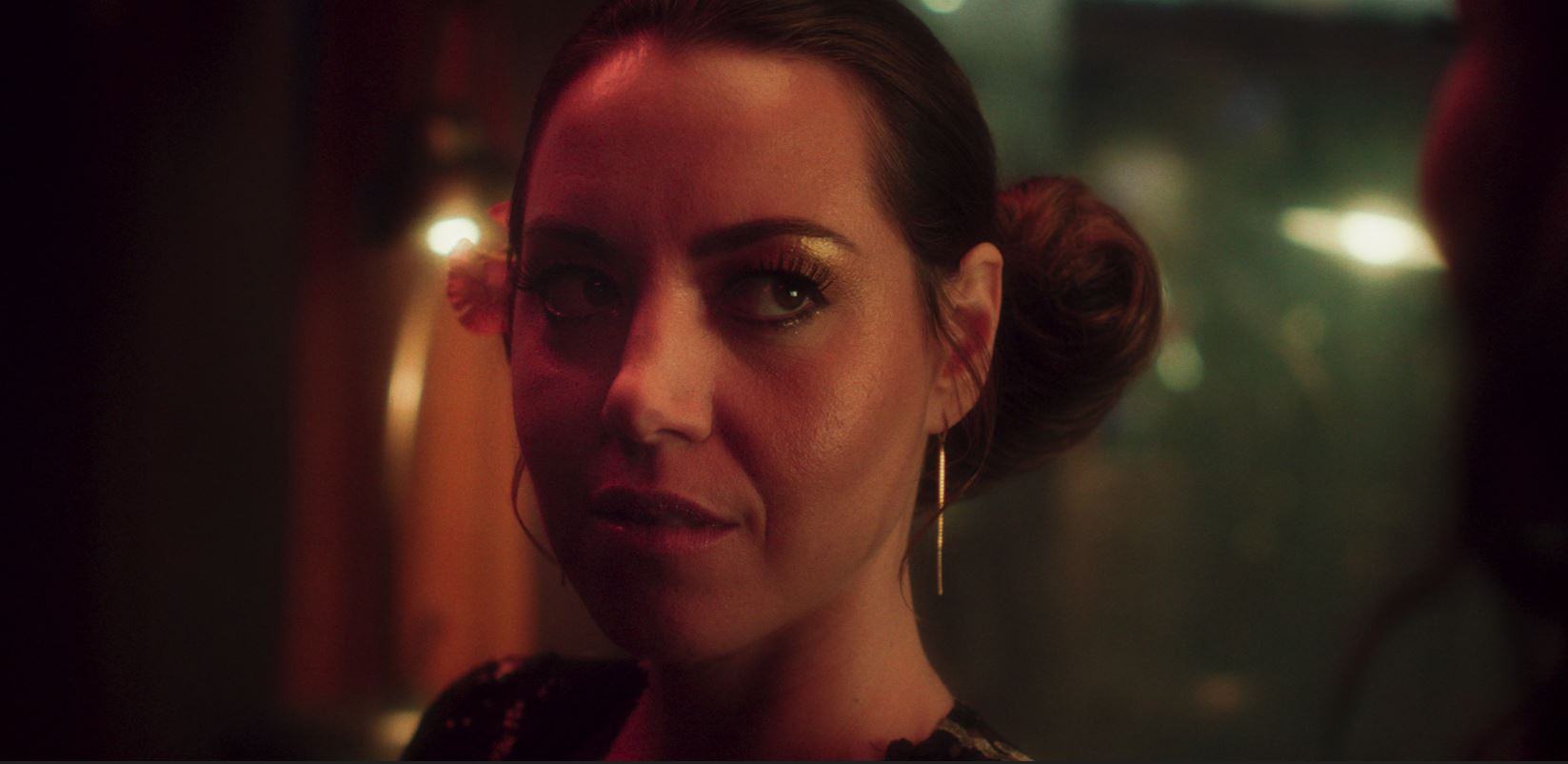
The initial episodes had to establish a lot of world-building and raised a lot of questions. While some answers were provided as the series continued, there are some that have been left without resolution, echoing the expectations established in the first episode. The series has been promoted as a ‘puzzle box’, and there is so much to resolve that at times the various riddles being presented can feel like they will be impossible to resolve. There are also numerous smaller plot points that could be easy to overlook.
The modern media landscape has led to an expectation of binge-watching—consuming an entire season of a programme in one go. Here, the decision to ‘go old school’ and (mostly) release one episode per week did the overall narrative a great service. We had time to sit and consider the various clues that seemed to be being offered to us. We could watch each new episode and consider how it helped to clarify previous scenes.
Given the web being woven, it also helped us to consider how much of what we had previously been shown was ‘true’, and where the red herrings may have been. With the entire series now available for the binge watcher to rush through, we wonder how much of the delayed gratification will transfer to a ‘one-hit’ adrenalin rush, and how much audience speculation will be diluted when merely the end credits lie between a newly raised question, and an at least partial resolution.
The most jaw-dropping revelation of the series happens in the closing moments of episode five (Darkest Hour/Wake Thy Power), and it’s an absolutely incredible moment for the MCU. Whilst we knew it was coming, it was the how of the moment that caused a collective intake of breath here at STARBURST. If you are bingeing, and you’re going to take a moment to get another drink, do it after this episode and give yourself a moment to reflect on what’s just happened.
Of course, narratively, the Big Twist does not happen with four episodes left to air, and there is much packed into the latter half of the series. We are also not yet at the end of The Road, and we have been promised that this aspect will be resolved at least one way or another.
First however, and in a move reminiscent of WandaVision when Agatha was introduced, we must have some intensive backstory. Episode Six (Familiar by thy Side) provides this in an episode focused on Locke’s Teen, which requires an immense amount from him in acting terms.
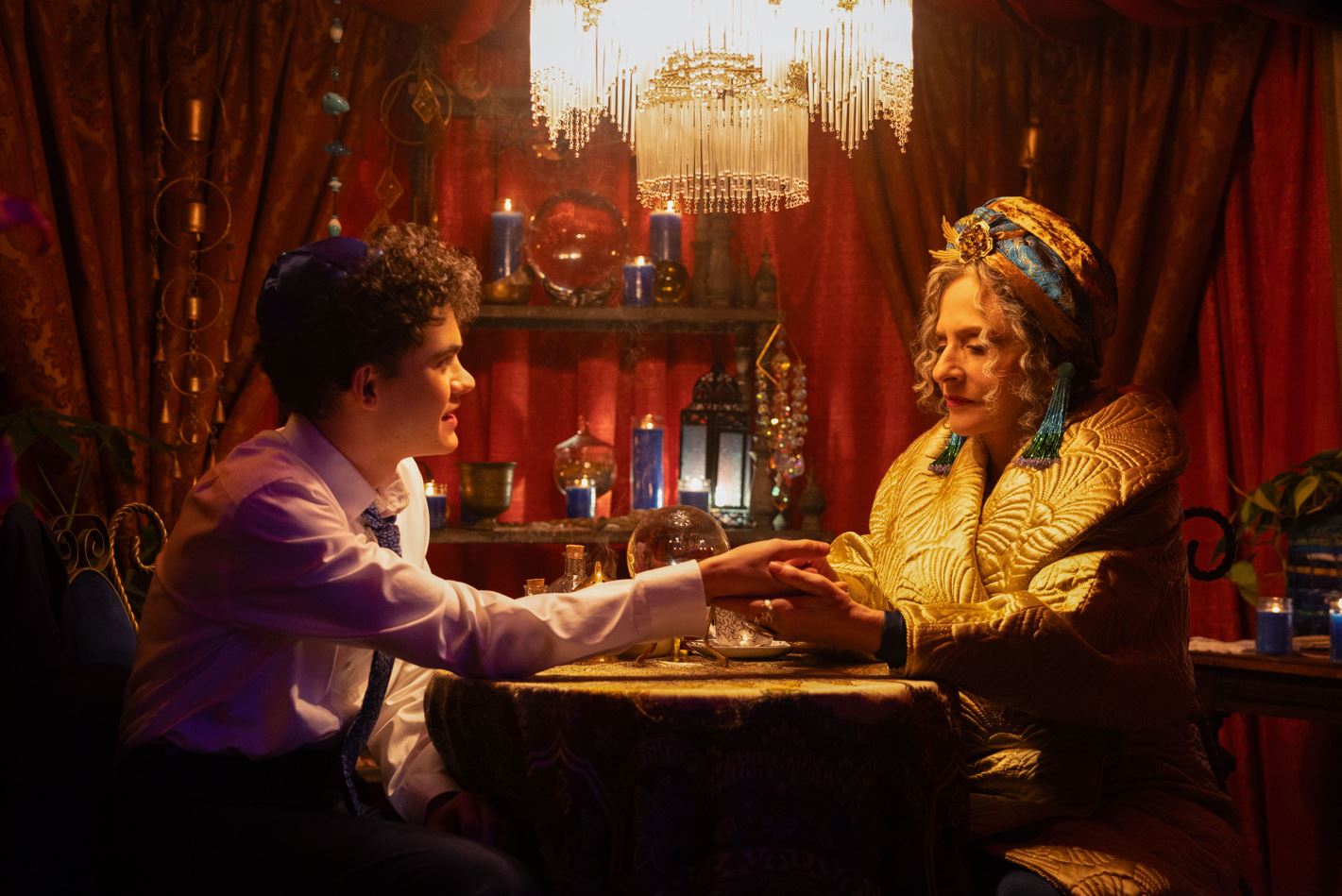
Portraying not just the character the audience knows at this point that he is, he also portrays another teenager and his current persona pretending to be the previous one. Confused? It makes more sense in the watching. It’s easy to overlook the almost Inception-like layers of characters Locke is playing here, but the different moments show an actor who differentiates the roles with the subtlety you’d expect of a main character who himself hides and misleads others as to his true nature.
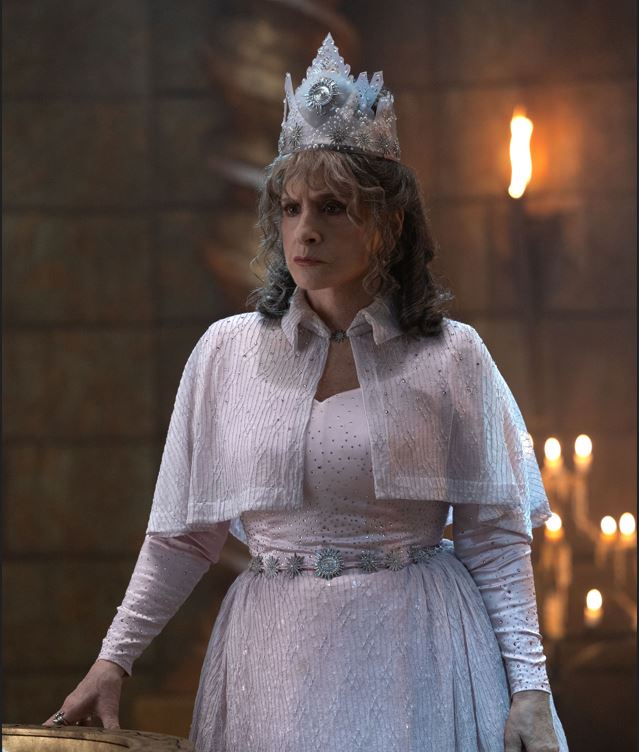
Episode Seven (Death’s Hand in Mine) is focused on Lilia Calderu. Patti LuPone delivers an astonishing performance as the 450-year-old Sicilian Witch, and talk of an Emmy nomination is well-deserved. The Calderu we see here appears to be an entirely different character from the one who makes an appearance in the Marvel Comic. This is perhaps an attempt by showrunner and lead writer Jac Schaeffer to establish that Marvel Comics and the MCU are two different interpretations of the same underlying world.
With the journey down The Road all but complete, the last two episodes go a long way to filling in many of the ‘what the heck just happened’ gaps, and it made sense that they were released together. These two episodes also help us understand much more about why Agatha behaves in the way she does while compacting three hundred years of her personal history into twenty minutes of screen time.
Circling back to the opening of The Road from Episode Two, we also learn exactly how much Agatha knew or suspected All Along, ensuring that the focus remains on this intriguing antihero.
Of course, this is a Marvel series, and so there’s more going on here. Principally, there’s probably at least one ‘back door pilot’ for a further series or movie happening, although there is more than one loose end remaining by the end and the distinct possibility that we might get a ‘spin-off of the spin-off’ if Marvel decides to explore the character of Jennifer Kale some more.
Jac Schaeffer and her team have done a remarkable job here, taking an established world and a minor character and weaving something that feels fresh and very different. As a part of the MCU, this series demonstrates that Marvel can do serious and considered and that with the right team, the most minor of characters can have an important role in the ongoing narrative arc of the Cinematic Universe.
Somehow, in 2024, this series also marks a breakthrough moment in the MCU. When Teen and his boyfriend, Eddie (Miles Gutierrez-Riley: The Wilds), kiss, it’s a moment that has occurred before. When Agatha and Rio do, this is, surprisingly, the first lesbian kiss ever to feature. It’s also a beautiful moment, an expression of surprising tenderness, forgiveness, reunification, and also an ending for both their relationship and Agatha.
Agatha All Along is a bold step for the MCU, taking a potentially odd branch of the universe – witches, and treating their stories with seriousness and respect. The decision to film as much of the series as possible with practical effects makes the whole endeavour feel grounded. The move away from the swathes of CGI and often overlong battle sequences from other entries in the MCU canon shows that Marvel can do controlled and serious if it wants to.
Taking Agatha Harkness, who has been a minor player in the Marvel canon until now, and giving her a series of her own was always going to be a gamble. Reports of very healthy viewing figures would suggest that the gamble has paid off, at least in terms of eyes-on-screens. Given the incredible care in the technical elements, it can only be hoped that awards season will reward the show as widely as its audience has embraced it.

Agatha All Along is now streaming on Disney+