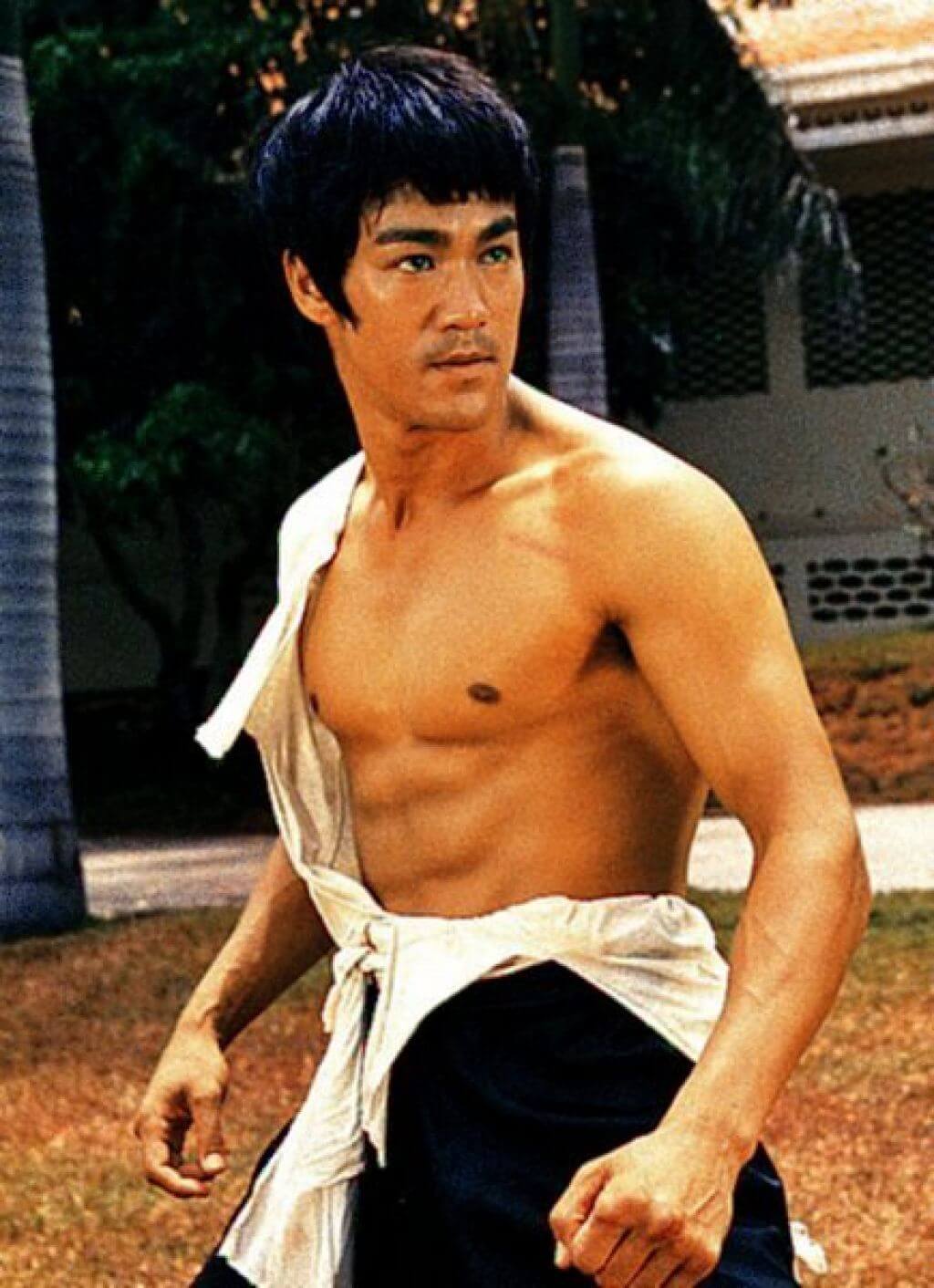
It all began with a fight in San Francisco that led to martial arts legend Bruce Lee questioning the effectiveness of Wing Chun, and his own system known as Jun Fan Gung Fu. In 1964, Lee was challenged by Wong Jack-man, known for his mastery of Xingyiquan, Northern Shaolin, and T’ai chi ch’uan, to a public contest in the San Francisco Bay Area. It’s said that the challenge originated due to Lee’s willingness to teach martial art techniques to non-Asians, but Wong later disputed this, claiming it was due to Lee’s arrogance. Depending on who you choose to believe – Lee or Wong – the fight ended with either Lee victorious, or with no decisive blow by either fighter.
Jeet Kune Do originated later in 1967, following the cancellation of The Green Hornet TV series in which Lee starred as Kato. Lasting only 26 episodes, Lee was out of work and decided to focus on teaching at the Jun Fan Gung Fu Institute. Influenced by his earlier confrontation with Wong Jack-man, and his realisation that traditional martial arts techniques were not practical in a no-holds-barred street fight, Lee emphasised “practicality, flexibility, speed, and efficiency”. But even Jun Fan Gung Fu, “the style of no style”, was too restrictive for Lee. Instead, Jeet Kune Do (or “The Way of the Intercepting Fist”) was developed – a philosophy with guiding ideas rather than a formalised approach indicative of traditional styles.
Becoming increasingly frustrated with Hollywood, Bruce Lee turned to the Hong Kong film industry; negotiating contracts with both Shaw Brothers and Golden Harvest. Ultimately Lee would accept an offer from film producer Raymond Chow to co-star in The Big Boss alongside James Tien, and later Fist of Fury (at the time tentatively titled King of Chinese Boxers). Arriving in Thailand, Lee began working with director Wu Chia-hsiang, but the two soon developed a sincere dislike for each other. Wu wanted to adhere to the tradition of intricate, flowing kung fu used in Cantonese opera, whereas Lee wanted to perform realistic, fast strikes attributed to his practical approach (and Jeet Kune Do philosophy) to martial arts.
Disparagingly referring to the actor as “Three-Leg Lee”, Wu mocked Lee’s abilities in the hopes Golden Harvest would remove him from the project. But Chow was invested in Lee, and chose to remove Wu instead; replacing him with the infamous Lo Wei! There was however still one problem… Who was going to be the leading man? The established James Tien? Or charismatic newcomer Bruce Lee?
In an effort to avoid trouble, Cheng Chao-an (Bruce Lee) travels to Thailand to live and work with his cousin, Hsu Chien (James Tien), at an ice factory. The factory owner, Hsiao Mi (played by Han Ying-chieh, who also served as the fight choreographer) is a prominent figure in overseas Chinese society, but in secret, he is operating the factory as a front for vice; kilos of heroin encased in each ice block! After several workers are never seen again – having discovered Hsiao’s secret stash – Hsu sets out to investigate and confronts his boss. Big mistake!
During production, Lo Wei played Bruce Lee and James Tien off against each other but found himself increasingly impressed with Lee’s work ethic and authenticity. Tien’s character was therefore re-written and his death imminent! During the film’s final reel, suspicious of Hsu’s own sudden disappearance, Cheng himself confronts Hsiao – discovering not only the heroin but also the frozen, bloody remains of Hsu and his former colleagues! Enraged, Cheng sets out to kill the racketeers in vengeance, leading to a deadly clash with the titular big boss himself!
Shortly before The Big Boss was released in 1971, cuts to excessive graphic violence were required by the Hong Kong censors. And while further cuts required by overseas territories have been restored over time – including in America, where the film was originally titled Fist of Fury – the material cut by HK remains missing. Regardless, The Big Boss is shockingly violent. However, it was Bruce Lee’s charisma and insistence on authentic fight choreography (to the chagrin of Han Ying-chieh) had audiences around the world transfixed. It’s an important, often under-appreciated movie – when compared to 1973’s Enter the Dragon – that is deserving of reappraisal. Bruce Lee’s earlier conversation with Raymond Chow during the production of The Big Boss proved to be true: “You just wait, I’m going to be the biggest Chinese star in the world.”