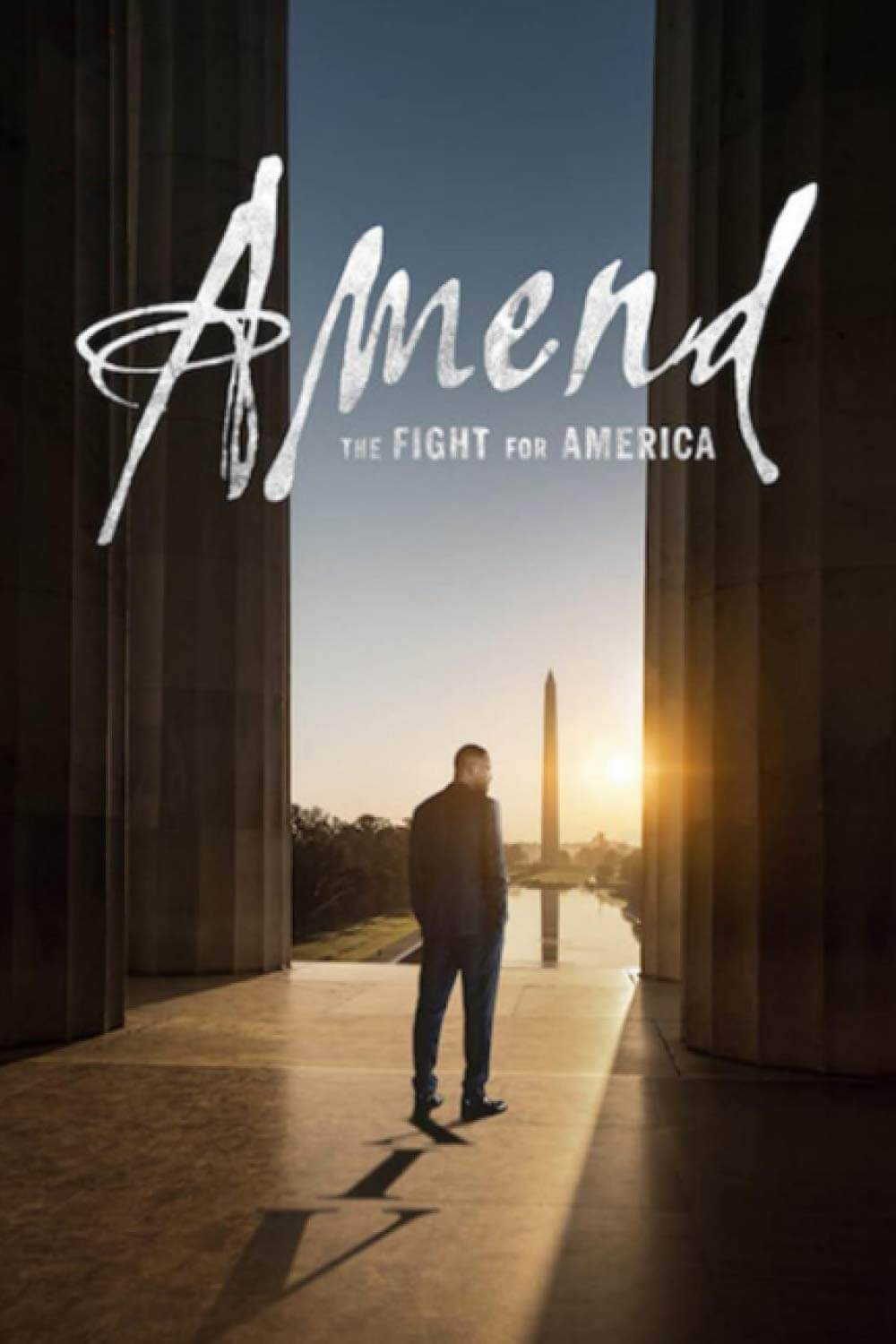
Osei Essed’s score for Amend: The Fight for America, the Netflix series about the 14th Amendment to the United States Constitution, immediately evokes a sense of history in its use of Americana elements, while weaving in and out of a series of powerful pop song needle drops which demonstrate just how important this amendment was to the fight for equal rights in America. Speaking with Essed, one gets a sense of just how thoughtfully the composer approached scoring this landmark six-part series.
STARBURST: Amend starts with Sharon Jones’ version of This Land Is Your Land, but what was your starting point for working on the documentary miniseries?
Osei Essed: I spent a bunch of time out in LA working on the series before anything was shot with the actors. So many of the interviews with our expert guests were already shot, but all of the creative non-conventional elements had yet to be created.
I went out to LA and I spent a few months out there sort of just talking and making some music and trying to find a way to tell the story that would feel fresh and contemporary, but at the same time, American in that way that early sort of 20th century orchestral music does or American folk music does
Those animated segments and the really stylized readings and recitations of the people involved in the fight for the 14th Amendment: how does that affect what you do, as opposed to talking heads, which are the de rigueur approach to most documentaries?
It required being able to switch voices quickly. And that’s tricky, no matter what, to do that because there were just these rapid cuts, which doesn’t happen a lot in work that I do – where you’re moving from moment to moment and each moment is its own encapsulated moment that requires its own supporting musical voice. I had to find a voice for it for each of those moments, but that’s somehow connected as a single thing.
Did it help you that there is a really good amount of popular music in the documentary to have something to go into or come out of?
I wouldn’t say it helped so much. I mean, it definitely placed limitations on the kinds of music I would place between sections or that I would have to create so, in that sense, I guess it was helpful that there were some limitations, but I think whenever you’re moving in and out of cues that you didn’t create – or in between them – finding the thing that connects them, when there are very few breaths, it is a challenge. And so that there was a really joyful challenge.
In a fictional narrative film, there’s a little bit more room, but the idea that, in a documentary, if there’s no music playing, it’s somebody talking is a fascinating observation. There’s constant sound throughout, basically.
There are lots of ways to approach it. I think there are some vérité documentaries where there are moments given to just the world of the film outside of music and letting those diegetic sounds take over. There’s a pleasure in that and those breaths are purposeful in that kind of filmmaking, but often that’s not the case.
When you were working on the score for Amend, were you considering certain themes or motifs for the various themes and motifs that go throughout the documentary? When they’re talking about Bull Connor or Andrew Johnson, your score gets darker.
Finding a way to voice new villains and the heroes was definitely a big, big part of it and then figuring out what corollaries existed between our heroes for each episode, for each part of the story, and how to connect them felt as if it was all a piece – in that it was observing some rules of composition – was definitely something we thought about.
Talking about the heroes and villains of each piece: many of the reviews have pointed to the Love episode as being the one that really encompasses a lot of different ideas, and so it ends up being a very particularly impactful part of the miniseries. When you’re talking about love, in that context, it’s a very hopeful, but also very sad, pendulum swing back and forth. How do you approach something like that, as it’s so deeply personal?
It’s interesting because I think that, for that storytelling, there was a longer cue in that episode. There were more real moments. I think a lot of the other episodes are dynamic in a way that that Love actually isn’t, even though that episode does encapsulate so much of what’s being fought for. I think what it does so effectively is it does bring this idea to a very personal level that hopefully resonates with everyone, so I think we’ve given a little bit more space there. It was easier to tell that story and really dive into what needed to be done in terms of the music.
One of the most triumphant parts of that documentary is Bree Newsome on the flagpole at the South Carolina state capitol. It must have been a really hard thing to score because you’re scoring a very triumphant, fist in the air, successful thing, but then you immediately have to go into what happened to Reverend Pinckney. That must be a very delicate transition for you as a composer.
For that one, fortunately, I’d had some training with the earlier episodes as well, ’cause there’s a lot of those very useful and triumphant moments that are then undercut almost immediately by the reaction to the advances made in the name of freedom and, and in the name of what it means to be a citizen in this country. I think that’s something that comes back and forth through the entire series: from the very outset, we get an inch there and then we’ll get pulled back in. It’s like every time you think, “All right, great, this is it,” it’s like, “Oh, well, no, actually this is not it at all.”
How did you originally become involved with Amend? You’ve done quite a few other documentaries in the past, but how did you come to work on this particular project?
I came to the project through Adam Weber, who was a producer and a friend, and he had worked with the score executive producer, Dan Romer, and when conceiving of the idea, Adam and I – being friends – also were able to just talk about it a little bit and went through a few interviews with his team and with the various parties involved with Westbrook – which was Overbrook at the time – and found our direction. It helped that I’d done quite a bit of documentary before and that I made some music that seemed to fit into where they were hoping to take the voice for Amend.
What for you is the appeal of scoring documentaries? Speaking with other composers, be it documentary or action or horror sci-fi or whatever, it seems that there is at least a grain of personal interest in it, to begin with, but it also seems like one project usually begets another.
I think largely that’s what it is. I’m happy to tell all kinds of stories, whether it’s documentary or narrative stories and whether they’re immigrant stories or American stories. I’m grateful for the opportunity to tell good stories with good storytellers. In terms of working in docs, that’s really what happened – I worked with one person, then another and it has grown into this wonderful thing where there are quite a few amazing documentaries being made and I get to work on some of them.
Is there a bit of an emotional toll that documentaries take, especially given the rather serious themes of a lot of the stuff you’ve worked on?
Yeah, absolutely. It can really be pretty, pretty heavy, I think, to walk around with a lot of these ideas in your head, thinking about the world from the perspective of many of these stories. I think what helps to sort of ameliorate that is thinking of the stories as a way to help heal wounds and as a way to help give voice to the voiceless and make the world hopefully stronger or more aware that way. It feels like you’re doing good, in a way, if you can tell the story well, so there’s something to be gained there.
In Amend, the tone is very serious but lightened with a sense of, “What the hell?!” where you have Randall Park or Larry Wilmore. Wilmore’s commentary walks the perfect line between this is absurd that this is still going on, while still recognising the seriousness of it all. And I think that’s like where he sort of finds the absurdity in it, but I really quite enjoyed it and I thought your, your music really lent a lot to it.
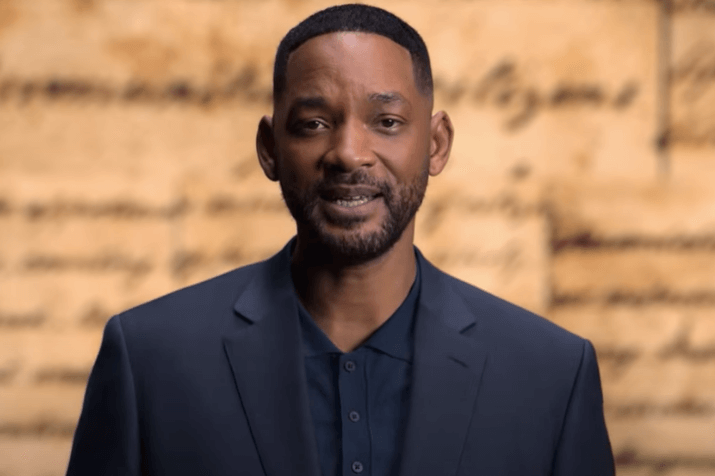
With Larry Wilmore and Will Smith, between the two of them, they really do help to lighten a little bit of the heaviness, but along with that, you have these stylized, recitations, which I think allow you to view it at a bit of a remove. It feels creative and feels a little bit exciting almost, and it feels like it’s action and it feels like it’s happening in the moment.
I think that makes this particular series really exciting and the approach to the music – as well as every other part of it – is just that it is forward-looking and it tries to make it feel as if there are stakes. Very often, when we’re thinking about history, talking about history, it seems so far removed – “It’s the past, how can it really affect us?” – but the way that the story was told made it feel immediate and made it feel as if you could have a reaction and should have a reaction and, perhaps, maybe you could even do something about history, which is an interesting thing, you know?
Nevermind the fact that I feel like so many of us – or at least for myself – I did not know very much about the 14th amendment so that felt fresh to have this thing that’s so important and the story of it is being told in this very immediate way, so I felt like I could engage with it in a way that I might not otherwise.
Absolutely. Seeing Graham Greene pop up in anything brings an almost immediate level of joy: ‘Oh, he’s in it? It’s going to be good’.
There’s just some really wonderful moments and appearances throughout. I remember, I was scoring one day and – my family watches Fresh Off the Boat. We’ve watched it twice because my eldest son is just a big fan. He’s eight now and we’ve watched the series twice in the last year and a half or so. He comes upstairs. He said, “Oh my God, it’s Louis! It’s Randall Park on the screen!” And he was like, “All right, right on,” so my kid feels like he wants to be engaged and there’s something great about that.
Amend: The Fight for America is now streaming on Netflix.