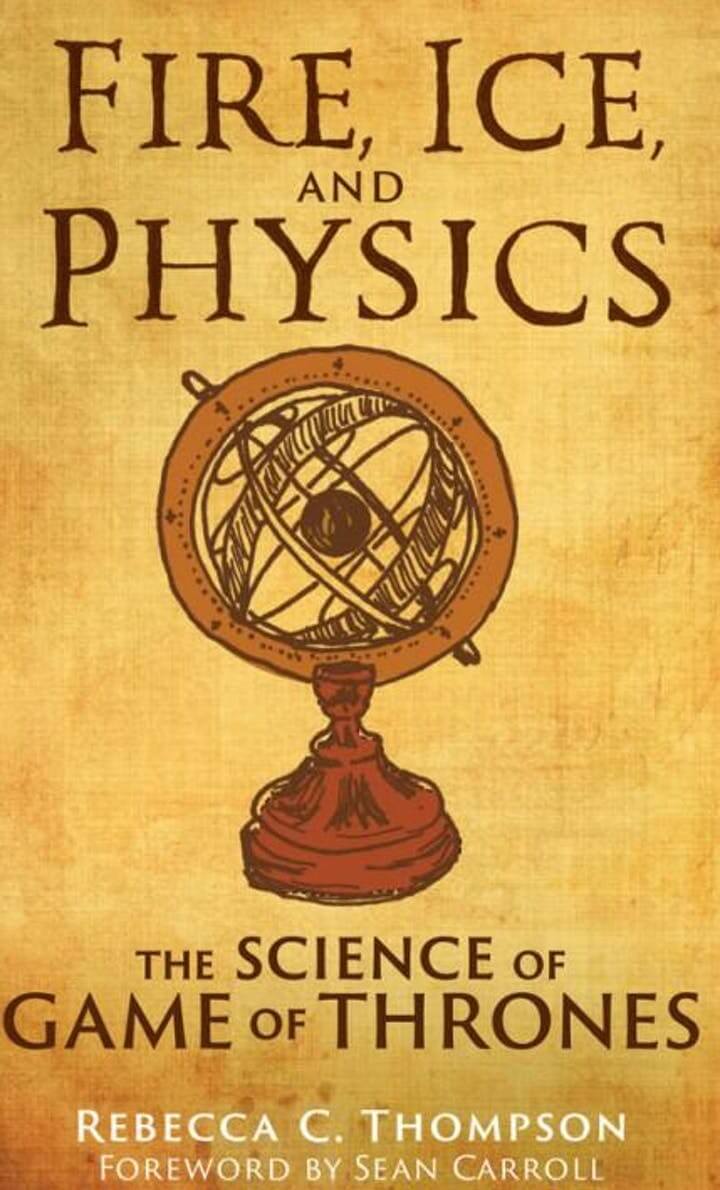
AUTHOR: REBECCA C. THOMPSON | PUBLISHER: THE MIT PRESS | RELEASE DATE: OCTOBER 29TH
‘Science of’ books are a very niche but entertaining genre. They take a well-known media franchise and use it as a starting point to explain and discuss science topics in an easy to digest way. It’s learning, but it’s also fun. As you may be able to guess, Fire, Ice, and Physics – The Science of Game of Thrones mostly focuses on the engineering and physics side of science, but in context of the world’s biggest fantasy TV show.
It opens with an excellent chapter on the seasons. Winter may well be coming, but the whole premise of the show is that winter is unpredictable; which is different from the real world in which the seasons are pretty predictable. Author Rebbeca Thompson breaks the topic down into bite-sized chunks, explaining exactly what seasons are and what they mean, before going on to explain a light bit of astrophysics. We get various potential reasons for the shifting seasons, including some grounded in Game of Thrones lore.
Other chapters take a similar approach. We get the great wall used as an excuse to talk about things such as pykrete and how certain structural materials wear down. Steel and Valyrian steel eat up two chapters as we learn the basics of smithing and the fascinating history of Damascus steel. Dragon glass and dragon fire lets the author teach us more about how physical objects are made, using fascinating real-life examples to illustrate the point.
The book is weaker when it discusses biology, but it’s still interesting stuff. We get a genetics lesson that explains why the Lannisters are so strange as well as the flaws in Ned Stark’s research. We learn more about how a dragon would work, and so on. The least effective chapter is on the subject of White Walkers; the science of zombies has been done to death, and this is basically nothing new. Though it does reference another excellent pop-sci book called Do Zombies Dream of Undead Sheep, which is well worth a look. It helps that the author is a fan of NCIS also; the topic of murder and decay is handled with good humour.
Mostly this is an excellent and entertaining work, especially as topics such as the material sciences rarely get interesting write-ups. A great addition to fans of ‘Science of’ books, and one that will likely entertain the more sceptical sort of Game of Thrones fan.