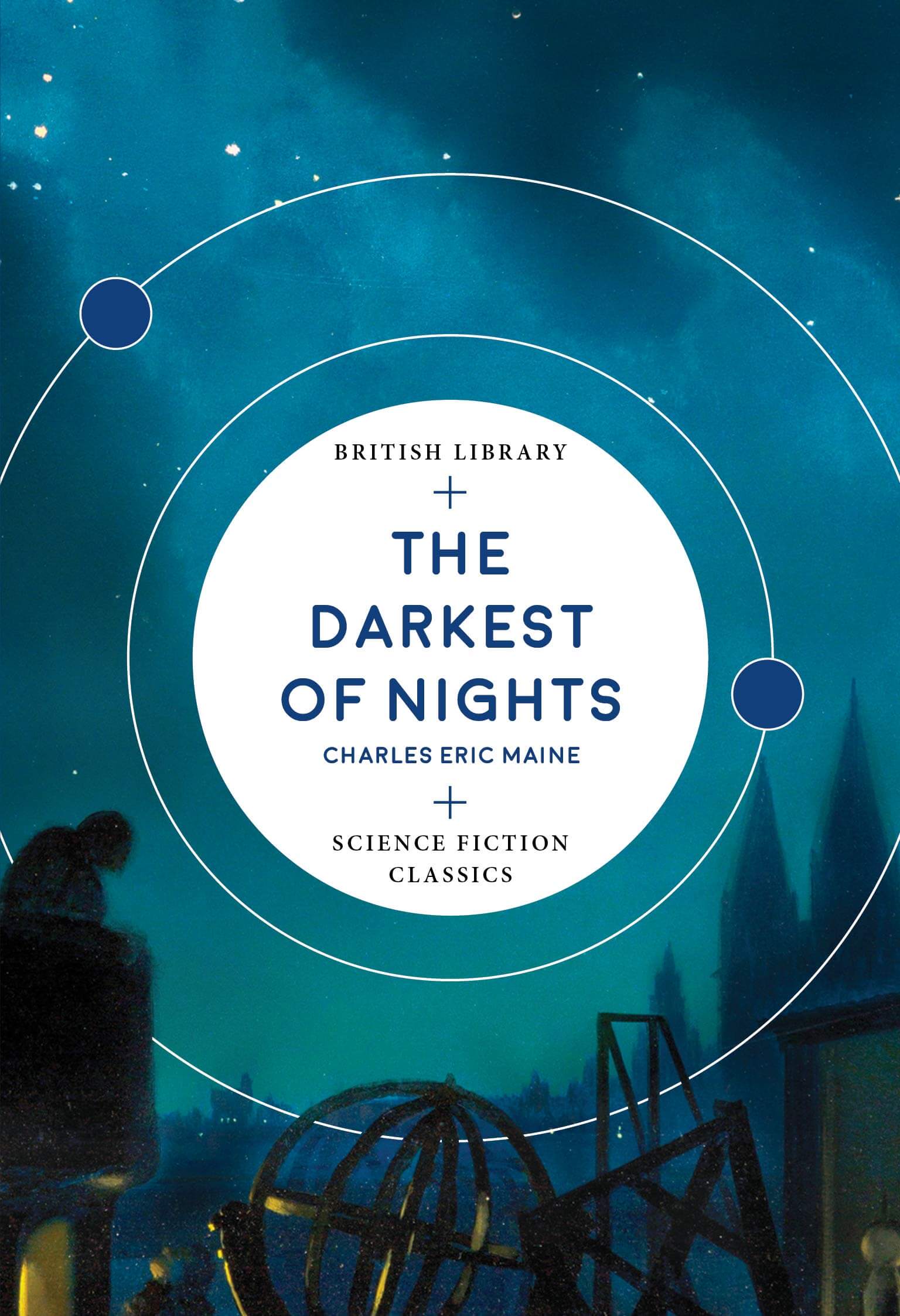
The 1960s were an interesting time for science fiction novels; the Cold War was in full swing and it helped influence the works of sci-fi luminaries such as Arthur C. Clarke, Philip K. Dick and JG Ballard. Amidst these authors was the largely forgotten Charles Eric Maine (1921-1981), who produced the novel The Darkest of Nights, which has been re-released as part of the British Library’s Science Fiction Classics series; his key theme being the human consequence of the Cold War; what could happen when we start messing around with nuclear weapons? Well, let’s see…
The Darkest of Nights sees, as a result of messing with nuclear weapons, the birth of a new plague which has taken the lives of millions in China. At first, Britain sees the political advantage of China being brought down a peg or two and fails to act; it continues to be inactive when the plague arrives in Japan, and Britain sees it as nature restoring the balance. However, with this in mind, why is the British government censoring the reports of incinerators and bunkers being constructed across the country? Newspaper turned TV reporter Clive Brant will soon have all of his questions answered in plain sight.
This novel has not been given the credit that it deserves. It is a well-constructed novel in which the post-apocalyptic world that has been created by the plague is spliced with political issues that resonate both today and at the height of the Cold War: security versus liberty, issues surrounding privilege and ‘I’m alright, Jack’ attitudes towards foreign affairs. Away from politics, you see that personal issues are not deterred by the ongoing crisis, such as the pending divorce between Clive and his wife; a personal touch expected amongst larger than lift stories today.
Overall, despite some minor hiccups with pace, The Darkest of Nights is definitely a novel that needs a re-discovery.
THE DARKEST OF NIGHTS / AUTHOR: CHARLES ERIC MAINE / PUBLISHER: BRITISH LIBRARY PUBLISHING / RELEASE DATE: OUT NOW