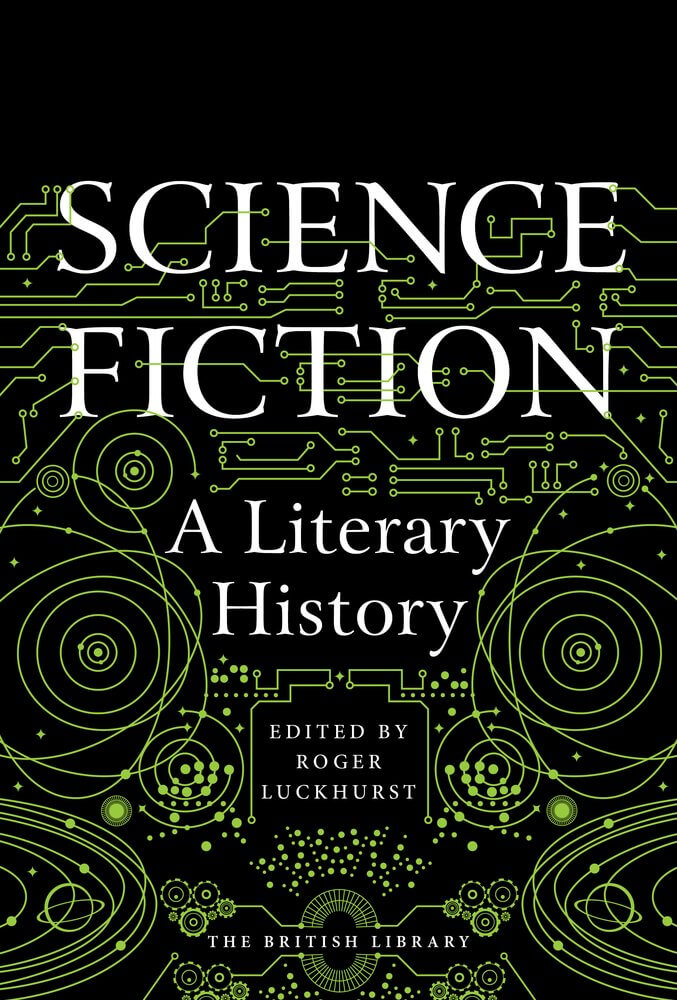
This is a collection of eight essays that opens up the debate about the key milestones in sci-fi literary history. As early as 1787, French publisher Charles -Georges-Thomas Garnier produced a 36-volume series of what he titled Imaginary Voyages, Dreams, Visions, and Cabalistic Novels which just about sums-up the sf genre. The bulk of the collection, 30 volumes, covers imaginary voyages that stretch back to Lucian of Samosata’s True History dated c.120-80 and the likes of Jonathan Swift’s Gulliver’s Travels (1726).
There proto-sf tales covered trips beyond and into the interior of the Earth, time travel, utopian and dystopian visions and mad scientists. Edgar Allan Poe was dissatisfied with how earlier authors ignored science and plausibility, and as a consequence he brought scientific principles to his stories of fantastic adventures. This approach had a powerful influence on Jules Verne, whose writings popularised the science fiction genre throughout the world.
By the end of the 19th century, the rise in literacy and cheap newspapers and magazines meant that ‘scientific romances’ could reach a mass audience. In this environment, the writings of H.G. Wells and Arthur Conan Doyle found a ready market.
As technology made so many changes to everyday life, sf was a means of understanding and speculating about their impact on our existence. The late 19th century also saw sf writers in Japan, China, India, Latin America and Russia dealing with these topics in the shadow of European and US science fiction.
It was with Hugo Gernsback and his pulp magazine Amazing Stories, in the 1920s, that the term science fiction became used to describe scientifically accurate stories of prophesy and adventure. Intriguingly, general fiction magazines published more sci-fi than specialist magazines because they paid higher rates.
The book covers how sf progressed to its Golden Age of the 1940s, the New Wave of the 1960s and how it has coped with what Gerry Canavan in his chapter New Paradigms, After 2001 calls, “thwarted futurity” in our new millennium.
Poe, Verne and Wells are certainly milestones in the history of sf literature, yet this book shows that they are part of a standardised history and there were parallel developments throughout the world, and works by authors who have not been regarded as worthy, or are marginalised by strict definitions of what sf is or is not. Each chapter contains references and what to read next to open us up to new or forgotten treasures of science fiction. A handy volume essential for anyone with a love of sf history or who wants a guide to the subject.
SCIENCE FICTION: A LITERARY HISTORY / EDITOR: ROGER LUCKHURST / PREFACE: ADAM ROBERTS / PUBLISHER: THE BRITISH LIBRARY / RELEASE DATE: NOW