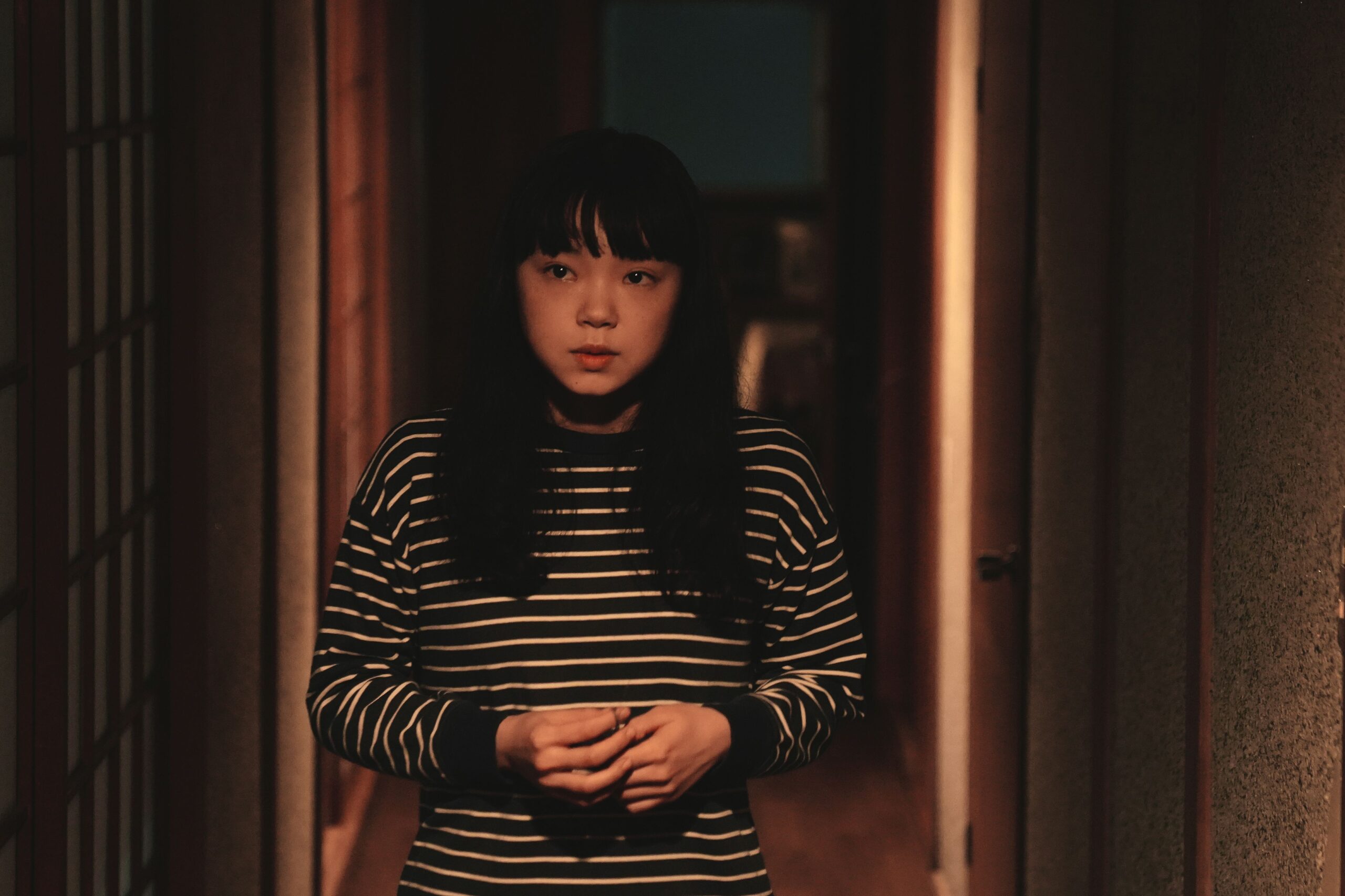
The premise of Best Wishes to All hinges on an integral twist that must be experienced or else lose the film’s only piece of potency. Visiting her grandparents in the country makes a young woman realise a dark secret that will change how she thinks about not only her own life, but every life. Horror lovers will likely cheer the source of fear inherent to the film, but yawn at its ploddingly standard use of it.
In the spirit of letting the film keep its single effective card a mystery, most of what’s left to discuss is technical. Outside of a few lovely and harrowing wide shots, the picture doesn’t have much to offer in cinematography. Stagnant, matter-of-fact camerawork makes the horror seem ordinary, which would almost be part of the premise if the J-horror approach wasn’t so occupied with shock value. The shocking moments are also more conceptual than visual, with only a few body horror moments to keep the darkness rolling in.
Characterisation remains nonspecific throughout the picture as well, with only archetypes to latch onto. With a bland audience surrogate and standard creepy relatives besides, Best Wishes to All forces audiences to latch onto only the thoughts behind its premise. Like a movie such as Sophie’s Choice or The Human Centipede, the concept is more effective than the movie’s execution of it, leaving Best Wishes to All as shorthand more than cinematic experience.